
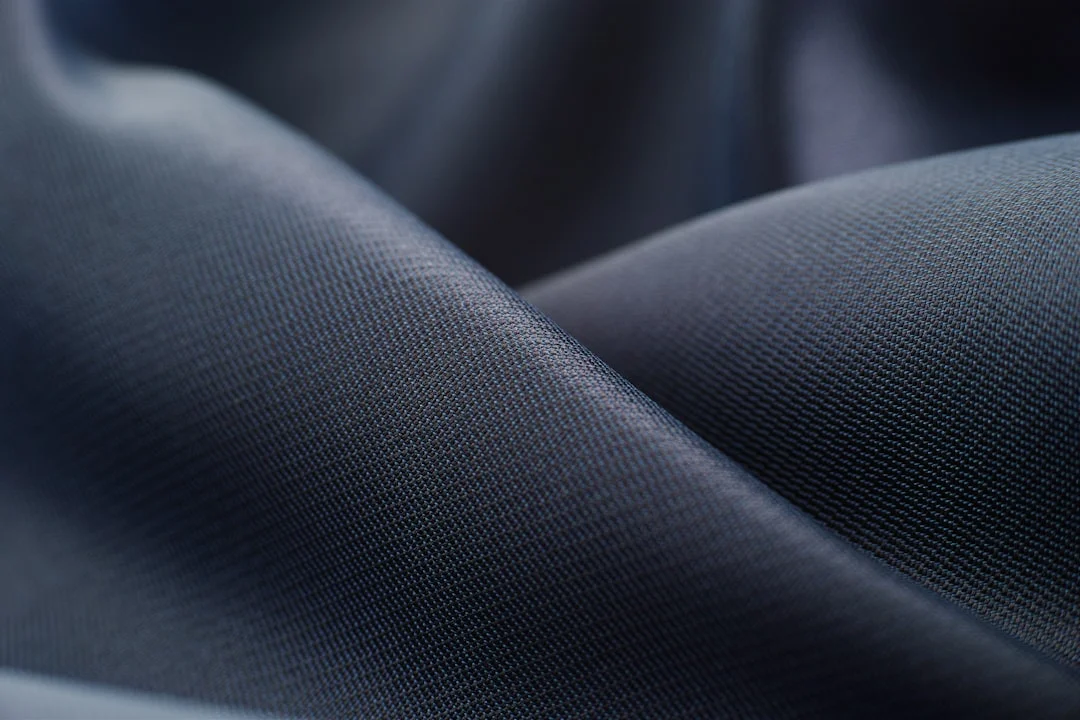
One of the most common questions we receive from apparel designers, gear manufacturers, and procurement teams is: is polyester waterproof? The short answer is no — standard polyester is not inherently waterproof. However, polyester is one of the most versatile base materials for engineering genuinely waterproof fabrics. As of 2026, the global waterproof fabric market relies heavily on polyester as a substrate precisely because it accepts coatings and laminates exceptionally well, holds dimensional stability under wet conditions, and resists mildew without special treatment. This guide breaks down exactly what standard polyester does and does not do with water, how performance is measured, and which engineered constructions deliver true waterproofing for outdoor, marine, workwear, and activewear applications.
What Polyester Actually Does with Water
Standard Polyester: Water-Resistant, Not Waterproof
Raw polyester fiber is hydrophobic by nature — its molecular structure does not readily absorb water the way cotton does. This makes it inherently water-resistant to light splashes and brief exposure, but this is not the same as waterproof.
- Water absorption rate: Standard polyester absorbs less than 0.4% of its weight in water (compared to cotton at 7–8%), meaning it dries quickly and does not become heavy when wet.
- Light rain exposure: A tightly woven polyester can shed light drizzle for a short time, but sustained rainfall or immersion will penetrate any uncoated woven or knitted structure through the interstitial spaces between yarns.
- No hydrostatic pressure resistance: Uncoated polyester has a hydrostatic head rating near 0 mm, meaning water will pass through under any meaningful pressure — including the pressure of sitting or kneeling on wet ground.
The Key Distinction: Water-Resistant vs. Waterproof
| Property | Standard Polyester | DWR-Treated Polyester | PU/TPU Coated Polyester |
| Light rain resistance | Partial | Yes | Yes |
| Sustained rain resistance | No | Limited | Yes |
| Hydrostatic head (mm) | ~0 | 500–1,500 mm | 5,000–30,000 mm |
| Seam waterproofing | No | No | With seam tape |
| Breathability | High | High | Moderate–High |
Compared to untreated cotton, standard polyester dries roughly 5× faster and sheds light moisture more effectively — but neither is a substitute for a properly engineered waterproof construction.
How Polyester Becomes Truly Waterproof: Coating and Lamination Technologies
Engineering Waterproofness into Polyester
Polyester's real advantage is how readily it bonds with waterproofing technologies. There are three primary approaches used in export-grade and wholesale fabric production as of 2026:
DWR (Durable Water Repellent) Finish
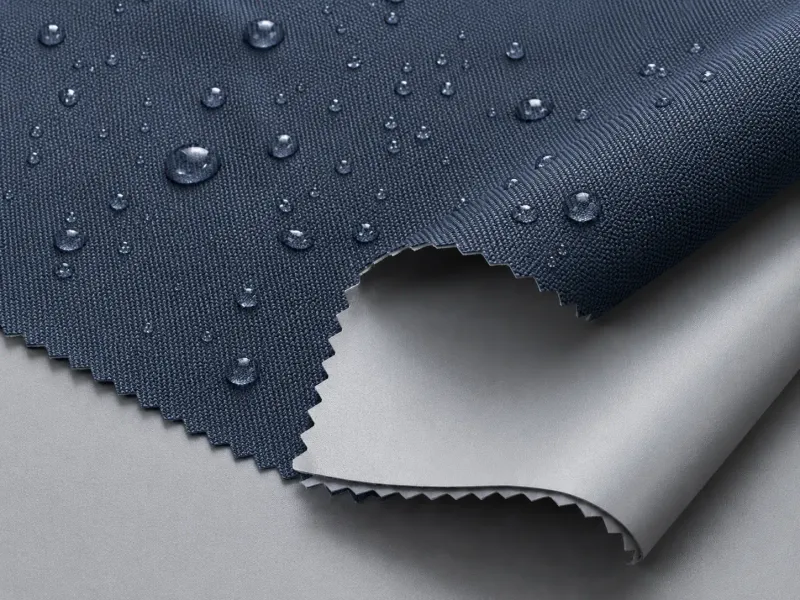
A DWR treatment creates a surface energy barrier that causes water to bead and roll off rather than penetrate the fabric structure.
- Mechanism: Fluoropolymer-free (PFC-Free) or traditional fluorocarbon chemistry bonds to the outer fiber surface.
- Performance: Effective against light-to-moderate rain; typical hydrostatic rating remains low (500–1,500 mm).
- Wash durability: DWR treatments typically last 20–50 wash cycles before reactivation or reapplication is needed.
- Best for: Softshell jackets, outdoor apparel, and applications where breathability is the primary requirement.
- Our Outdoor Shell Fabric and Eco Friendly Outdoor Fabric both carry PFC-Free DWR finishes.
PU (Polyurethane) Coating
A PU coating is applied directly to the back face of the polyester substrate, creating a continuous waterproof film.
- Waterproof rating: 5,000 mm – 10,000 mm hydrostatic head — suitable for outdoor gear, rainwear, and protective covers.
- Weight impact: Adds approximately 20–40 GSM depending on coating thickness.
- Breathability: Microporous PU coatings achieve MVTR values of 3,000–8,000 g/m²/24h.
- Available in our Waterproof Polyester Fabric range (120–250 GSM, PU or PVC coating options).
TPU Membrane Lamination
TPU lamination bonds a thin thermoplastic polyurethane film (10–60 microns) to the polyester substrate, delivering the highest waterproof performance available in textile form.
- Waterproof rating: 20,000 mm – 30,000 mm hydrostatic head — suitable for technical mountaineering, marine, and industrial applications.
- Breathability: 8,000–18,000 g/m²/24h MVTR, significantly outperforming standard PU coatings.
- Adhesion strength: Greater than 20 N/5mm, ensuring the laminate does not delaminate under repeated flexing.
- Available in our TPU Laminated Fabric and 3 Layer Waterproof Fabric (rated to 30,000 mm).
Ripstop Weave + Coating Combination
For applications requiring both tear resistance and waterproofing, a ripstop weave structure paired with PU or TPU coating delivers durability the flat weave cannot.
- Ripstop grid: 5–10 mm reinforcement pattern prevents tear propagation.
- Combined waterproof rating: 5,000–15,000 mm hydrostatic head.
- Available as Ripstop Waterproof Fabric in 80–180 GSM.
How to Read Waterproof Ratings: What the Numbers Mean
Understanding Hydrostatic Head (HH) Ratings
The industry-standard measure of waterproofness is the hydrostatic head test — a column of water in millimeters that the fabric can withstand before water passes through. Understanding these benchmarks is essential for sourcing decisions.
| HH Rating | Performance Level | Typical Application |
| 0–1,500 mm | Water-resistant | Light rain, wind jackets |
| 1,500–5,000 mm | Waterproof (entry level) | Casual rain jackets, daypacks |
| 5,000–10,000 mm | Waterproof (standard) | Hiking jackets, outdoor covers |
| 10,000–20,000 mm | Highly waterproof | Technical outerwear, tents |
| 20,000–30,000 mm | Extreme waterproof | Marine, alpine, industrial |
Breathability: The Other Side of the Equation
Waterproofness without breathability creates condensation build-up inside the garment. Breathability is measured as MVTR (Moisture Vapor Transmission Rate) in g/m²/24h.
- Standard PU coated polyester: MVTR of 3,000–8,000 g/m²/24h — adequate for moderate activity.
- TPU laminated 3-layer construction: MVTR of 10,000–18,000 g/m²/24h — suitable for high-output activities.
- As a comparison reference: an uncoated polyester mesh may achieve MVTR above 30,000 g/m²/24h but offers zero waterproofing.
Seam Sealing: Often the Weakest Point
Even a 30,000 mm rated fabric will leak at unsealed seams. For fully waterproof garments and products, taped or welded seams are mandatory. This is a construction-level decision, not a fabric-level one — buyers should specify seam treatment requirements alongside fabric specifications.
Waterproof Polyester for Specific Applications
Matching Fabric Construction to End Use
Not every application requires the same level of waterproofing. Over-engineering increases cost and weight; under-engineering leads to product failures. Here is how we approach application-specific sourcing:
Outdoor Apparel & Technical Outerwear
- Recommended construction: 3-layer TPU laminate or 2.5-layer PU membrane.
- Target HH rating: 10,000–20,000 mm minimum for reliable field performance.
- Weight range: 140–280 GSM for all-season versatility.
- Suitable fabric: Waterproof Breathable Fabric — available with PFC-Free DWR surface treatment for Outdoor Apparel brands.
Marine & Heavy-Duty Industrial
- Recommended construction: High-tenacity polyester (600D–1000D+) with heavy-duty PU or TPU coating.
- Target HH rating: 5,000–10,000 mm minimum; Grade 5 color fastness required for salt and UV exposure.
- Weight range: 280–500 GSM (marine grade).
- Suitable fabric: Marine UV Resistant Fabric — designed specifically for the Outdoor & Adventure Industry.
Sustainable / Recycled Waterproof Fabrics
As of 2026, buyer demand for recycled waterproof substrates has increased substantially in the Sustainable Fashion Industry. RPET-based waterproof fabrics now achieve performance parity with virgin polyester equivalents.
- Base material: 100% Recycled Polyester (RPET) from post-consumer PET bottles.
- Certification: GRS (Global Recycled Standard) certified with full Chain of Custody documentation.
- Weight range: 120–280 GSM, customizable.
- Suitable fabric: Recycled Polyester Fabric with DWR or PU coating applied to order.
Activewear & Sportswear
For Sportswear & Activewear applications, the waterproofing requirement is typically lighter — DWR-treated stretch fabrics that repel sweat and light rain while maintaining 4-way stretch and moisture wicking.
- Stretch: 4-way stretch with >95% shape recovery.
- Wicking performance: Rapid dry in < 30 seconds contact time.
- Suitable fabric: Moisture Wicking Stretch Fabric — 82% Polyester / 18% Elastane, OEKO-TEX certified.
Sourcing Waterproof Polyester Fabric: Wholesale & Export Considerations
What to Specify When Sourcing Waterproof Polyester
For wholesale and OEM buyers sourcing waterproof polyester fabric globally, a complete specification prevents costly mismatches. Our QC team checks each production batch against the following parameters before shipment:
Essential Specification Checklist
- Hydrostatic head (mm): Specify minimum acceptable rating for your end-use.
- MVTR (g/m²/24h): Define breathability requirement if applicable.
- Coating type: PU, TPU, or PVC — each has different hand-feel, temperature performance, and recycling profiles.
- DWR chemistry: PFC-Free (PFAS-Free) is the current industry standard for 2026 export to EU and North American markets.
- GSM range: Confirm weight tolerance (typically ±5%).
- Width: Standard rolls are 150–180 cm; marine-grade constructions up to 250 cm.
- Certification requirements: GRS for recycled content, OEKO-TEX Standard 100 for chemical safety, REACH compliance for EU market access.
Wholesale Supply Capabilities
| Parameter | Standard Range |
| Fabric width | 150 cm – 250 cm |
| Weight range | 80 GSM – 500 GSM |
| Waterproof rating | 1,500 mm – 30,000 mm |
| Coating options | PU, TPU, PVC, DWR |
| Certification | GRS, OEKO-TEX, REACH |
| Supply format | Rolled or folded, full bolt |
We supply export-quality waterproof polyester fabrics to brands and manufacturers across North America, Europe, and Asia-Pacific. Customization of coating weight, color, GSM, and certification documentation is available for wholesale orders. Explore our full Waterproof & Breathable Fabric collection for current in-stock and made-to-order options.
Frequently Asked Questions
Is polyester waterproof or just water-resistant?
Standard polyester is water-resistant, not waterproof. Its hydrophobic fiber structure causes water to bead on the surface and the fabric absorbs less than 0.4% of its weight in water — making it far better than cotton in wet conditions. However, uncoated polyester has a hydrostatic head rating near 0 mm, meaning sustained rain or water pressure will penetrate through the gaps between yarns. True waterproofing requires a coating (PU or PVC) or membrane lamination (TPU), which can raise the hydrostatic head rating to 5,000–30,000 mm depending on construction.
What is the difference between DWR-treated polyester and PU-coated polyester?
DWR (Durable Water Repellent) is a surface finish that causes water to bead and roll off — it is effective against light rain and maintains high breathability, but typically only achieves 500–1,500 mm hydrostatic head and performance degrades after 20–50 wash cycles. PU (Polyurethane) coating is applied to the back face of the fabric as a continuous film, achieving 5,000–10,000 mm hydrostatic head with sustained rain protection. PU coating reduces breathability somewhat (MVTR 3,000–8,000 g/m²/24h) but provides durable, long-term waterproofing. For maximum performance, TPU membrane lamination achieves 20,000–30,000 mm hydrostatic head with MVTR up to 18,000 g/m²/24h.
Can recycled polyester (RPET) be made waterproof?
Yes. Recycled polyester (RPET) accepts PU coatings, TPU lamination, and DWR treatments with the same performance outcomes as virgin polyester. As of 2026, GRS-certified RPET waterproof fabrics are available in 120–280 GSM with hydrostatic ratings from 5,000 mm upward, making them a viable sustainable alternative for outdoor apparel, bags, and protective covers. Full Chain of Custody (COC) documentation is available for brands requiring certified recycled content claims.
How do I choose between a 2-layer, 2.5-layer, and 3-layer waterproof construction?
The number of layers refers to how the waterproof membrane is integrated: a 2-layer construction bonds the membrane to the face fabric with a loose inner lining — lightest weight, most economical. A 2.5-layer construction adds a printed or embossed protective backing instead of a separate lining — compact and lightweight for packable garments. A 3-layer construction fully laminates face fabric, membrane, and backer into a single unit — the most durable, highest performance option with the best MVTR (10,000–18,000 g/m²/24h) and waterproof ratings up to 30,000 mm. Choose 3-layer for technical outerwear, marine, and alpine applications; 2-layer or 2.5-layer for casual and lifestyle products.
Does waterproof polyester fabric require special care to maintain its performance?
Yes. PU and TPU coated or laminated fabrics should be washed at low temperatures (typically 30°C or below) using non-bio detergent, and should not be dry-cleaned or ironed directly on the coated surface. DWR-treated polyester benefits from periodic tumble-drying on low heat (or heat gun reactivation) to restore the DWR beading effect after wash degradation. Fabric softeners and bleach should be avoided as they degrade both DWR chemistry and PU/TPU adhesion. With correct care, quality PU-coated polyester maintains its hydrostatic head rating through 50+ wash cycles.
Related Resources
Related Products (4)
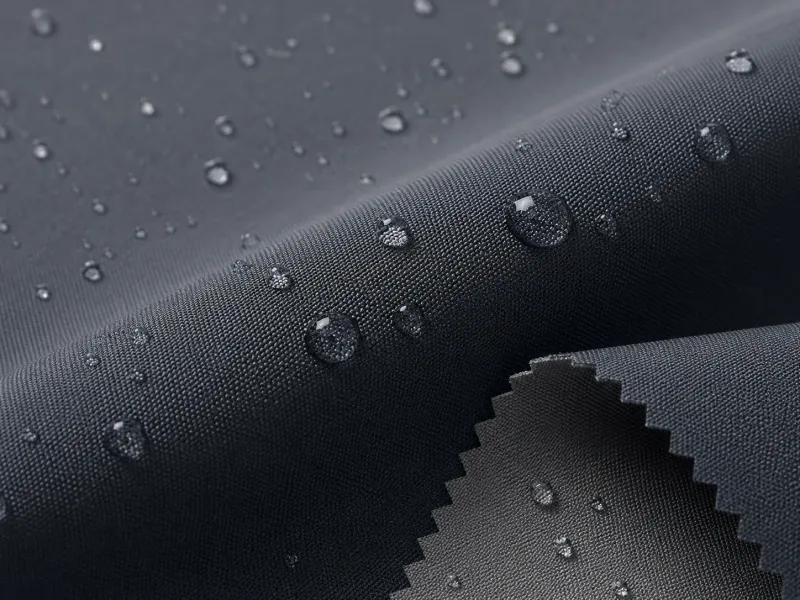
Waterproof Polyester Fabric
Durable waterproof polyester fabric designed for outdoor apparel, bags and weather-resistant textile applications.
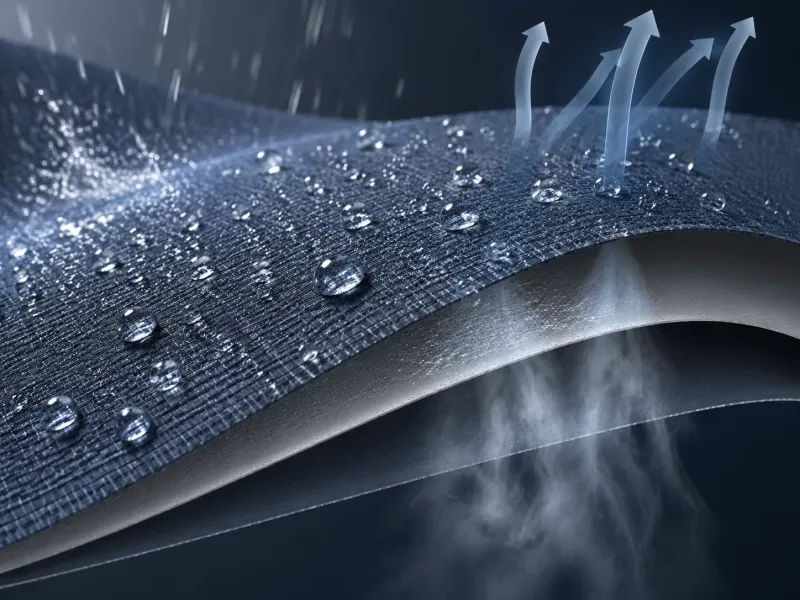
Waterproof Breathable Fabric
Advanced waterproof and breathable fabric engineered for high-performance outdoor garments.
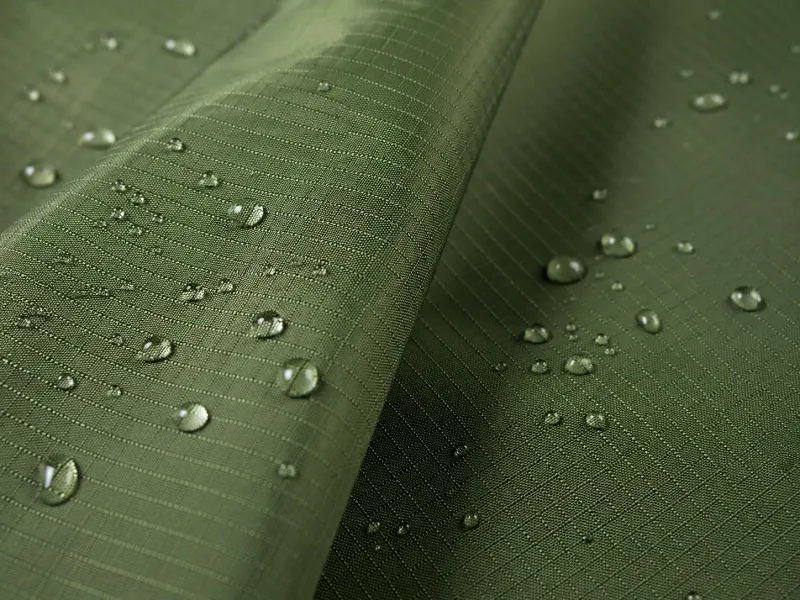
Ripstop Waterproof Fabric
Lightweight ripstop waterproof fabric with enhanced tear resistance for outdoor applications.
TPU Laminated Fabric
TPU laminated fabric providing superior waterproof performance and flexibility.
Related Categories
Related Industries
Understanding polyester's water resistance, coatings, and how to choose the right waterproof fabric for your application
Request a Waterproof Fabric Sample or Wholesale Quote