
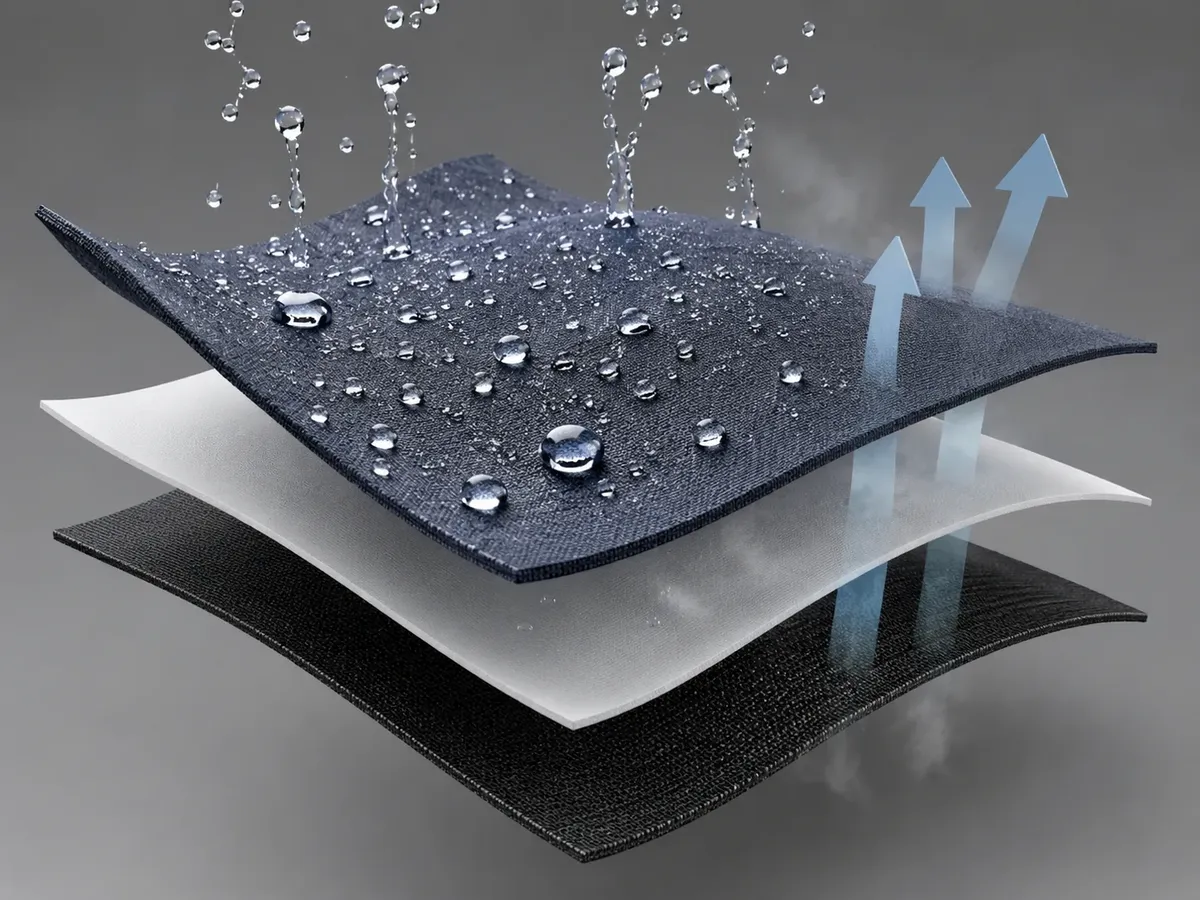
3 Layer Waterproof Fabric
Material Base
High-Density Nylon or Polyester Tricot
Weight (GSM)
180gsm - 280gsm (Customizable)
Overview
3 Layer Waterproof Fabric is an engineered composite textile constructed by bonding a durable woven face fabric, a functional waterproof-breathable membrane, and a protective inner tricot backing into a single laminate. The three-layer sandwich structure delivers reliable moisture protection on the outer surface while the membrane blocks liquid water penetration and permits water vapor transmission, keeping the wearer dry from both external precipitation and internal perspiration. This construction is designed for high-performance end uses where weather resistance, durability, and wearer comfort must be maintained simultaneously.
Key Features & Specifications
- Fabric weight: 140-180 gsm, balancing weather protection with wearability for garments and equipment that require repeated flexing and packing.
- Waterproof rating (water column): 10,000-20,000 mmH2O, providing sustained resistance against heavy rain, wind-driven moisture, and prolonged wet exposure. This performance places the material firmly within the Waterproof & Breathable Fabric category.
- Breathability (moisture vapor transmission rate): 8,000-15,000 g/m²/24h, allowing internal water vapor to escape and reducing condensation buildup during active use.
- UPF rating: 40-50+, offering effective ultraviolet protection suitable for extended outdoor exposure.
- Tensile strength: 600-900 N (warp) and 500-800 N (weft), ensuring the laminate withstands mechanical loading and repeated stress without delamination.
- Tear strength: 25-45 N, providing resistance to snagging and propagation of tears, comparable to Ripstop Waterproof Fabric constructions that use reinforcement grids.
- Dimensional shrinkage: less than 3% after standard laundering, maintaining garment fit and cut-panel accuracy through the product lifecycle.
- Operating temperature range: -30°C to +60°C, retaining membrane flexibility and adhesion performance across cold-weather and warm-weather conditions.
These specifications are consistent with premium technical shells and align this material with related options such as Waterproof Breathable Fabric and TPU Laminated Fabric within our product range.
Material & Construction
The outer face layer is typically woven from high-tenacity polyester or nylon filament yarns in a plain, twill, or ripstop weave, delivering abrasion resistance and structural stability. The face fabric is treated with a durable water repellent (DWR) finish that causes surface water to bead and run off, preventing saturation of the outer layer and preserving breathability. Common face constructions use 20D-75D yarns depending on the required weight and hand feel, with ripstop grids incorporated where enhanced tear resistance is specified.
The central functional layer is a microporous or hydrophilic membrane, most often based on TPU (thermoplastic polyurethane) or PU lamination technology. This membrane is the core barrier: its micro-scale pore structure or monolithic hydrophilic chemistry blocks liquid water molecules while allowing smaller water vapor molecules to pass through, which is the defining mechanism of the Waterproof & Breathable Fabric category. TPU Laminated Fabric membranes are favored for their environmental profile, recyclability, and consistent bonding performance across large production runs.
The inner layer is a lightweight knitted tricot backing laminated to the membrane. This backing protects the membrane from abrasion, oils, and mechanical damage during wear, improves next-to-skin comfort, and contributes to the fabric's overall dimensional stability. The three layers are joined using either full-surface adhesive lamination or dot/gravure lamination, with dot lamination generally preserving higher breathability and softer drape. Seam-sealing tape compatibility is maintained across the laminate so that finished garments can achieve fully waterproof construction at stitched seams.
This layered approach differentiates the fabric from single-layer or two-layer alternatives such as Waterproof Polyester Fabric and standard Outdoor Shell Fabric, where the membrane or coating may be exposed or only partially protected. The bonded three-layer format offers greater durability and is suited to demanding, high-cycle applications.
Applications
- Outdoor Apparel: Hardshell jackets, rain jackets, ski and snowboard outerwear, hiking pants, and mountaineering shells that require both waterproof integrity and breathability during aerobic activity. This makes the fabric a core material for the Outdoor & Adventure Industry.
- Workwear & Protective Clothing: All-weather uniforms, foul-weather gear, high-visibility rainwear, and protective outer garments for personnel working in exposed environments, serving the requirements of the Industrial Safety & Workwear Industry.
- Technical outdoor equipment: Backpack covers, tent flysheets, gaiters, and equipment shells that demand a robust, abrasion-resistant waterproof surface with dimensional stability.
- Military and tactical gear: Field jackets, wet-weather layers, and load-bearing accessories requiring durable weather protection across wide temperature ranges.
- Marine and fishing apparel: Deck jackets, bibs, and protective garments exposed to continuous spray, humidity, and salt-water conditions.
- Cycling and motorsport outerwear: Wind- and rain-resistant riding jackets and trousers where breathability during exertion is essential to wearer comfort.
The versatility of the three-layer construction allows it to substitute for or complement other technical textiles such as Ripstop Waterproof Fabric in reinforcement-critical designs and Waterproof Breathable Fabric in comfort-critical garment programs.
Customization & Wholesale
FuncFabric supplies 3 Layer Waterproof Fabric on a wholesale and bulk basis with production and finishing options configured to buyer specifications.
- Minimum order quantity: standard MOQ is 1,000-3,000 meters per color or specification for custom orders, with lower trial quantities available for sampling and pre-production evaluation.
- Custom width: standard roll widths of 145 cm and 150 cm, with alternative widths available on request to optimize marker efficiency and cut yield.
- Custom colors: full color matching to Pantone or buyer-supplied physical standards, with solution-dyed and piece-dyed options available depending on volume and fastness requirements.
- Printing and finishing: camouflage, all-over prints, and custom patterns via sublimation or transfer printing, plus finishing options including anti-static, flame-retardant, and enhanced DWR treatments.
- Membrane and weight configuration: selectable membrane type (TPU or PU), waterproof and breathability targets, face fabric denier, and total laminate weight to match the intended application, whether Outdoor Apparel or Workwear & Protective Clothing.
- OEM and ODM services: full private-label production, custom laminate development, roll packaging, labeling, and technical documentation to support buyer brand programs.
- Lead time: 15-30 days for standard specifications following sample approval, with lead time varying by order volume, color count, and finishing complexity.
- Export and compliance: worldwide export experience with support for OEKO-TEX and REACH compliance, standard export packaging on rolls in waterproof wrapping, and documentation for international shipment by sea and air.
Buyers sourcing across the Waterproof & Breathable Fabric range can combine this product with complementary materials such as Waterproof Polyester Fabric, TPU Laminated Fabric, and Outdoor Shell Fabric within a single order to consolidate logistics and streamline supplier management. For technical data sheets, physical swatches, and volume pricing, contact FuncFabric to initiate a sampling and quotation process tailored to your production requirements.
What is the difference between 2-layer, 2.5-layer and 3-layer waterproof fabric?
2-layer bonds a membrane to the face fabric with a separate hanging liner — cheapest, for casual rain jackets. 2.5-layer adds a printed protective layer for light, packable shells. 3-layer sandwiches the membrane between face and backer — toughest and most breathable, our pick for technical outerwear.
What hydrostatic head do I need for outdoor waterproof fabric?
For real weather, aim for 10,000mm hydrostatic head or higher, paired with an MVTR of 10,000+ g/m2/24h so the fabric also breathes. A high waterproof rating with poor breathability leaves the wearer wet from sweat, so treat both numbers as a pair, not one in isolation.
Request 3 Layer Waterproof Fabric Specifications
Need custom widths, colors, or tensile requirements? Our engineering team can configure this product to match your exact B2B specifications.
Request a Technical Quote