
Ripstop waterproof fabric has become the go-to technical textile for outdoor apparel designers and manufacturers who need a material that genuinely performs in the field. As of 2026, the combination of a reinforced ripstop weave structure with high-performance PU or TPU waterproof coatings delivers a balance of tear resistance, weather protection, and packability that no single-layer fabric can match. Whether you are sourcing shells for hiking jackets, rain gear, or multi-day expedition wear, understanding the engineering behind ripstop waterproof fabric helps you specify the right material — and avoid costly mis-selections. At FuncFabric, we supply ripstop waterproof fabric globally to outdoor brands, wholesalers, and OEM manufacturers, and we prep bulk rolls week after week for some of the most demanding climates on the planet.
The Ripstop Weave: Built-In Tear Resistance
What Is a Ripstop Weave?
A ripstop weave integrates a reinforcement grid of thicker interlocking threads at regular intervals — typically every 5mm to 10mm — into an otherwise lightweight base fabric. This grid acts as a mechanical barrier that arrests any tear before it can propagate across the fabric panel.
Why It Matters for Outdoor Use
Conventional plain-weave fabrics, once nicked by a sharp rock face or snag, can tear continuously under stress. Ripstop geometry changes that dynamic entirely. In field conditions — scrambling on scree, brushing through dense undergrowth, or contact with crampon edges — tear propagation is one of the primary failure modes. The reinforcement grid intercepts the tear at every grid intersection, limiting damage to a single 5–10mm cell.
Ripstop vs. Plain Weave: A Practical Comparison
| Property | Ripstop Weave | Plain Weave |
| Tear propagation | Arrested at each grid node | Unrestricted once initiated |
| Weight penalty | Minimal (~5–8% heavier) | Baseline |
| Durability in abrasive conditions | High | Moderate |
| Visual pattern | Visible grid (5–10mm) | Smooth |
| Common use | Shells, technical jackets | Liners, casual wear |
Compared to plain-weave polyester shells of equivalent GSM, ripstop constructions consistently outperform on tear resistance without a meaningful weight penalty — making them the current industry standard for serious outdoor shell fabrics as of 2026.
Waterproof Performance: Ratings, Coatings, and What the Numbers Mean
Understanding Hydrostatic Head Ratings
Waterproof performance in technical fabrics is measured by hydrostatic head (HH) — the height of a water column (in millimetres) a fabric can resist before water penetrates. Higher numbers mean greater waterproofing.
FuncFabric Ripstop Waterproof Fabric Ratings
| Application | Recommended HH Rating | Typical Use Case |
| Light rain jackets / day hiking | **5,000mm** | Urban/trail use, light showers |
| 3-season hiking shells | **10,000mm** | Sustained rain, moderate conditions |
| Alpine / expedition outerwear | **15,000mm** | Heavy rain, snow, high-wind environments |
Our Ripstop Waterproof Fabric is rated from 5,000mm up to 15,000mm hydrostatic head, covering the full spectrum from entry-level to expedition-grade outdoor apparel.
PU vs. TPU Coatings
The coating type applied to the ripstop base fabric directly affects performance, durability, and sustainability profile:
- PU (Polyurethane): The most widely used coating. Delivers reliable waterproofing, good flexibility, and cost efficiency. Suitable for the majority of outdoor shell applications.
- TPU (Thermoplastic Polyurethane): Higher durability, better resistance to hydrolysis over time, and more compatible with recycling streams. Preferred for premium and export-quality garments targeting European and North American markets.
We apply DWR (Durable Water Repellent) surface treatment as a complementary layer — PFC-free options are available to meet current EU and North American environmental standards, which have tightened significantly since 2023.
Breathability: Why Waterproof Alone Is Not Enough
The Breathability Requirement
A fully sealed waterproof shell that traps moisture vapor next to the skin creates a clammy, uncomfortable microclimate — defeating much of the purpose of performance outdoor apparel. Breathability, measured by MVTR (Moisture Vapor Transmission Rate) in g/m²/24h, quantifies how efficiently the fabric allows body vapor to escape outward.
Ripstop Waterproof Fabric MVTR Range
Our ripstop waterproof fabric delivers an MVTR of 3,000 to 8,000 g/m²/24h, depending on coating weight and construction. This range is appropriate for:
- Trail running and fast-paced hiking where sweat output is high
- Multi-layer systems where breathability is shared across garment layers
- Conditions where moderate-to-high activity levels are sustained
For applications demanding higher MVTR — such as aerobic alpine climbing — our Waterproof Breathable Fabric with 10,000–20,000 g/m²/24h MVTR or 3 Layer Waterproof Fabric at 10,000–18,000 g/m²/24h provide an upgrade path within the same supply chain.
Breathability vs. Waterproof Rating Trade-Off
| Fabric Type | Waterproof (HH) | MVTR (g/m²/24h) | Best For |
| Ripstop Waterproof Fabric | 5,000–15,000mm | 3,000–8,000 | Shells, casual outdoor |
| Waterproof Breathable Fabric | 10,000–20,000mm | 5,000–15,000 | Active outdoor, hiking |
| 3 Layer Waterproof Fabric | 20,000–30,000mm | 10,000–18,000 | Alpine, expedition |
Choosing the right point on this curve is a core part of our sourcing consultation process — we specify based on end-use activity level, not just garment category.
Weight, Packability, and GSM Selection for Outdoor Apparel
Weight Range and What It Means
Ripstop waterproof fabric is available from 80gsm to 180gsm — one of the lightest ranges available among waterproof shell fabrics. This low weight-to-performance ratio is a primary reason outdoor apparel brands favour ripstop constructions for packable shells, ultralight wind-jackets, and emergency rain gear.
GSM Selection Guide
| GSM Range | Characteristics | Recommended Application |
| **80–100gsm** | Ultra-lightweight, maximum packability | Ultralight shells, emergency rain covers |
| **100–130gsm** | Balanced weight and durability | Day hiking, trail running jackets |
| **130–180gsm** | Enhanced durability, abrasion resistance | Technical mountaineering, expedition shells |
Base Material: Polyester vs. Nylon Ripstop
- 100% Polyester Ripstop: Lower weight, excellent dimensional stability, more economical. Preferred for volume outdoor and activewear orders. Recycled RPET options available under GRS certification.
- Nylon Ripstop: Superior abrasion resistance and a softer hand feel. Preferred for premium and export-quality technical shells destined for North American and European markets.
For brands with sustainability mandates, our ripstop waterproof fabric in recycled polyester (RPET) base aligns directly with programmes certified under the Global Recycled Standard (GRS), a growing requirement across the outdoor & adventure industry as of 2026.
How to Specify Ripstop Waterproof Fabric for Your Outdoor Apparel Line
Step-by-Step Specification Process
We work through the following checklist with every new outdoor apparel client to ensure the fabric specification is correct before bulk production:
- 1. Define end-use activity level — sedentary (touring, travel) vs. aerobic (hiking, running) determines the MVTR target
- 2. Set the waterproof rating — match hydrostatic head to the wettest conditions the garment will encounter in use
- 3. Choose base fiber — polyester for economy and recyclability; nylon for premium hand-feel and abrasion resistance
- 4. Select GSM — lower for packable/ultralight; higher for technical durability
- 5. Specify coating type — PU for cost efficiency; TPU for longevity and recyclability compliance
- 6. Confirm DWR standard — PFC-free is now the default for EU export orders
- 7. Set ripstop grid size — standard 5mm–10mm grid; finer grids for lightweight applications
MOQ and Wholesale Supply
We supply ripstop waterproof fabric in bulk rolls to outdoor apparel brands, OEM manufacturers, and fabric distributors globally. Our export-quality production serves North America, Europe, and Asia-Pacific markets. Our QC checks each batch against hydrostatic head, MVTR, and dimensional stability before shipment.
Related Fabrics Worth Evaluating
If your product range spans multiple performance tiers, consider pairing ripstop waterproof fabric with:
- Outdoor Shell Fabric — ripstop and softshell constructions, 100–300gsm, 100% windproof
- TPU Laminated Fabric — 20,000–30,000mm HH, 8,000–18,000 g/m²/24h MVTR for premium tier
- Eco Friendly Outdoor Fabric — GRS certified, PFC-free DWR, UPF 50+, for sustainability-forward collections
Frequently Asked Questions
What hydrostatic head rating do I need for outdoor apparel ripstop waterproof fabric?
It depends on the activity and conditions. A rating of 5,000mm is adequate for light rain and casual outdoor use. For 3-season hiking and sustained rain, 10,000mm is the practical minimum. Expedition and alpine shells should be specified at 15,000mm or above. Our Ripstop Waterproof Fabric covers the full 5,000mm–15,000mm range, and we can help you match the correct rating to your end-use before committing to bulk.
How does the ripstop grid prevent tearing in outdoor conditions?
The ripstop weave integrates reinforcing threads at 5mm–10mm intervals across both warp and weft directions. When a tear is initiated — by a snag, sharp edge, or abrasion — the reinforcement grid intercepts it at the nearest grid node, limiting propagation to a single 5–10mm cell. This is fundamentally different from plain-weave fabrics, where a tear can run the full length of a panel under stress. For outdoor apparel exposed to rock, brush, and pack hardware, this structural containment is a critical durability advantage.
Is ripstop waterproof fabric breathable enough for active outdoor use?
Ripstop Waterproof Fabric delivers an MVTR of 3,000–8,000 g/m²/24h, which is suitable for moderate-activity outdoor use and multi-layer garment systems. For high-aerobic activities like trail running or alpine climbing where vapor output is significantly higher, upgrading to our Waterproof Breathable Fabric (5,000–15,000 g/m²/24h) or 3 Layer Waterproof Fabric (10,000–18,000 g/m²/24h) provides the additional breathability headroom. We can supply samples across all three tiers for comparative wear testing.
Can ripstop waterproof fabric be sourced in recycled or sustainable versions?
Yes. We offer ripstop waterproof fabric with a 100% Recycled Polyester (RPET) base, certified under the Global Recycled Standard (GRS) with full chain-of-custody documentation. PFC-free DWR coating is available as the default for these versions, aligning with EU chemical regulations and the sourcing requirements of most major outdoor apparel sustainability programmes as of 2026. This option is directly comparable to our standard ripstop waterproof fabric in performance, with no meaningful trade-off in waterproof rating or MVTR.
What is the difference between PU and TPU coating on ripstop waterproof fabric?
PU (Polyurethane) coating is the most widely used option — it delivers reliable waterproofing, good flexibility, and is well-suited to the majority of outdoor apparel applications. TPU (Thermoplastic Polyurethane) is a higher-durability alternative with better resistance to hydrolysis over time and improved compatibility with textile recycling processes. For export-quality garments targeting European or North American premium outdoor markets, TPU is increasingly the preferred specification. Both options are available across our ripstop waterproof fabric range.
Related Resources
Related Products (4)
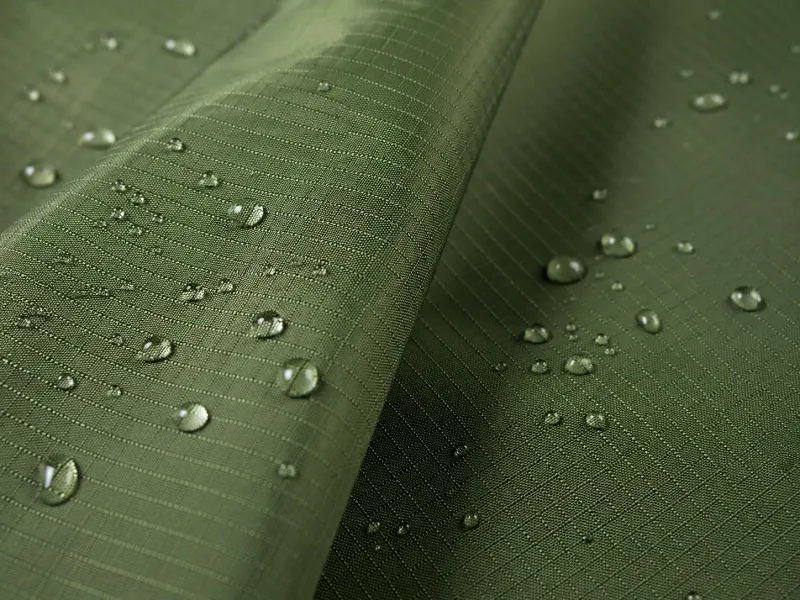
Ripstop Waterproof Fabric
Lightweight ripstop waterproof fabric with enhanced tear resistance for outdoor applications.
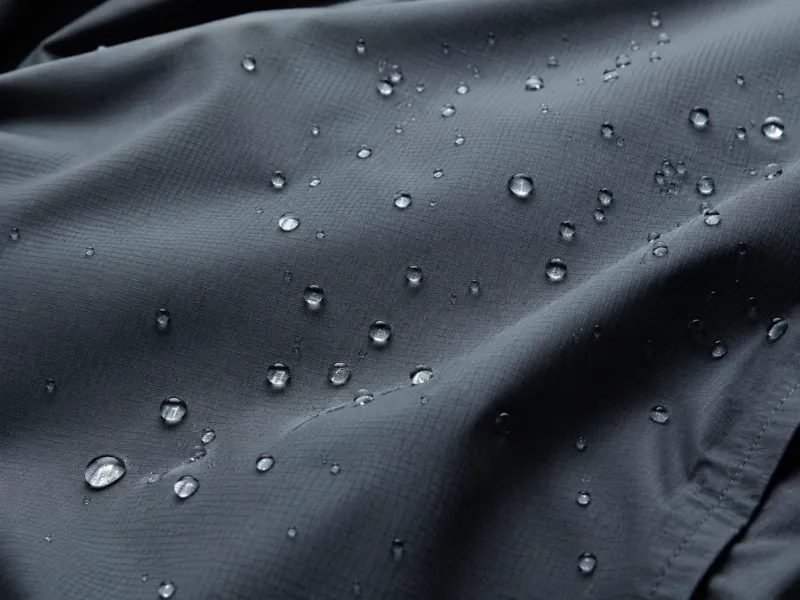
Outdoor Shell Fabric
Weather-resistant shell fabric developed for outdoor jackets and protective outerwear.
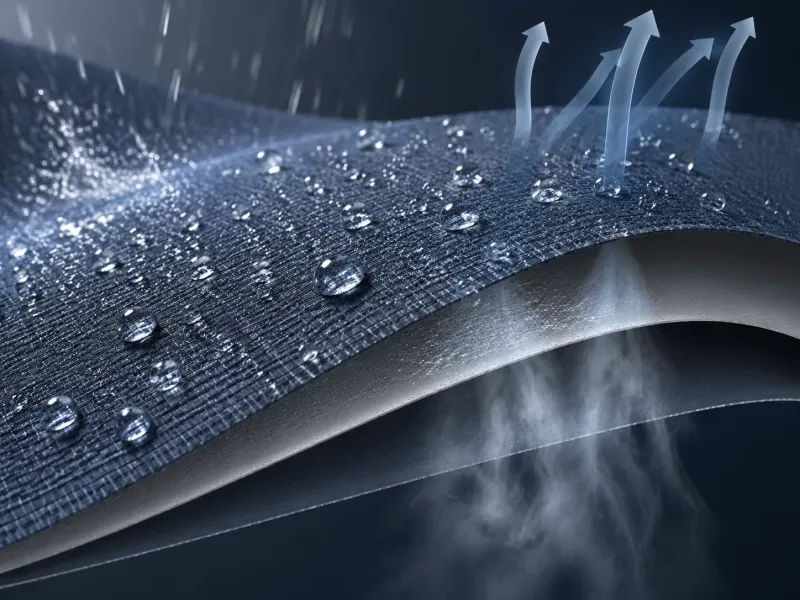
Waterproof Breathable Fabric
Advanced waterproof and breathable fabric engineered for high-performance outdoor garments.
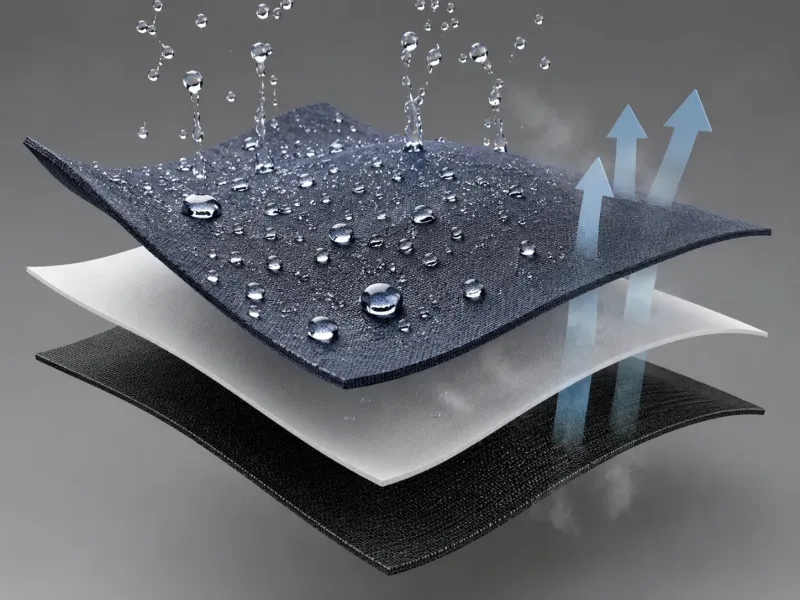
3 Layer Waterproof Fabric
Premium 3-layer waterproof fabric for professional outdoor and technical apparel.
Related Applications
Related Industries
Engineering-grade protection combining tear resistance, waterproofing, and breathability for demanding outdoor use
Request Ripstop Waterproof Fabric Samples Today