
Not all waterproof polyester is equal — and specifying the wrong hydrostatic head rating is one of the most common and costly mistakes in outdoor apparel development. A light rain jacket requires a fundamentally different waterproof spec than a mountaineering hardshell or a three-season trekking shell. As of 2026, the industry has settled on clear performance tiers, from 1,500mm for casual urban rainwear through to 20,000mm–30,000mm for expedition-grade alpine garments. This guide breaks down exactly what waterproof rating polyester fabric needs for each outdoor apparel category, what the numbers actually mean under real field conditions, and how coating type — PU, TPU, or membrane laminate — affects both waterproofing and breathability. Whether you are a brand sourcing fabric in bulk or a designer finalizing technical specifications, understanding these thresholds will help you select the right fabric the first time.
What Does Waterproof Rating (Hydrostatic Head) Actually Mean?
Understanding Hydrostatic Head (HH) Testing
Waterproof rating is measured in millimeters (mm) using a hydrostatic head test (ISO 811 / AATCC 127). A column of water is applied to a fabric sample; the height at which water begins to penetrate defines the rating. The higher the number, the greater the water pressure the fabric can resist before leaking.
What the Numbers Mean in Practice
| Rating (mm HH) | Real-World Pressure Equivalent | Typical Outdoor Condition |
| 1,500 mm | Light sitting pressure | Light drizzle, casual urban use |
| 3,000 mm | Moderate rain exposure | Hiking in moderate rain |
| 5,000 mm | Sustained heavy rain | Trail running, day hiking |
| 10,000 mm | Kneeling in wet snow | All-weather hiking, skiing |
| 15,000 mm | Extended wet-snow exposure | Technical skiing, mountaineering |
| 20,000–30,000 mm | Expedition-level pressure | Alpine climbing, prolonged storm |
Key distinction: hydrostatic head measures static water pressure, not dynamic rain impact. A garment rated at 5,000mm will resist moderate rain effectively, but seam construction, zippers, and DWR surface treatment all influence real-world performance equally as much as the base fabric rating.
- Fabrics rated below 1,500mm are classified as water-resistant, not waterproof — a critical distinction for labeling compliance.
- The current industry standard minimum for an outdoor apparel garment marketed as "waterproof" is 5,000mm, as of 2026.
- For wholesale and export orders, buyers in North America and Europe typically require test reports from ISO 811 or AATCC 127 to confirm fabric compliance.
Recommended Waterproof Ratings by Outdoor Apparel Category
Matching Fabric Rating to End-Use Application
We supply fabric across every outdoor apparel tier and see the spec decisions that lead to returns — and the ones that don't. The single most common error is under-specifying for the activity level. Below is the framework we use when guiding bulk buyers.
| Apparel Category | Minimum Recommended HH | Preferred HH Range | Typical Coating |
| Urban rainwear / casual jacket | 1,500 mm | 1,500–3,000 mm | PU Coated Polyester |
| Hiking jacket / trail shell | 5,000 mm | 5,000–10,000 mm | PU or TPU |
| Ski jacket / snowboard shell | 10,000 mm | 10,000–15,000 mm | TPU Laminate |
| Mountaineering / alpine hardshell | 20,000 mm | 20,000–30,000 mm | 3-Layer TPU Membrane |
| Packable rain jacket | 3,000 mm | 3,000–5,000 mm | Lightweight PU |
| Softshell (wind/water resistant) | 500–1,500 mm | — | DWR Only |
Why Polyester is the Dominant Base Fabric
Polyester is the base of choice for waterproof outdoor apparel for three reasons:
- Dimensional stability: Polyester retains its structure under PU and TPU lamination without distorting, unlike some nylon constructions.
- Weight efficiency: At 120gsm–250gsm, waterproof polyester delivers protection without bulk — critical for packable and layering applications.
- Coating adhesion: PU and TPU bonds to high-density polyester weaves with adhesion strength exceeding 20 N/5mm, ensuring delamination is not a field failure mode under normal use.
Compared to waxed cotton or heavy PVC-coated fabrics, modern coated polyester cuts garment weight by roughly 40–60% while maintaining equivalent or superior waterproof performance — a meaningful advantage for export-focused active outdoor brands.
Coating Types: PU vs TPU vs 3-Layer Membrane
The Three Main Waterproofing Technologies for Polyester
Choosing the coating type is as important as choosing the HH rating. Each technology delivers a different balance of waterproofing, breathability, weight, and cost profile.
PU (Polyurethane) Coating
- Waterproof range: 5,000mm – 10,000mm (standard constructions)
- Breathability (MVTR): 3,000 – 8,000 g/m²/24h
- Weight: 120gsm – 250gsm
- Best suited for: day hiking, trail running, casual outdoor use
- PU coating is applied directly to the fabric back; it is the most widely used and cost-efficient method for mid-tier outdoor apparel.
TPU (Thermoplastic Polyurethane) Laminate
- Waterproof range: 20,000mm – 30,000mm
- Breathability (MVTR): 8,000 – 18,000 g/m²/24h
- Membrane thickness: 10–60 microns
- Best suited for: skiing, alpine climbing, expedition outerwear
- TPU membranes are bonded rather than coated, delivering superior waterproof performance with significantly higher breathability than standard PU.
3-Layer Laminate Construction
- Waterproof range: 20,000mm – 30,000mm
- Breathability (MVTR): 10,000 – 18,000 g/m²/24h
- Construction: Face fabric + micro-porous PU or TPU film (15–30 microns) + durable backer
- Weight: 180gsm – 280gsm
- Best suited for: hardshell jackets, mountaineering, professional outdoor gear
| Technology | HH Rating | MVTR | Weight Range | Best For |
| PU Coating | 5,000–10,000mm | 3,000–8,000 | 120–250gsm | Hiking, casual outdoor |
| TPU Laminate | 20,000–30,000mm | 8,000–18,000 | 150–300gsm | Skiing, alpine |
| 3-Layer Laminate | 20,000–30,000mm | 10,000–18,000 | 180–280gsm | Hardshell, expedition |
Critical note: breathability (MVTR) matters as much as waterproof rating for active outdoor apparel. A fabric rated at 20,000mm HH with an MVTR below 5,000 g/m²/24h will cause excessive internal moisture buildup during high-output activities — a common complaint in low-grade waterproof shells.
DWR Finish: The Surface Layer That Works With Your Rating
What DWR Does — and What It Doesn't
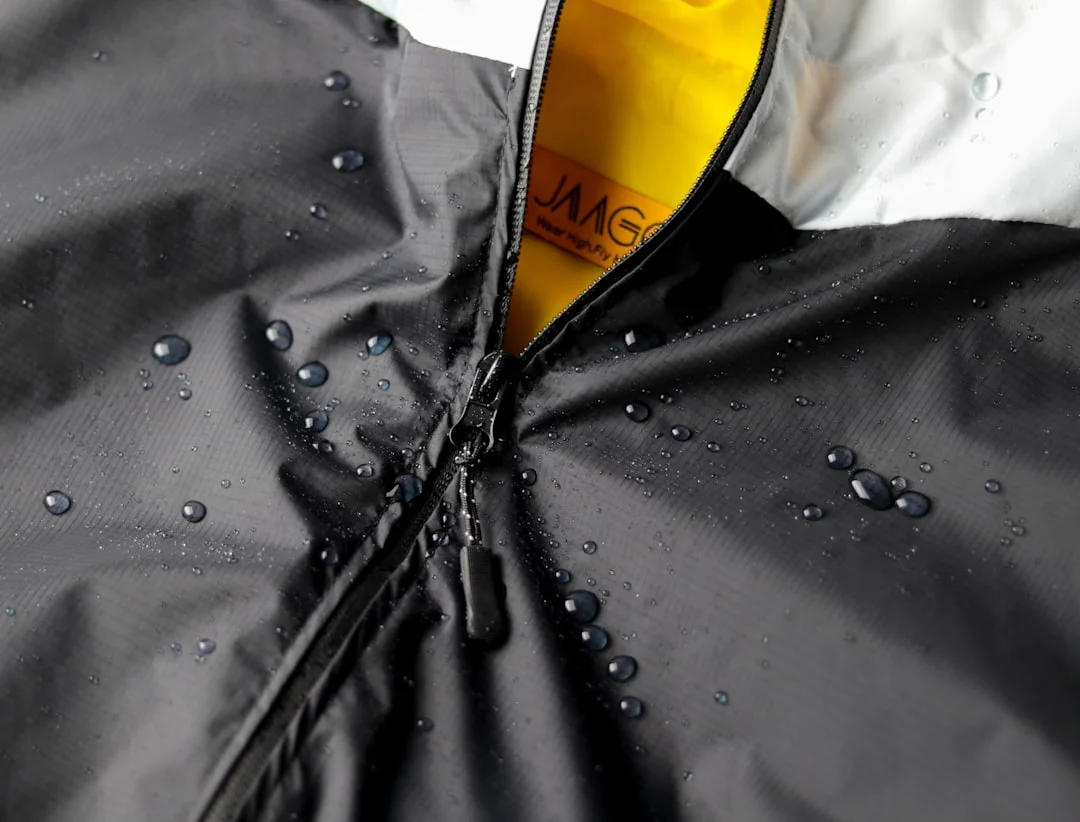
Durable Water Repellent (DWR) is a surface finish applied to the outer face of waterproof fabric. It causes water to bead and roll off rather than saturate the face fabric, which preserves the breathability of the membrane or coating underneath.
DWR does not waterproof a garment on its own. It is a complementary treatment — without an adequate hydrostatic head rating in the base fabric or coating, DWR alone will not prevent water penetration under sustained pressure.
DWR Specifications to Know
- Standard DWR: provides initial beading performance, rated by AATCC 22 (spray test, 0–100 scale); a rating of 80 or above is considered adequate for outdoor apparel.
- PFC-Free DWR: as of 2026, the outdoor industry is transitioning away from PFAS-based DWR due to EU REACH regulations and California legislation. PFC-free alternatives now achieve comparable performance ratings.
- Wash durability: standard DWR finishes degrade after approximately 20–30 wash cycles; advanced formulations extend this to 50+ cycles.
Why DWR Matters for Waterproof Polyester
When face fabric becomes "wet out" (saturated at the surface), the membrane's breathability is reduced by up to 50% — meaning the garment still won't leak, but moisture vapor from the wearer can no longer escape efficiently. Maintaining DWR performance is essential for comfort during aerobic outdoor activity.
- Our Eco Friendly Outdoor Fabric uses a PFC-Free DWR surface finish aligned with current export compliance requirements for North American and European markets.
- Outdoor Shell Fabric is available with PFC-Free DWR in 150cm–180cm widths, suitable for cut-and-sew production.
Sourcing Waterproof Polyester Fabric: Key Specifications for Buyers
What to Specify When Ordering in Bulk
When sourcing waterproof polyester for outdoor apparel in wholesale or export quantities, the following specification checklist ensures your garments meet end-use performance requirements and pass retail compliance checks.
Essential Specification Checklist
- Hydrostatic Head (HH): specify minimum rating in mm — do not accept "waterproof" claims without test documentation (ISO 811 or AATCC 127)
- MVTR (Breathability): specify g/m²/24h requirement — minimum 5,000 for active outdoor use, 10,000+ for high-output applications
- Coating type: PU, TPU, or 3-layer laminate — each has different performance and weight profiles
- DWR compliance: confirm PFC-Free or standard, with wash durability rating
- Fabric weight (GSM): 120gsm–250gsm for lightweight to mid-weight applications; 180gsm–300gsm for technical hardshells
- Width: standard export rolls are 150cm–180cm
- Test reports: request ISO 811, AATCC 127, and MVTR test certificates with each batch
FuncFabric Waterproof Polyester Range
| Product | HH Rating | MVTR | GSM Range | Coating |
| [Waterproof Polyester Fabric](/products/waterproof-polyester-fabric/) | 5,000–10,000mm | 3,000–8,000 | 120–250gsm | PU or PVC |
| [Ripstop Waterproof Fabric](/products/ripstop-waterproof-fabric/) | 5,000–15,000mm | 3,000–8,000 | 80–180gsm | PU or TPU |
| [Waterproof Breathable Fabric](/products/waterproof-breathable-fabric/) | 10,000–20,000mm | 5,000–15,000 | 140–280gsm | PU or TPU Membrane |
| [TPU Laminated Fabric](/products/tpu-laminated-fabric/) | 20,000–30,000mm | 8,000–18,000 | 150–300gsm | TPU |
| [3 Layer Waterproof Fabric](/products/3-layer-waterproof-fabric/) | 20,000–30,000mm | 10,000–18,000 | 180–280gsm | 3-Layer PU/TPU |
All products are available in export-quality rolled or folded format, with full batch test reports supplied. We produce for brands serving North America, Europe, and global outdoor retail channels.
Frequently Asked Questions
What is the minimum waterproof rating for outdoor apparel to be called waterproof?
The current industry standard minimum for a garment to be marketed as waterproof is 5,000mm hydrostatic head (HH), as of 2026. Fabrics rated below 1,500mm are classified as water-resistant only. For active outdoor use — hiking, trail running, skiing — a minimum of 5,000mm is recommended, with 10,000mm or above preferred for sustained heavy rain or snow exposure. Test results should be based on ISO 811 or AATCC 127 to be accepted by major retail buyers in North America and Europe.
What waterproof rating does a ski jacket or snowboard shell need?
Ski jackets and snowboard shells require a minimum of 10,000mm HH, with the performance tier starting at 15,000mm for all-day, high-activity use. Premium ski outerwear typically specifies 20,000mm–30,000mm using TPU laminate or 3-layer construction, combined with an MVTR of at least 10,000 g/m²/24h to manage sweat vapor during aerobic activity. Fabrics in the sub-10,000mm range will not hold up against kneeling in wet snow or prolonged storm exposure.
Is polyester or nylon better as a base for waterproof outdoor fabric?
Both polyester and nylon perform well as base fabrics for waterproof outdoor apparel, and the choice depends on the application. Polyester offers better UV resistance, lower moisture absorption, and is generally more cost-effective for high-volume production. Nylon offers superior abrasion resistance and a slightly softer hand feel. For most outdoor apparel — jackets, shells, pants — high-density polyester with PU or TPU coating delivers a strong performance-to-weight ratio at 120gsm–250gsm, making it the dominant choice globally. Ripstop constructions in both materials add tear resistance without significant weight penalty.
What is the difference between a waterproof rating and a DWR treatment?
The waterproof rating (hydrostatic head, measured in mm) reflects the performance of the fabric's coating or membrane — it is the primary barrier against water penetration under pressure. DWR (Durable Water Repellent) is a surface finish applied to the outer face of the fabric that causes water to bead and roll off, preventing the face fabric from becoming saturated. DWR does not replace the waterproof membrane; it works alongside it. When DWR degrades after repeated washing (typically after 20–30 cycles for standard finishes), the face fabric can "wet out," which reduces breathability by up to 50% even though the membrane is still intact. PFC-Free DWR formulations are now standard for export-focused brands targeting EU and North American markets.
Can I get waterproof polyester fabric with a breathability spec for active outdoor use?
Yes. Waterproof and breathability are not mutually exclusive — the key is selecting the right construction. Our Waterproof Breathable Fabric is rated at 10,000mm–20,000mm HH with an MVTR of 5,000–15,000 g/m²/24h, suitable for active hiking and trail use. For higher-output applications like alpine climbing or ski touring, TPU Laminated Fabric and 3 Layer Waterproof Fabric deliver 20,000mm–30,000mm HH combined with 8,000–18,000 g/m²/24h MVTR. For bulk or wholesale orders, we supply full ISO 811 and MVTR test documentation with each production batch.
Related Resources
Related Products (3)
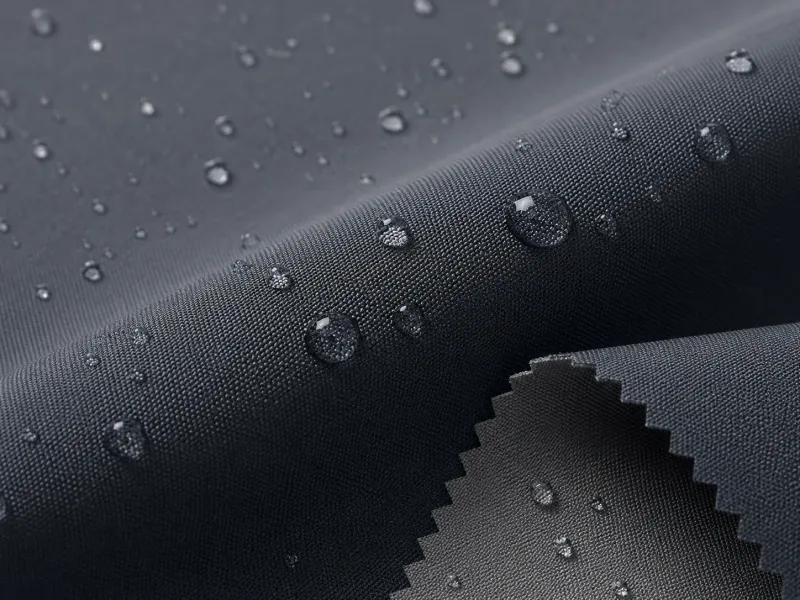
Waterproof Polyester Fabric
Durable waterproof polyester fabric designed for outdoor apparel, bags and weather-resistant textile applications.
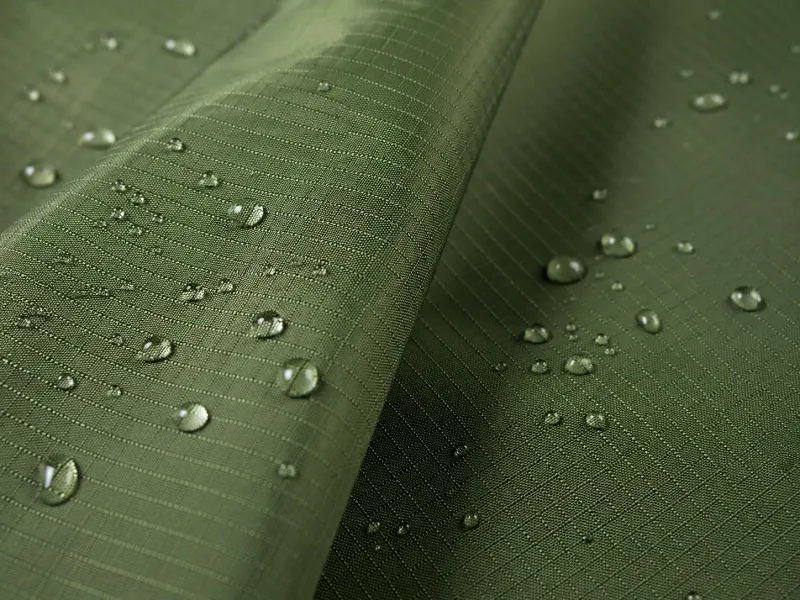
Ripstop Waterproof Fabric
Lightweight ripstop waterproof fabric with enhanced tear resistance for outdoor applications.
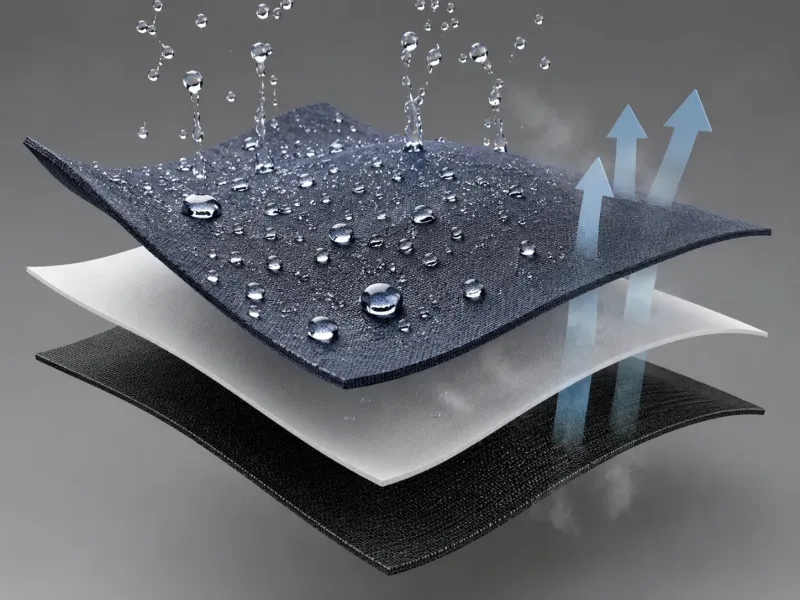
3 Layer Waterproof Fabric
Premium 3-layer waterproof fabric for professional outdoor and technical apparel.
Related Categories
Related Applications
Related Industries
Choose the right hydrostatic head rating for every outdoor condition
Request a Waterproof Fabric Sample or Bulk Quote