
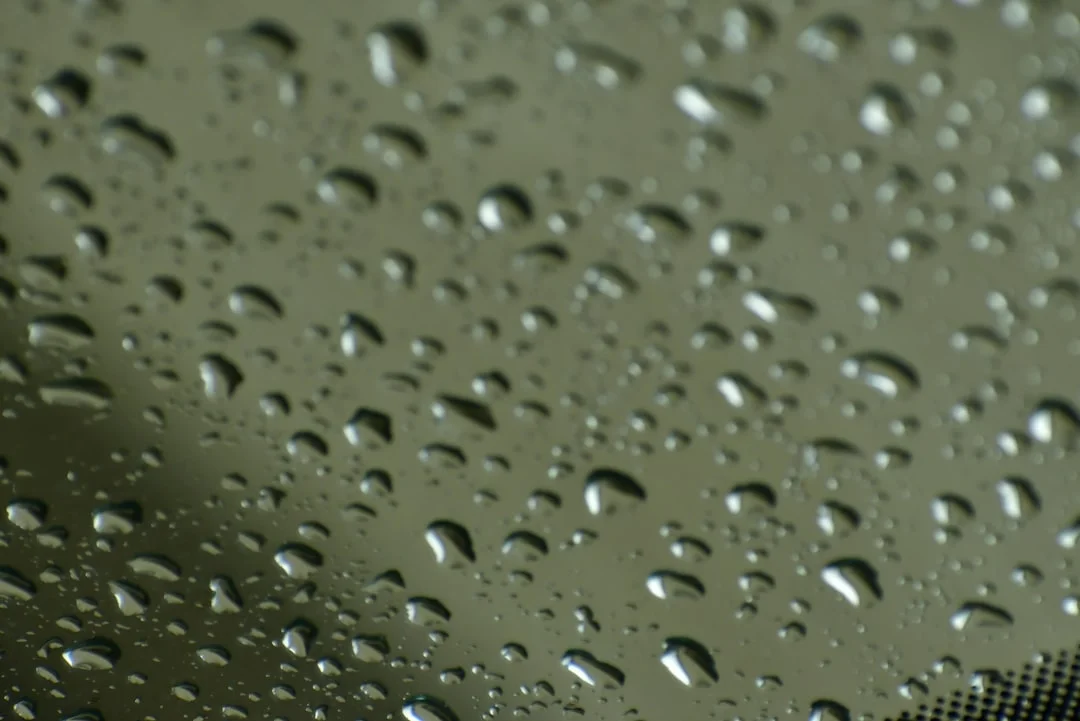
Choosing between waterproof polyester fabric and Oxford fabric is one of the most common decisions bag designers and gear manufacturers face. Both materials are derived from polyester, both are widely used across the outdoor, travel, and tactical industries — but they differ significantly in construction, coating technology, weight-to-durability ratio, and water resistance performance. As of 2026, the global technical textile market increasingly demands fabrics that balance protection, weight, and sustainability. This guide breaks down the key differences between these two fabric families so you can make a confident, specification-driven sourcing decision for your bags, backpacks, luggage, or outdoor gear product lines.
What Is Oxford Fabric? Construction and Core Characteristics
What Is Oxford Fabric?
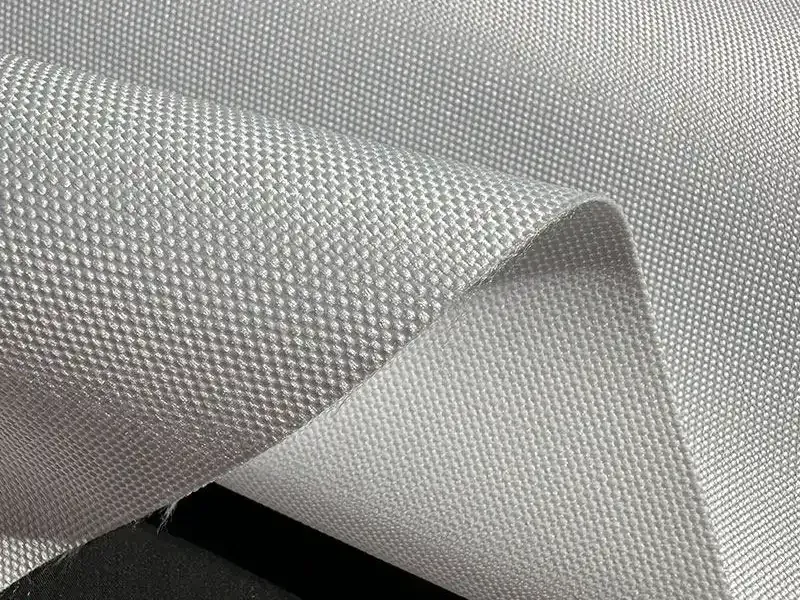
Oxford fabric is a woven textile named after its basket-weave structure, originally developed for durable shirting. In its modern industrial form — and as offered through FuncFabric's Oxford Fabric — it is produced in polyester yarns ranging from 150D to 1680D (denier), with the most common bag-grade variants being 300D, 420D, 600D, and 900D.
Key Construction Features
- Weave structure: Plain or basket weave (two warp threads interlaced with two weft threads), creating a visible cross-hatch surface texture
- Denier range: 150D (lightweight linings) through 1680D (heavy-duty tactical applications)
- Weight (GSM): Typically 180 GSM – 480 GSM depending on denier and coating
- Coating: Most Oxford fabrics are PU (polyurethane) or PVC coated on the reverse side to add water resistance
- Water column (hydrostatic head): Standard Oxford fabric achieves approximately 1,000 mm – 3,000 mm — adequate for light rain but not sustained downpours
- Abrasion resistance: High, particularly at 600D and above; the tight basket weave resists surface scuffing
- Tensile strength: The multi-thread construction gives Oxford fabric excellent tear resistance, especially versus single-thread plain weaves of equivalent weight
Common Bag and Gear Applications
- Everyday backpacks and school bags (300D–600D)
- Tool bags and organizers (600D–900D)
- Luggage shells and duffel bags (600D–1200D)
- Military and tactical pouches (900D–1680D)
- Budget-to-mid-range outdoor gear
What Is Waterproof Polyester Fabric? Technical Specifications
What Is Waterproof Polyester Fabric?
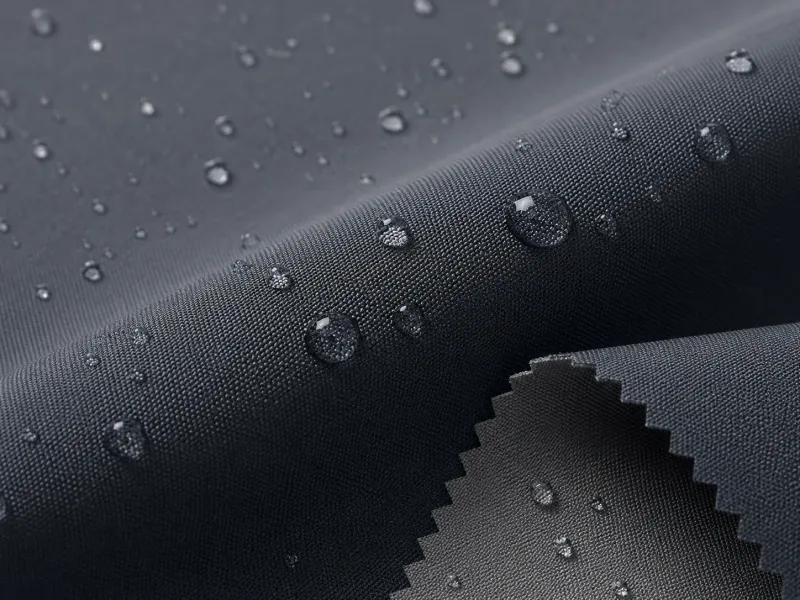
Waterproof polyester fabric refers to a category of woven or knitted polyester base fabrics that have been engineered specifically for high water resistance — going well beyond the basic PU-back coating found on standard Oxford fabric. FuncFabric's Waterproof Polyester Fabric is constructed from 100% polyester (virgin or recycled RPET) and is designed to meet demanding hydrostatic head ratings.
Technical Specifications at a Glance
| Specification | Waterproof Polyester Fabric | Standard Oxford Fabric |
| Waterproof Rating (Hydrostatic Head) | **5,000 mm – 10,000 mm** | 1,000 mm – 3,000 mm |
| Breathability (MVTR) | **3,000 – 8,000 g/m²/24h** | Minimal (coated back) |
| Weight (GSM) | **120 GSM – 250 GSM** | 180 GSM – 480 GSM |
| Coating Type | PU or PVC (customizable) | PU or PVC |
| DWR Treatment | PFC-Free or Standard DWR | Optional |
| Base Construction | Woven or ripstop polyester | Basket-weave polyester |
| Typical Denier | 50D – 300D (lighter builds) | 150D – 1680D |
Why the Waterproof Rating Gap Matters
A hydrostatic head of 1,500 mm (typical entry-level Oxford) means the fabric will resist a column of water that height before leaking — sufficient for a light drizzle. At 8,000 mm – 10,000 mm, waterproof polyester fabrics can withstand sustained heavy rain and submersion pressure, making them suitable for drybags, hydration pack bladders, rain covers, and technical outdoor gear.
For gear that will see real outdoor exposure — not just commuter use — the performance gap between these two families is significant.
Head-to-Head Comparison: Durability, Weight, and Performance
Side-by-Side Performance Comparison
| Property | Waterproof Polyester Fabric | Oxford Fabric |
| **Water Resistance** | High (5,000–10,000 mm HH) | Moderate (1,000–3,000 mm HH) |
| **Weight per unit area** | Lighter (120–250 GSM) | Heavier (180–480 GSM) |
| **Abrasion Resistance** | Moderate–High | High (especially 600D+) |
| **Tear Resistance** | High (ripstop variants) | High (basket weave) |
| **Breathability** | Present (MVTR 3,000–8,000) | Very low |
| **Packability** | Excellent (folds compact) | Moderate |
| **Texture/Hand Feel** | Smooth, technical | Structured, matte |
| **Printability** | Good | Excellent |
| **Typical MOQ (wholesale)** | 500 meters per color/spec | 500 meters per color/spec |
| **Sustainability Options** | RPET / GRS certified available | Standard polyester |
Durability in Practice
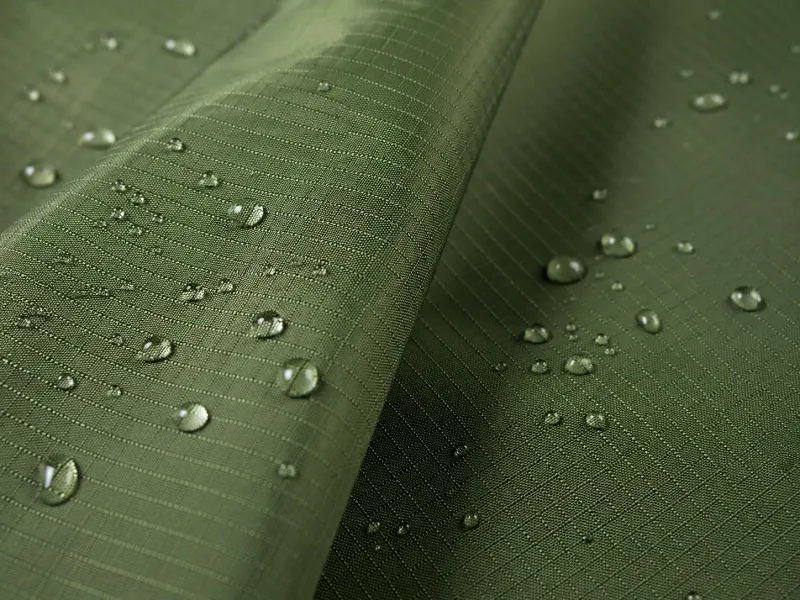
Oxford fabric's multi-thread basket weave gives it a structural advantage in abrasion resistance — we routinely see 600D Oxford hold up well in base-of-bag wear zones where packs contact rough ground. However, compared to high-denier Oxford, waterproof polyester in ripstop construction stops tear propagation more effectively: once a ripstop grid catches a snag, it does not spread beyond the 5 mm – 10 mm reinforcement grid.
For backpack manufacturers sourcing for multi-year product warranties, combining waterproof polyester for the main body with 600D Oxford for base panels is a proven dual-material strategy we supply on bulk orders.
Best Use Cases: Which Fabric Fits Your Product?
Choosing the Right Fabric for Your Bag or Gear Application
Choose Oxford Fabric When:
- Budget is a primary constraint — 600D Oxford consistently delivers excellent value at the mid-range of bag fabrics
- Your product targets everyday urban use: school bags, laptop bags, gym duffels, corporate giveaway bags
- You need a fabric that accepts screen printing and heat transfer cleanly — Oxford's structured surface is excellent for branded merchandise
- The product will not face sustained rain exposure or submersion
- You need heavy-duty structural rigidity in a single-layer fabric (900D–1680D Oxford)
Choose Waterproof Polyester Fabric When:
- The product requires genuine weatherproofing: hiking daypacks, cycling bags, outdoor drybags, kayaking gear
- Weight savings matter — a 150 GSM waterproof polyester will outperform a 300 GSM Oxford on water resistance while being significantly lighter
- Your brand targets the Outdoor & Adventure Industry or technical sportswear segment, where performance claims must be backed by specifications
- You are building a product line where RPET / recycled content is a selling point — waterproof polyester is available in GRS-certified recycled constructions
- The gear will face UV exposure over extended periods; pairing with a DWR-treated waterproof polyester adds a second layer of protection
Hybrid Applications (Both Fabrics)
| Bag Type | Recommended Combination |
| Technical hiking backpack | Waterproof polyester main body + 600D Oxford base/straps |
| Camera bag | 600D Oxford shell + waterproof polyester rain cover |
| Tactical gear bag | 900D Oxford shell + waterproof polyester internal liner |
| Travel duffel | 600D Oxford structure + waterproof polyester bottom panel |
For outdoor apparel brands extending into bags and accessories, the Outdoor & Adventure Industry increasingly specifies waterproof polyester as the baseline for any gear claiming all-weather protection — a standard that has tightened noticeably as of 2026.
Sustainability, Sourcing, and Wholesale Considerations
Sustainability Profiles: A Growing Differentiator
As of 2026, sustainability credentials are increasingly a sourcing requirement rather than a bonus — particularly for brands selling into European and North American retail channels.
Oxford Fabric
- Standard Oxford fabric is produced from virgin polyester
- Recycled-content Oxford is available but less commonly stocked
- No inherent certification pathway without supplier documentation
Waterproof Polyester Fabric
- Available in 100% RPET (Recycled PET) constructions derived from post-consumer PET bottles
- Can be supplied with GRS (Global Recycled Standard) certification and full Chain of Custody (COC) documentation
- PFC-Free DWR coatings available, eliminating persistent fluorochemicals from the waterproofing layer
- Aligns with brands in the Outdoor Apparel and Sportswear & Activewear segments that require auditable sustainability claims
For brands that need to go further, the Eco Friendly Outdoor Fabric and Recycled Polyester Fabric lines extend these principles into broader product ranges.
Wholesale and Bulk Sourcing
- Both fabrics are available for export-quality wholesale supply, serving North America, Europe, and global markets
- Minimum order quantities and custom specifications (width, GSM, coating weight, color) are confirmed per project
- For gear manufacturers requiring consistent batch-to-batch color and weight tolerance, we run QC checks on every production roll
- Width options: 150 cm standard; custom widths available on larger runs
- Custom DWR levels, coating weights, and denier combinations are accommodated for OEM and private-label programs
Related Technical Fabric Options
If your application demands performance beyond standard waterproof polyester, consider:
- Ripstop Waterproof Fabric — waterproof rating 5,000–15,000 mm HH, reinforcement grid 5–10 mm, ideal for tents and technical packs
- Waterproof Breathable Fabric — rated 10,000–20,000 mm HH with MVTR 5,000–15,000 g/m²/24h, for performance outerwear crossing into bag applications
- TPU Laminated Fabric — 20,000–30,000 mm HH, for premium gear where weight and waterproofing performance are non-negotiable
Frequently Asked Questions
Is Oxford fabric actually waterproof, or just water-resistant?
Standard Oxford fabric with a PU or PVC backing is water-resistant, not fully waterproof. Most 600D Oxford fabrics achieve a hydrostatic head rating of approximately 1,000 mm – 2,000 mm, which is sufficient to resist light rain and brief splashes. For sustained rain exposure, submersion, or products claiming genuine waterproofing, you need a fabric rated at 5,000 mm hydrostatic head or higher — which is the baseline for dedicated waterproof polyester fabrics. If your bag needs to survive a downpour without seeping through, Oxford alone is unlikely to meet the specification without additional seam taping and a higher-rated shell fabric.
Which fabric is more durable for heavy-duty bags — waterproof polyester or Oxford?
For raw abrasion and structural durability, high-denier Oxford fabric (600D–1680D) has an edge due to its multi-thread basket weave and greater fabric weight (up to 480 GSM). It resists scuffing and puncture well in base-of-bag applications. Waterproof polyester fabric, particularly in ripstop construction, offers superior tear-stop performance — once a snag initiates, the reinforcement grid (typically 5–10 mm) arrests propagation. For most heavy-duty bags, the optimal solution is to use 600D Oxford on wear zones (base, corners) and waterproof polyester on the main panels, combining the structural benefits of both.
Can waterproof polyester fabric be made from recycled materials?
Yes. Waterproof polyester fabric is available in 100% RPET (Recycled PET) constructions sourced from post-consumer PET bottles. These can be supplied with GRS (Global Recycled Standard) certification and full Chain of Custody documentation — important for brands selling into markets with mandatory recycled content reporting. PFC-Free DWR coatings are also available, so the waterproofing layer does not rely on persistent fluorochemicals. Standard Oxford fabric is typically produced from virgin polyester, though recycled-content Oxford can be sourced on request.
What denier Oxford fabric should I specify for a backpack?
Denier selection depends on the bag's end-use and target market. As a general reference: 300D Oxford suits lightweight daypacks and casual bags; 420D–600D is the most common range for everyday backpacks, school bags, and mid-range travel bags, balancing weight and durability; 900D–1200D is appropriate for tool bags, military-style packs, and gear bags subject to heavy loading and rough handling; 1680D is reserved for tactical and heavy-duty professional applications. For backpacks in the 20–40 L range targeting outdoor or urban use, 600D Oxford is the current industry standard as of 2026.
What is the minimum order quantity for waterproof polyester or Oxford fabric?
Minimum order quantities vary by specification, construction, and whether custom colors or coatings are required. Standard stocked colors and weights in both Oxford and waterproof polyester typically start at 500 meters per color per specification for wholesale and export orders. Custom denier, GSM, coating weight, or color-matched orders may carry higher MOQs depending on production run requirements. Sample quantities are available for product development and specification verification before committing to bulk production. Contact FuncFabric's sourcing team to confirm MOQ for your specific project.
Related Resources
Related Products (3)
Oxford Fabric
Factory-direct Oxford fabric: 210D to 600D+, PU/PVC/PA coatings, waterproof options for bags, tents, workwear and covers. Low MOQ, free swatches, 24-hour quotes.
Waterproof Polyester Fabric
Durable waterproof polyester fabric designed for outdoor apparel, bags and weather-resistant textile applications.
Ripstop Waterproof Fabric
Lightweight ripstop waterproof fabric with enhanced tear resistance for outdoor applications.
Related Categories
Related Applications
Related Industries
A technical comparison to help you choose the right material for your next bag or outdoor gear project
Request a Fabric Sample or Wholesale Quote Today