
Workwear fabric is used for far more than covering the body. It is engineered to protect, perform, and endure in environments where standard textiles fail. From arc-flash-rated coveralls to antibacterial scrubs, the right fabric determines whether a garment delivers safety and comfort over repeated industrial use. At FuncFabric, we supply B2B buyers across industries with technical workwear fabrics built to meet rigorous specifications.
What Is Workwear Fabric Used For? Core Applications
Workwear fabric is used for uniforms and protective clothing in construction, manufacturing, oil and gas, healthcare, logistics, and outdoor work. Unlike everyday apparel textiles, workwear fabrics are selected for specific hazards: flame, heat, chemicals, abrasion, UV radiation, or biological contamination. The performance of each fabric is measurable and often verified against recognized international standards.
For example, FR Workwear Fabric from FuncFabric, with weights from 220 to 350 GSM, is designed with self-extinguishing and antistatic properties to reduce injury risk in industrial environments. As of 2026, procurement teams increasingly require documented test evidence for every roll, from antibacterial rates to hydrostatic head ratings. That is why we maintain clear specifications across all workwear fabric categories.
Workwear Fabric by Sector: Industrial Safety, Healthcare, and Outdoor
In industrial safety, workwear fabric is used for FR coveralls, welding aprons, arc flash suits, and oil-and-gas uniforms. Welding Protective Fabric, for example, is a heavy cotton or cotton-FR blend weighing 260-420 GSM with EN ISO 11611 Class A1/A2 certification and a self-extinguishing afterflame of under 2 seconds. Arc Flash Protection Fabric provides ATPV ratings between 12 and 45+ cal/cm², depending on fabric weight and construction. Oil & Gas Protective Fabric adds oil and water repellency rated AATCC 118 Grade 8-9, plus antistatic resistance below 100 ohms for ATEX/IECEx-type environments.
In medical and healthcare, workwear fabric is used for scrubs, patient gowns, and staff uniforms, where bacterial control and wash durability are critical. Healthcare Uniform Fabric is offered at 100-140 GSM with antibacterial efficiency of at least 99.9% against E. coli and S. aureus, and it retains performance over more than 50 industrial launder cycles. Medical Antibacterial Fabric adds oleophobic and hydrophobic stain resistance while maintaining high air permeability.
In outdoor and field work, workwear fabric is used for jackets, trousers, and protective layers that must stay waterproof while allowing moisture vapor to escape. Waterproof Breathable Fabric reaches a 10,000-20,000 mm hydrostatic head and an MVTR of 5,000-15,000 g/m²/24h. For lighter outer shells, Ripstop Waterproof Fabric is available from 80 to 180 GSM with PU or TPU coatings and a 5-10 mm reinforcement grid.
Key Workwear Fabric Categories and Technical Specifications
Flame Retardant Fabric is one of the most important workwear fabric categories. Cotton Flame Retardant Fabric, made from 100% cotton with an advanced phosphorus-based finish, comes in 200-340 GSM twill, poplin, or canvas weaves, with afterglow under 2 seconds and shrinkage below 3% warp and 2% weft. Inherent Flame Retardant Fabric, by contrast, is composed of 95% meta-aramid and 5% PPTA and does not rely on chemical coatings, making it suitable for prolonged exposure up to 360°C.
Antibacterial Fabric is widely used in healthcare, food processing, and hygiene-sensitive workwear. Antibacterial Knitted Fabric achieves at least 99% efficacy against E. coli, S. aureus, and C. albicans, and lasts 30-50 industrial launder cycles. Silver Ion Antibacterial Fabric extends durability to 50-100 industrial wash cycles and is available in knit, woven, mesh, or non-woven constructions from 120 to 250 GSM.
UV Protection Fabric is used for outdoor workwear and sun-exposed uniforms. UV Protection Stretch Fabric combines 82% polyester with 18% elastane, provides UPF 50+ protection, and comes in 180-260 GSM with 4-way stretch. For lighter layering, Sun Protective Apparel Fabric is available from 80 to 140 GSM and blocks more than 98% of UVA and UVB radiation.
Waterproof & Breathable Fabric supports workwear for wet environments such as construction, logistics, and outdoor maintenance. 3 Layer Waterproof Fabric uses a micro-porous PU or TPU membrane and achieves a hydrostatic head of 20,000-30,000 mm with MVTR of 10,000-18,000 g/m²/24h. TPU Laminated Fabric delivers similar waterproof performance with adhesion strength above 20 N/5mm, providing durability for demanding jobsite conditions.
How to Choose the Right Workwear Fabric
First, define the hazard and the applicable standard. Welding garments require EN ISO 11611, while arc flash PPE is rated by ATPV or EBT in cal/cm². In healthcare, look for evidence such as AATCC 100 or OEKO-TEX Standard 100; Medical Antibacterial Fabric is designed around those compliance expectations for scrubs and gowns.
Second, balance protection with comfort and task mobility. A 140 GSM lightweight knit may be appropriate for healthcare uniforms, while a 350 GSM heavy twill is better suited for welding protection. For outdoor workwear, choose a breathable membrane construction if workers shift between cold, rain, and high physical activity.
Third, plan for real-world laundering. Antibacterial Knitted Fabric maintains efficacy across 30-50 industrial wash cycles, while Silver Ion Antibacterial Fabric extends that to 50-100 cycles. Comparing these durability figures before sourcing helps buyers reduce replacement frequency and total garment lifecycle cost.
B2B Supply Capabilities for Workwear Fabrics
FuncFabric supplies export-quality workwear fabrics in production volumes, with widths commonly from 150 cm to 180 cm across most categories. We work with brands, uniform programs, and industrial distributors sourcing materials for Workwear & Protective Clothing, Uniforms & Corporate Apparel, and Medical & Healthcare Textiles.
For buyers with sustainability targets, Recycled Polyester Fabric is made from 100% RPET derived from post-consumer PET bottles, available from 120 to 280 GSM in single jersey, interlock, mesh, or woven constructions, and GRS Certified with full traceability. GRS Certified Recycled Fabric can be paired with antibacterial, moisture-wicking, or durable water-repellent finishes, allowing uniform programs to meet both performance and environmental criteria.
Compared with sourcing different workwear fabric categories from multiple mills, working with one technical textile supplier simplifies testing, documentation, and quality consistency. We can align fabric construction, weight, finish, and compliance parameters with the standards your market requires.
Frequently Asked Questions
What is workwear fabric used for?
Workwear fabric is used for uniforms and protective garments in construction, manufacturing, oil and gas, healthcare, logistics, and outdoor work. It is selected for specific hazards such as flame, heat, chemicals, abrasion, UV radiation, and microbial contamination, and it is engineered to survive repeated industrial laundering. Common categories include FR Workwear Fabric, antibacterial fabric, UV Protection Fabric, and Waterproof & Breathable Fabric.
What are the key performance properties to look for in workwear fabric?
The key performance properties depend on the end use. For welding, look for EN ISO 11611 Class A1/A2 certification and self-extinguishing behavior. For oil and gas workwear, check ATPV ratings of 8-25 cal/cm² and antistatic resistance below 100 ohms. In healthcare, verify an antibacterial rate of at least 99.9% and wash durability of more than 50 industrial launder cycles, as seen in our Healthcare Uniform Fabric.
Can workwear fabric be both flame retardant and comfortable?
Yes, modern FR fabrics are available in weights from 220 to 350 GSM and in blends such as modacrylic/cotton or meta-aramid/PPTA. Inherent Flame Retardant Fabric, for example, is engineered to withstand long-term heat exposure up to 360°C while remaining suitable for breathable, wearable garments. Compared with coated FR finishes, inherently FR materials maintain protection after repeated washing because they do not rely on surface treatments.
Is sustainable workwear fabric available?
Yes. We offer GRS Certified Recycled Fabric with 20-100% certified recycled content, and Recycled Polyester Fabric made from 100% RPET derived from post-consumer PET bottles. Depending on construction, these fabrics can be used for uniform programs, outer shells, and performance layers in weights from 120 to 280 GSM and widths of 150-180 cm. Full chain-of-custody documentation is available from post-consumer waste to fabric roll.
Can I request specific weights, finishes, and certifications?
Yes, we can customize specifications including fabric weight, construction, width, finish, and performance requirements. For example, Antimicrobial Polyester Fabric is available from 130 to 240 GSM in single jersey, interlock, mesh, or twill, and it maintains antimicrobial efficacy after at least 50 industrial wash cycles. Share your application and compliance targets, and we will recommend a workwear fabric that matches the required standard.
Related Resources
Related Products (4)
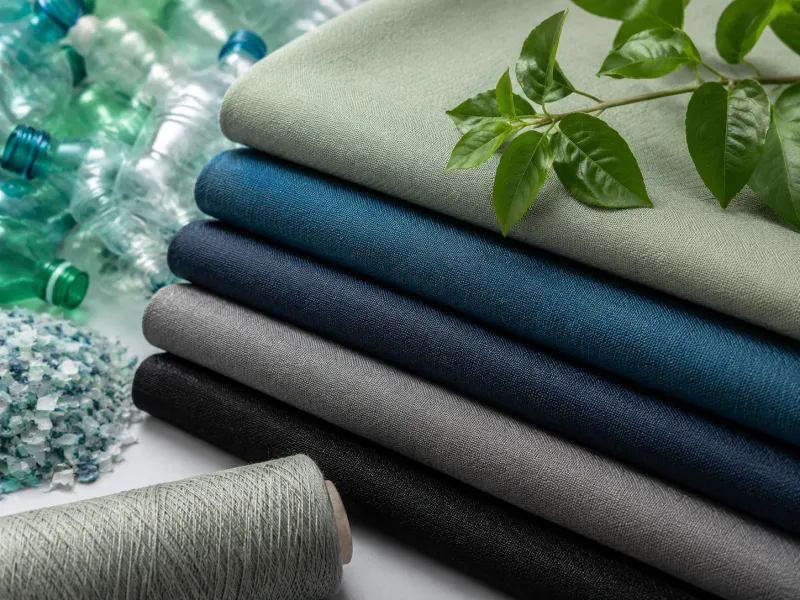
GRS Certified Recycled Fabric
Global Recycled Standard certified fabric providing traceable sustainability for international brands.
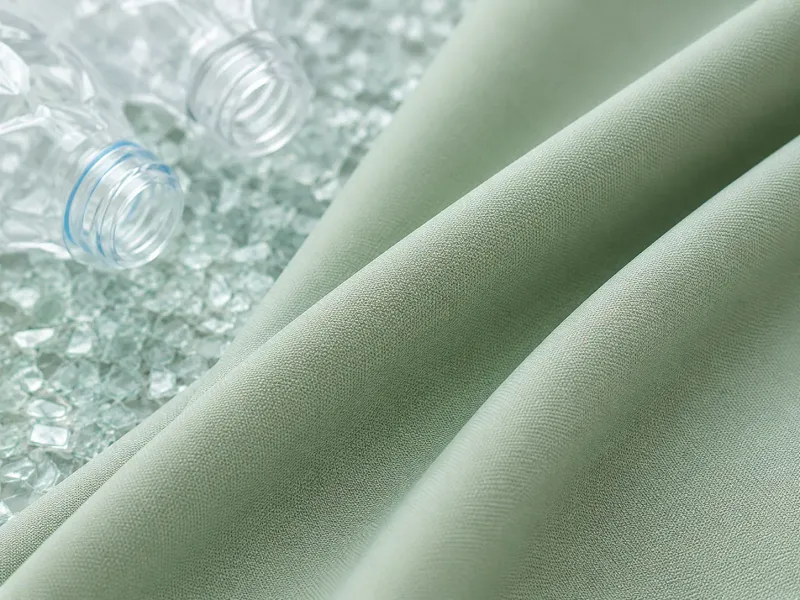
Recycled Polyester Fabric
High-performance recycled polyester fabric manufactured from post-consumer PET bottles for sustainable apparel and technical textile applications.

Antibacterial Knitted Fabric
Soft antibacterial knitted fabric combining comfort, flexibility and antimicrobial protection.
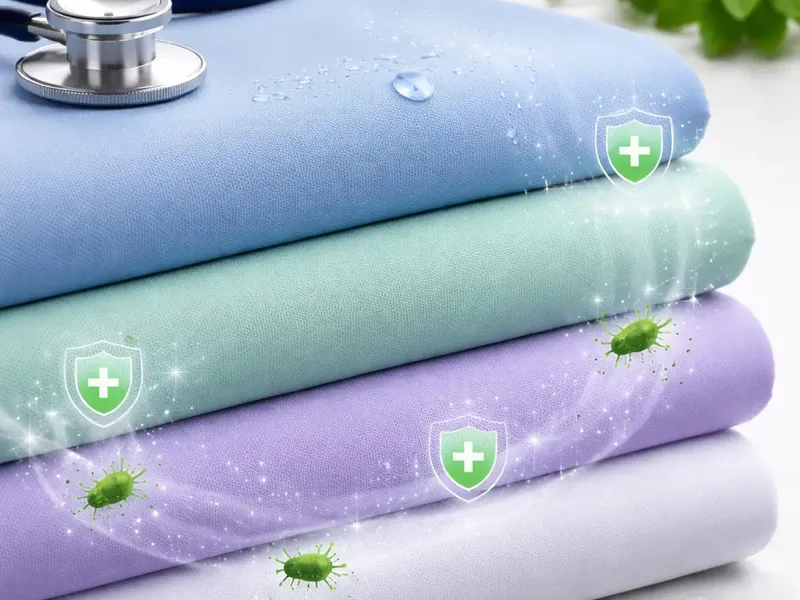
Healthcare Uniform Fabric
Antibacterial healthcare uniform fabric developed for hospitals, clinics and healthcare institutions.
Related Categories
Technical workwear fabrics for safety, medical, outdoor, and uniform applications
Get a Workwear Fabric Quote