
Choosing between waterproof fabric and water resistant fabric can determine whether your product holds up in a downpour or fails at the first sign of drizzle. In this guide, we break down the technical differences using concrete specifications: hydrostatic head ratings from 5,000 mm to 30,000 mm, MVTR breathability numbers, and DWR treatments. Whether you are developing outdoor apparel, marine covers, or technical workwear, this comparison helps you specify the right material with confidence.
What's the Difference Between Waterproof and Water Resistant Fabric?
Water resistant fabric typically relies on a durable water repellent (DWR) finish or a tight weave to make water bead up and roll off. It handles light rain and brief exposure but does not provide a barrier under sustained pressure. Waterproof fabric, in contrast, incorporates a membrane or coating such as polyurethane (PU) or thermoplastic polyurethane (TPU) that blocks liquid water from passing through.
As of 2026, the industry standard way to quantify this difference is the hydrostatic head test, expressed in millimeters of water pressure. Our Ripstop Waterproof Fabric, for example, ranges from 5,000 mm to 15,000 mm, while our 3 Layer Waterproof Fabric reaches 20,000 mm to 30,000 mm. Compared to a simple DWR-treated shell, a 3-layer construction adds a 15–30 micron micro-porous membrane, which is why it can handle prolonged rain and heavy water load without leaking.
Hydrostatic Head Ratings and Breathability Explained
When specifying waterproof fabric vs water resistant fabric, two numbers matter most: hydrostatic head and moisture vapor transmission rate (MVTR). Hydrostatic head measures how much water pressure a fabric can withstand before moisture penetrates. In our range, Waterproof Polyester Fabric is rated from 5,000 mm to 10,000 mm, Waterproof Breathable Fabric from 10,000 mm to 20,000 mm, and TPU Laminated Fabric from 20,000 mm to 30,000 mm.
Breathability, measured in MVTR, describes how much moisture vapor can escape. Our 3 Layer Waterproof Fabric offers an MVTR of 10,000–18,000 g/m²/24h, while lighter Ripstop Waterproof Fabric provides 3,000–8,000 g/m²/24h. DWR finishes alone do not achieve meaningful hydrostatic head ratings; they are intended for water beading, not sustained waterproofing. When comparing options, always check both ratings together: a high waterproof rating with low MVTR can leave wearers feeling clammy during exertion.
Fabric Options for Different Exposure Levels
Not every application needs a 30,000 mm fabric. For light rain jackets and packable shells, a Ripstop Waterproof Fabric at 80–180 gsm gives a good balance of packability and protection. For hiking and mountaineering, a 3 Layer Waterproof Fabric at 180–280 gsm provides durable, breathable protection. For marine covers, a Marine UV Resistant Fabric with 5,000–10,000 mm water resistance and UPF 50+ suits sun and salt exposure.
Our Outdoor Shell Fabric combines a 100% windproof construction (air permeability below 1 mm/s) with a PFC-free DWR finish, making it a strong water resistant option for softshell garments. Compared to a coated fabric, a PFC-free DWR treatment is a more sustainable choice for light weather protection, though it will need re-application over the product's life.
How to Choose Between Water Resistant and Waterproof Fabric for Your Product
Start by defining the end use and exposure time. If your product will face only brief showers and you prioritize lightweight comfort, a water resistant fabric with a DWR finish—such as Outdoor Shell Fabric or Eco Friendly Outdoor Fabric—is often sufficient. Eco Friendly Outdoor Fabric also offers UPF 50+ (blocks over 98% UVA/UVB radiation) and a PFC-free DWR finish, making it suitable for sun-and-splash applications.
If the product must withstand heavy rain, pressure washing, or submersion, specify a true waterproof construction. For example, our 3 Layer Waterproof Fabric and TPU Laminated Fabric both carry 20,000–30,000 mm hydrostatic heads and MVTR ratings of 8,000–18,000 g/m²/24h. We also supply export-quality rolls in widths from 150 cm to 180 cm, with recycled options available through our Recycled Sustainable Fabric collection.
Sourcing Waterproof and Water Resistant Fabrics from FuncFabric
We produce a full range of water resistant and waterproof fabrics for outdoor apparel, workwear, and technical applications. Every batch is checked for hydrostatic head, breathability, abrasion resistance, and dimensional stability. Our GRS Certified Recycled Fabric is available with 20% to 100% recycled content and full chain-of-custody documentation, so you can build sustainable products without sacrificing weather protection.
Compared to using a single generic shell fabric, working with a specialized supplier allows you to match membrane type, GSM, width, and finish to your exact performance target. We supply export-quality rolls to manufacturers across North America and Europe. To evaluate options for your next collection, request specifications and fabric swatches today.
Frequently Asked Questions
What is the main difference between waterproof and water resistant fabric?
Water resistant fabric typically uses a durable water repellent finish or tight weave to make water bead off, but it cannot withstand sustained water pressure. Waterproof fabric includes a PU or TPU membrane or coating that blocks water entirely. In our range, waterproof fabrics are specified with hydrostatic head ratings from 5,000 mm up to 30,000 mm, while water resistant DWR finishes are not rated for sustained exposure.
What hydrostatic head rating makes a fabric waterproof?
There is no single universal cutoff, but the fabrics we label as waterproof are tested to hydrostatic heads of 5,000 mm to 30,000 mm. For example, Waterproof Polyester Fabric is rated 5,000–10,000 mm, Waterproof Breathable Fabric is 10,000–20,000 mm, and 3 Layer Waterproof Fabric reaches 20,000–30,000 mm. A DWR finish alone does not provide a meaningful hydrostatic head rating.
Can water resistant fabric be made fully waterproof?
Yes, by changing the construction or adding a membrane. A water resistant shell can become waterproof by specifying a laminated or coated construction such as our TPU Laminated Fabric, which uses a TPU membrane of 10–60 microns and reaches 20,000–30,000 mm hydrostatic head. The base fabric, membrane type, and lamination method all determine the final waterproof rating.
Which fabric is best for heavy rain and demanding outdoor use?
For prolonged heavy rain and high-exertion activities, a 3 Layer Waterproof Fabric or TPU Laminated Fabric is the best choice. Both offer 20,000–30,000 mm hydrostatic head and MVTR breathability of 8,000–18,000 g/m²/24h. These fabrics are available in 180–280 gsm and are commonly used in outdoor apparel collections.
Related Resources
Related Products (4)
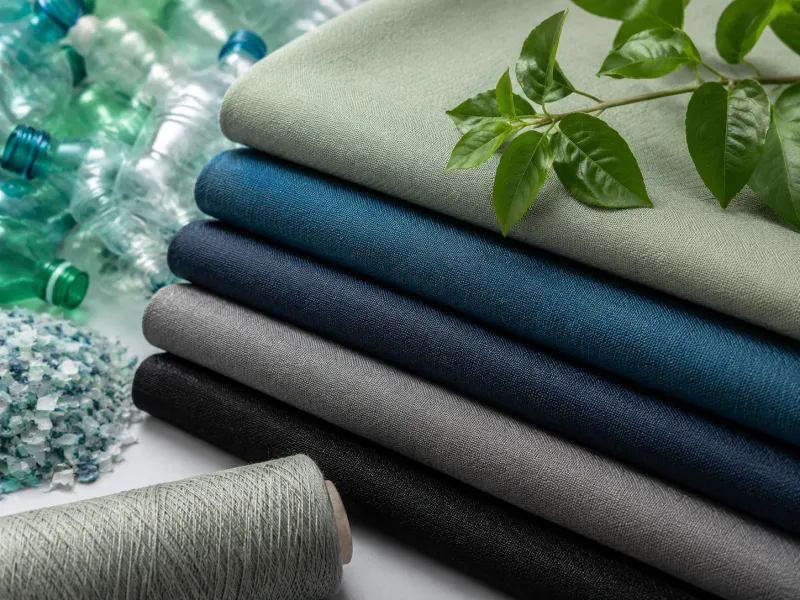
GRS Certified Recycled Fabric
Global Recycled Standard certified fabric providing traceable sustainability for international brands.
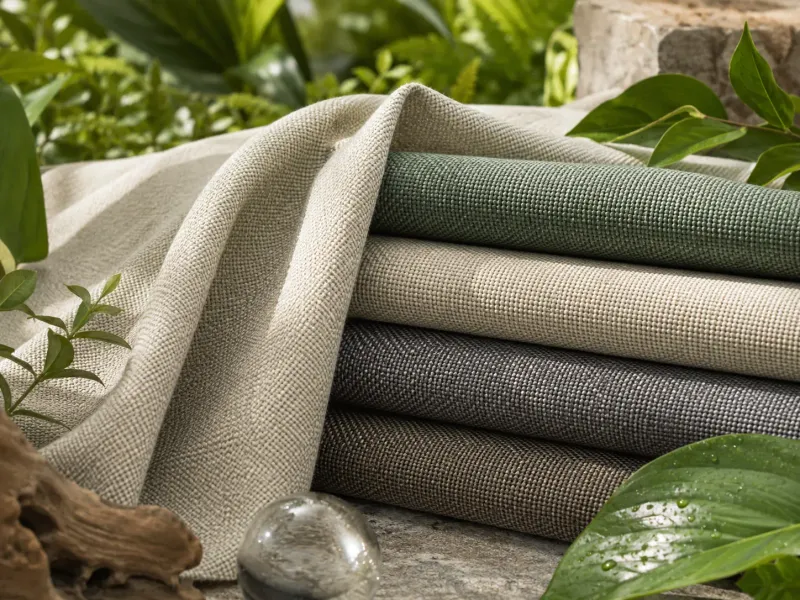
Eco Friendly Outdoor Fabric
Environmentally responsible outdoor fabric engineered for durability and sustainable performance.
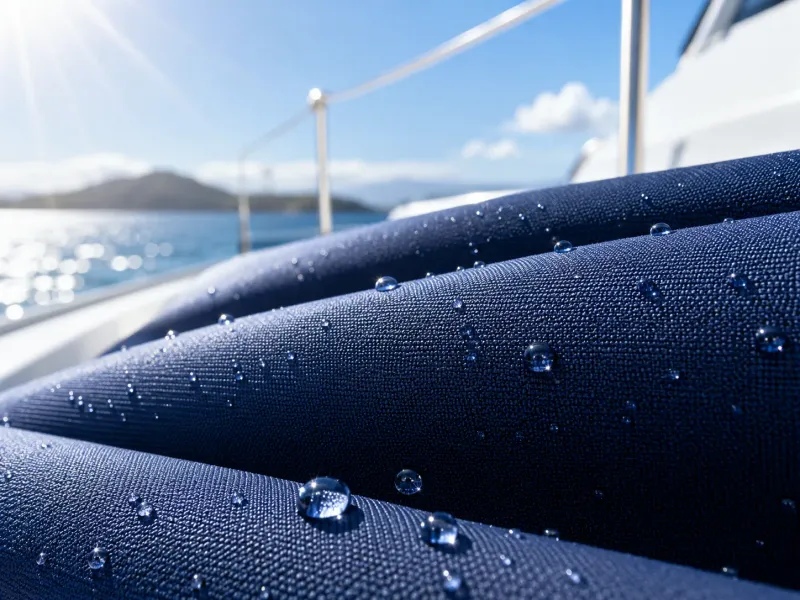
Marine UV Resistant Fabric
Marine-grade UV resistant fabric developed for harsh outdoor and coastal environments.
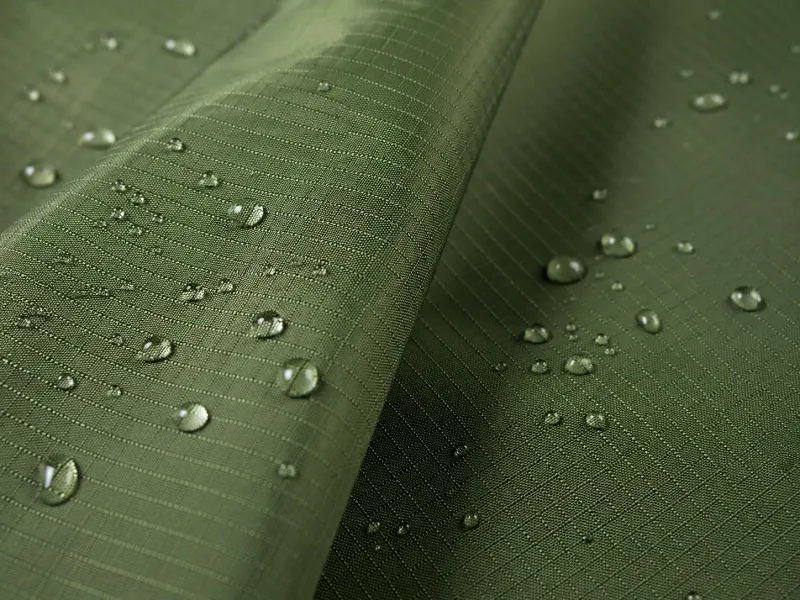
Ripstop Waterproof Fabric
Lightweight ripstop waterproof fabric with enhanced tear resistance for outdoor applications.
Related Categories
Related Applications
Compare hydrostatic head ratings, DWR finishes, and breathability to choose the right fabric
Request Fabric Samples & Specifications