
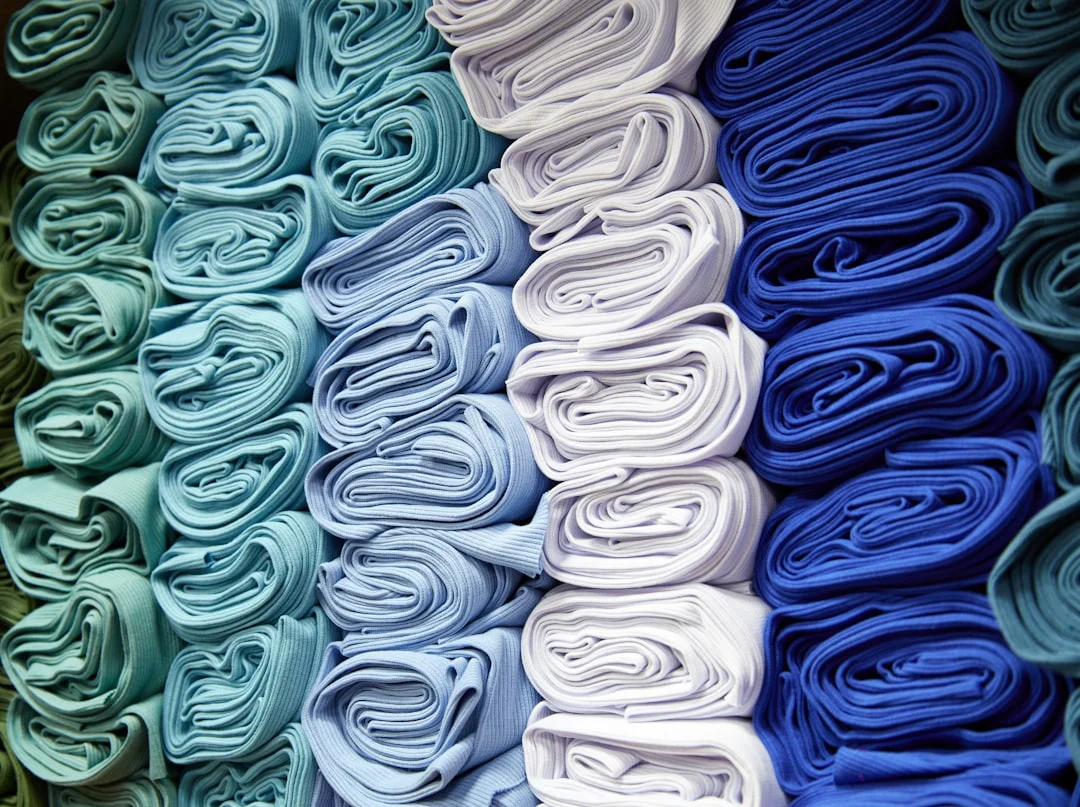
When sourcing for swimwear and activewear, the choice between swimwear fabric and recycled performance fabric affects fit, durability, and sustainability. This guide breaks down the differences in composition, weight, stretch, UV protection, and chlorine resistance. As of 2026, GRS-certified recycled options with traceable supply chains have become a serious alternative for brands that want performance without compromising on environmental credentials. We manufacture both export-quality families, and we regularly help wholesale buyers match the right construction to the right garment.
Why Compare Swimwear Fabric and Recycled Performance Fabric?
Choosing between swimwear fabric and recycled performance fabric is not about picking a universal winner; it is about matching the fabric to the end use. Swimwear Fabric is engineered for wet environments: high chlorine resistance, UPF 50+ protection, and a 4-way stretch body that moves with the swimmer. Recycled Performance Fabric is built for a broader activewear range—moisture wicking, quick-dry performance, and high abrasion resistance with GRS-certified recycled content. As of 2026, many brands use both across their collections: one for pool and beach programs, the other for training, lifestyle, and sustainable lines.
The decision also affects how you position your line. If you source for sportswear and activewear, recycled performance fabric typically gives you a stronger sustainability story because every roll carries GRS certification and traceable chain-of-custody documentation. Compared to conventional swimwear fabric, the recycled option often has a wider construction range—single jersey, interlock, mesh, or technical woven—making it easier to use across tops, leggings, and outerwear.
Material Composition, Weight, and Construction
Start with composition. Our Swimwear Fabric is made from 82% polyester and 18% elastane, with nylon-elastane and recycled options available. It is supplied in 180–240 GSM and 150cm width, with a 4-way stretch structure designed for close-fitting swimwear. Recycled Performance Fabric, by contrast, uses 100% recycled polyester (RPET) or recycled nylon blends in a customizable 140–280 GSM range, and it is available in single jersey, interlock, mesh, or technical woven constructions. Both families are produced to export-quality standards for wholesale and bulk programs.
The GSM difference matters in practice. A 180–240 GSM swimwear fabric gives a substantial, compressive feel appropriate for swimsuits and boardshorts. A 140 GSM recycled mesh is ultra-light for linings and sportswear inserts, while a 280 GSM technical woven can be used for performance outerwear. With widths from 150cm to 180cm—and up to 250cm in our GRS Certified Recycled Fabric line—you can specify a construction that matches your pattern cutting and yield.
Performance Comparison: Stretch, Chlorine, UV, and Moisture Management
Performance is where the two fabrics diverge most clearly. Swimwear Fabric is optimized for repetitive water exposure: high chlorine resistance, UPF 50+ (blocking more than 98% of UVA/UVB radiation), and a 4-way stretch that recovers during active swimming. Recycled Performance Fabric is optimized for sweat management: moisture-wicking properties, quick-dry behavior, and high abrasion resistance, with 4-way stretch available. If you are producing competition swimwear, chlorine resistance should be your first priority; if you are making training tops or athleisure, moisture wicking will be more important.
For outdoor use, Swimwear Fabric has a verified UPF 50+ rating, while Recycled Performance Fabric contributes high abrasion resistance and moisture management rather than a stated UPF rating. In our experience, a blend approach often works: use Swimwear Fabric for the main body of a beach set and RPET mesh for liners or panels. This gives you the chlorine resistance of a dedicated swim fabric with the breathability of a performance textile.
Sustainability, Certification, and Traceability
If sustainability is part of the brief, Recycled Performance Fabric has a measurable advantage. It is GRS (Global Recycled Standard) certified and fully traceable, from post-consumer waste to finished fabric roll. That includes full chain-of-custody documentation, so you can verify recycled content claims in your own product labels. Swimwear Fabric also offers recycled options, but the standard composition is virgin polyester blended with elastane; recycled versions of swimwear fabric are available on request, while the GRS documentation is most consistently attached to the recycled performance range.
Our GRS Certified Recycled Fabric line takes this further: recycled content from 20% to 100%, independently audited and verified, in weights from 120 to 300 GSM and constructions from knit to non-woven. For brands targeting sustainable fashion, this traceable chain makes it easier to align with current market expectations around recycled content and responsible sourcing. By contrast, a conventional swimwear fabric has no such documentation unless you specify the recycled variant.
How to Choose and Specify for Your Collection
A practical rule: define the primary stressor of the garment. For pool, beach, or open-water swimwear, choose Swimwear Fabric with its 180–240 GSM, UPF 50+, and chlorine-resistant elastane. For athleisure, sports tops, or recycled-performance basics, choose Recycled Performance Fabric in a GSM that fits the season—140 GSM for lightweight mesh, up to 280 GSM for structured pieces. If you need both, we commonly help brands run a side-by-side program: swimwear fabric for the swim capsule and recycled performance fabric for the activewear capsule.
Specify width, weight, structure, and certification in writing. Our Swimwear Fabric is 150cm wide; Recycled Performance Fabric runs 150–180cm; GRS Certified Recycled Fabric runs up to 250cm. Rolled or folded, the fabrics are available for bulk ordering. We recommend requesting reference swatches and verifying yardage against your pattern before committing to a large production run. This is how we plan production with wholesale buyers: the spec sheet is agreed first, then the fabric is made.
Frequently Asked Questions
What is the main difference between swimwear fabric and recycled performance fabric?
Swimwear fabric is built for wet environments with high chlorine resistance, UPF 50+ protection, and a dense 180–240 GSM body. Recycled performance fabric is built for activewear with moisture wicking, quick-dry performance, high abrasion resistance, and GRS-certified recycled content. The two overlap on 4-way stretch, but their priorities are different: chlorine resistance in swimwear, breathability and sustainability in performance fabric.
Can recycled performance fabric replace traditional swimwear fabric for chlorine pools?
Recycled performance fabric can be used for swimming, but it is not a drop-in substitute for swimwear fabric in every program. Swimwear fabric combines high chlorine resistance with a UPF 50+ rating and a 180–240 GSM stretch construction. Recycled performance fabric prioritizes moisture wicking and abrasion resistance, and its recycled content is GRS certified. For competition or frequent pool use, swimwear fabric is usually the safer choice; for training and athleisure, recycled performance fabric works well.
What GSM, width, and stretch options are available for both fabrics?
Swimwear Fabric is available in 180–240 GSM, 150cm width, and 4-way stretch. Recycled Performance Fabric is available in 140–280 GSM, 150–180cm width, and also supports 4-way stretch. GRS Certified Recycled Fabric extends the range to 120–300 GSM and 150–250cm widths. Stretch varies by structure: single jersey tends to have high stretch, while technical woven options have lower give but higher durability.
Is recycled performance fabric GRS certified and traceable?
Yes. Recycled Performance Fabric is GRS (Global Recycled Standard) certified and traceable, with full chain-of-custody documentation from post-consumer waste to fabric roll. It is made from 100% recycled polyester (RPET) or recycled nylon blends. Depending on the line, GRS Certified Recycled Fabric offers 20%–100% recycled content that has been independently audited and verified.
Which fabric is better for UV protection and outdoor wear?
Swimwear Fabric has a UPF 50+ rating and blocks more than 98% of UVA/UVB radiation, making it ideal for outdoor swim and beachwear. Recycled Performance Fabric focuses on high abrasion resistance and moisture management rather than a guaranteed UPF rating. For long sun exposure, we recommend Swimwear Fabric, UV Protection Stretch Fabric, or other UPF 50+ options in the UV Protection Fabric collection.
Related Resources
Related Products (3)
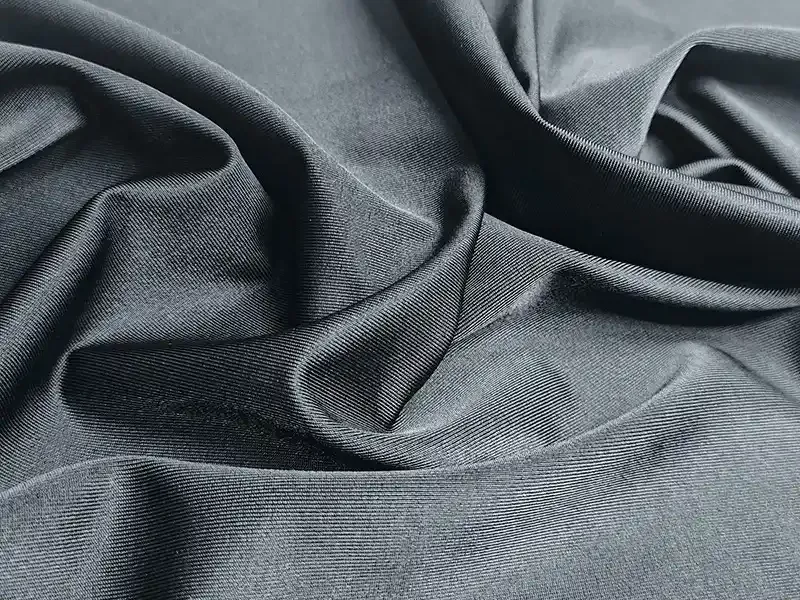
Swimwear Fabric
Chlorine-resistant, UPF 50+ four-way stretch swimwear fabric engineered for swimming costumes, swimsuits and performance beachwear.
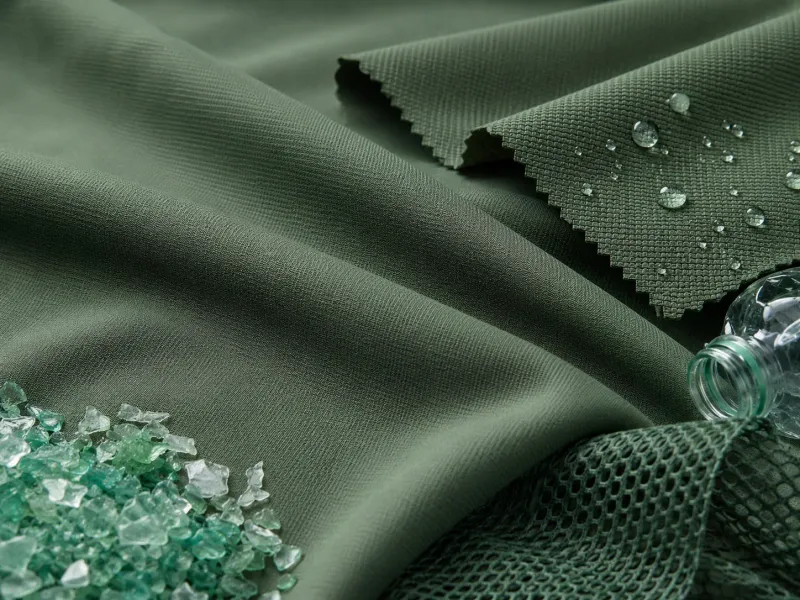
Recycled Performance Fabric
Advanced recycled performance fabric combining sustainability with technical textile functionality.
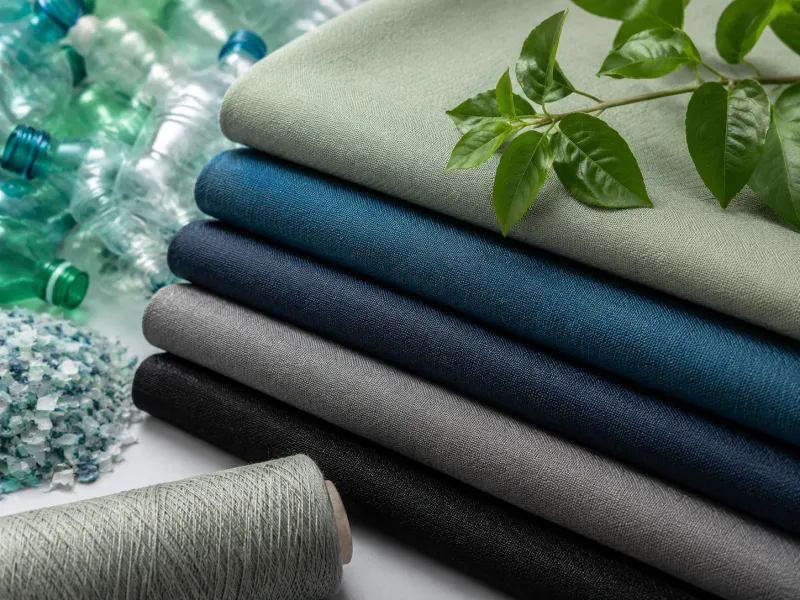
GRS Certified Recycled Fabric
Global Recycled Standard certified fabric providing traceable sustainability for international brands.
Related Applications
Compare composition, weight, stretch, chlorine resistance, and recycled content side by side.
Request a Fabric Quote for Your Line