
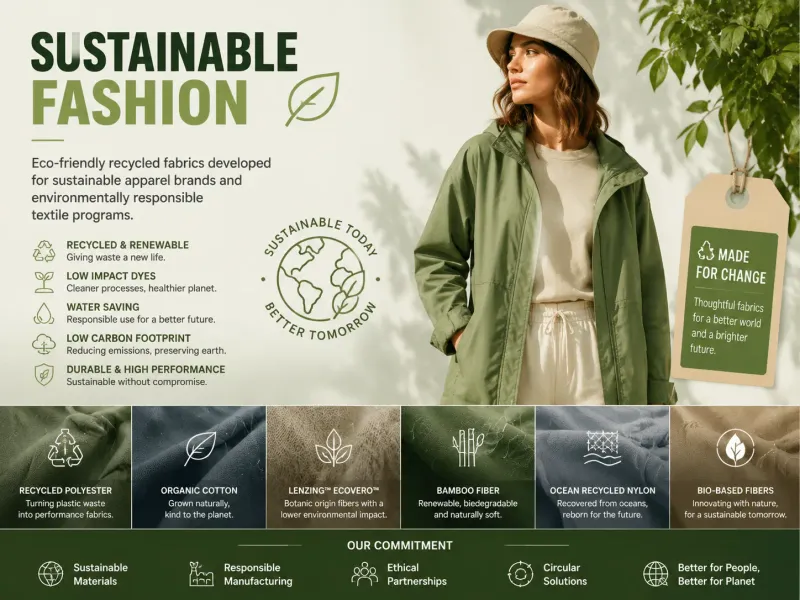
Sustainable Fashion
Technical Description
Overview
Sustainable Fashion refers to the design, production, and distribution of apparel that minimizes environmental impact through recycled inputs, resource-efficient processing, and extended product lifecycles. For this application, technical fabric matters because sustainability cannot come at the cost of performance: garments must still deliver durability, moisture management, weather resistance, and color fastness while meeting third-party environmental certifications that global buyers now treat as procurement prerequisites. Technical fabric engineering allows manufacturers to convert post-consumer waste streams into materials that perform on par with virgin synthetics, closing the gap between ecological responsibility and commercial viability.
Key Fabric Requirements
- Fabric weight: Typically 80-320 gsm depending on end use, with lightweight activewear at 110-160 gsm, mid-weight woven shells at 180-240 gsm, and heavier outerwear panels at 260-320 gsm.
- Recycled content: Minimum 50-100% recycled polyester, with GRS (Global Recycled Standard) certification requiring at least 50% certified recycled material and full chain-of-custody documentation.
- Water resistance: Waterproof shells rated at a 5,000-20,000 mm water column, with entry-level rain protection at 5,000 mm and technical outdoor layers reaching 10,000-20,000 mm.
- Breathability: Moisture vapor transmission rate (MVTR) of 5,000-15,000 g/m²/24h, ensuring comfort during active wear and preventing internal condensation.
- UV protection: UPF 30-50+ for outdoor and activewear applications, blocking 95-98% of UV radiation in accordance with AATCC 183 / UPF testing.
- Tensile and tear strength: Tensile strength of 400-800 N and tear strength of 20-50 N, sufficient for repeated flex, abrasion, and load-bearing seams in performance garments.
- Colorfastness: Rating of 4-5 on the ISO 105 grey scale for wash, light, and rubbing, maintaining appearance across the garment lifecycle.
- Chemical compliance: OEKO-TEX Standard 100 and bluesign-eligible dyeing, with restricted substance limits meeting REACH and Prop 65 thresholds for global export.
Recommended Fabrics
Recycled Sustainable Fabric is the foundational category for this application, engineered from reclaimed inputs to reduce reliance on virgin petroleum feedstock while retaining the mechanical properties buyers require. It suits brands building full sustainable collections that must document recycled content across their supply chain.
Recycled Polyester Fabric is produced from post-consumer PET bottles and industrial polyester waste, offering a like-for-like replacement for virgin polyester at comparable strength and dyeability, which makes it a practical base material for large-volume apparel programs.
RPET Sports Fabric is optimized for stretch, recovery, and moisture-wicking, making it well suited to leggings, base layers, and team kits where recycled credentials must coexist with athletic performance.
Sustainable Activewear Fabric combines lightweight construction with breathability and four-way stretch, targeting yoga, training, and lifestyle apparel where comfort and eco-certification are both decision factors for wholesale buyers.
GRS Certified Recycled Fabric carries independently verified recycled content and chain-of-custody traceability, which is essential for brands that must substantiate sustainability claims to retailers, auditors, and regulators.
Recycled Performance Fabric is built for demanding conditions, pairing recycled fiber content with technical finishes such as DWR coatings and abrasion resistance, making it appropriate for outerwear and technical layers.
Waterproof & Breathable Fabric bridges Sustainable Fashion and the Outdoor & Adventure Industry, delivering the water column and MVTR ratings needed for jackets, shells, and all-weather garments without compromising recycled content.
Applications & Use Cases
- Recycled activewear lines: Leggings, sports bras, and training tops produced from RPET Sports Fabric and Sustainable Activewear Fabric, serving fitness and athleisure brands requiring stretch, wicking, and verified recycled content.
- Weatherproof outerwear: Rain jackets and technical shells using Waterproof & Breathable Fabric rated at 10,000 mm water column and 10,000 g/m²/24h MVTR, targeting both fashion and the Outdoor & Adventure Industry.
- Everyday sustainable apparel: T-shirts, hoodies, and casual wear made from Recycled Polyester Fabric blends for high-volume retail programs where cost, durability, and recycled sourcing must be balanced.
- Corporate and uniform programs: Branded workwear and team uniforms produced with GRS Certified Recycled Fabric, enabling procurement teams to meet internal ESG and sustainability targets with documented evidence.
- Outdoor and adventure gear: Hiking layers, windbreakers, and travel apparel built from Recycled Performance Fabric with UPF 50+ and DWR finishes for sun and light-rain protection.
- Circular fashion collections: Take-back and resale-ready garments constructed from Recycled Sustainable Fabric, supporting brands designing for recyclability and extended lifecycle claims.
Customization & Wholesale
FuncFabric supplies global wholesale and bulk buyers with configurable production suited to brand and private-label programs. Standard minimum order quantity (MOQ) is typically 500-1,000 meters per color for stock-supported constructions, with custom-developed fabrics starting at 1,000-3,000 meters depending on yarn and finish complexity. Fabric widths are available in standard 150 cm and 160 cm, with alternative widths configurable to reduce cutting waste for specific garment patterns.
Customization covers custom colors matched to Pantone TCX/TPX references, with lab-dip approval prior to bulk dyeing, and low-minimum color runs available on select recycled bases. Printing options include sublimation, digital, and screen printing for all-over patterns, logos, and seasonal graphics, with sublimation best suited to polyester-rich recycled constructions. Technical finishes such as DWR (durable water repellent), anti-microbial, moisture-wicking, and UV-protective treatments can be specified at the development stage.
OEM and ODM services are available, spanning fabric development, certification support, and finished-garment coordination for buyers requiring an end-to-end supply solution. Certification documentation including GRS, OEKO-TEX Standard 100, and recycled-content transaction certificates is provided to support downstream audits and customs requirements.
Standard lead times run 15-25 days for stock-supported fabrics and 30-45 days for fully custom development and dyeing, subject to order volume and finishing requirements. Sampling lead time is typically 7-15 days for lab dips and strike-offs. Export is handled on FOB, CIF, or DDP terms from major Chinese ports, with full documentation for global shipment including commercial invoice, packing list, certificate of origin, and applicable recycled-content certificates. Packaging is configurable in rolls with moisture-barrier wrapping for long-haul freight, and consolidated container loading is available for multi-fabric orders.
Related Products (5)
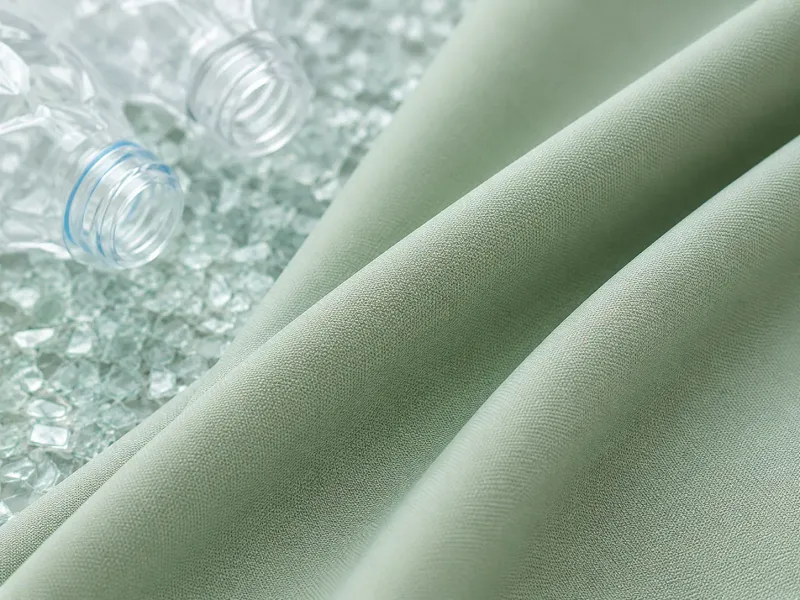
Recycled Polyester Fabric
High-performance recycled polyester fabric manufactured from post-consumer PET bottles for sustainable apparel and technical textile applications.
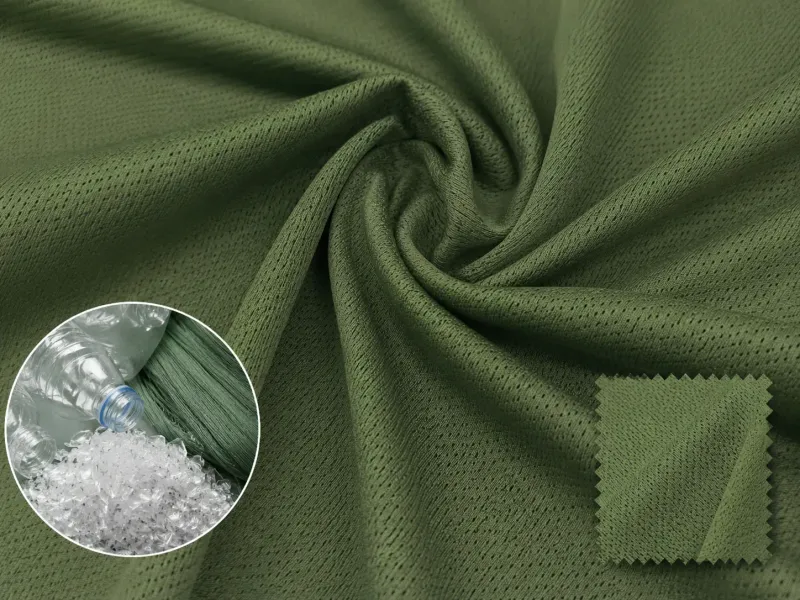
RPET Sports Fabric
Eco-friendly RPET sports fabric designed for activewear brands seeking sustainable performance textiles.
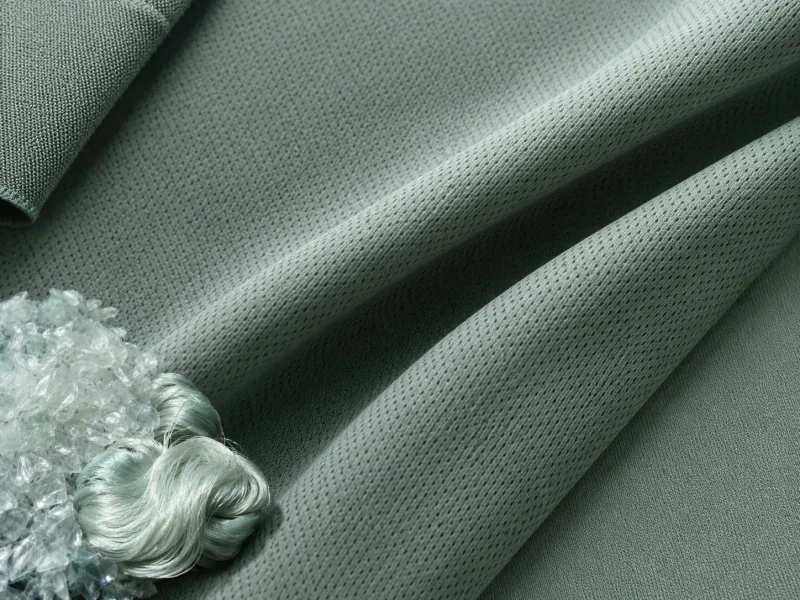
Sustainable Activewear Fabric
Sustainable performance fabric combining recycled materials with modern athletic apparel requirements.
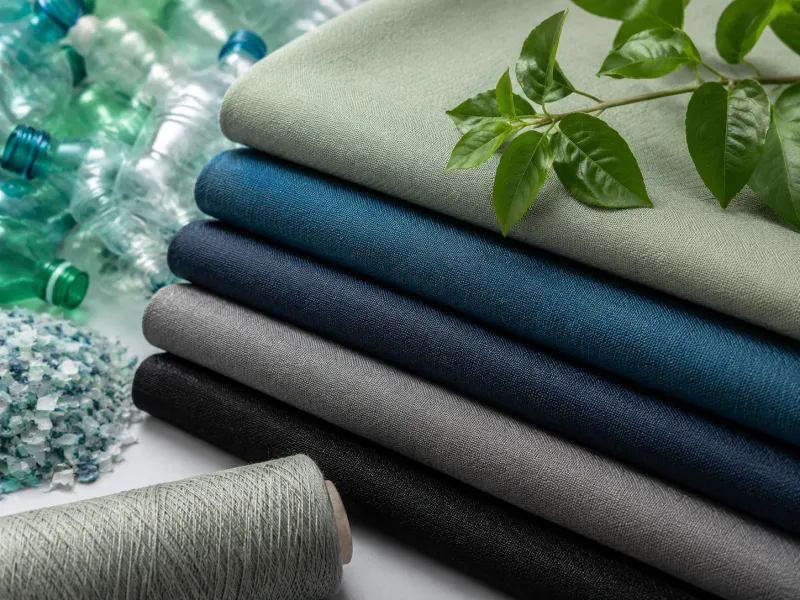
GRS Certified Recycled Fabric
Global Recycled Standard certified fabric providing traceable sustainability for international brands.
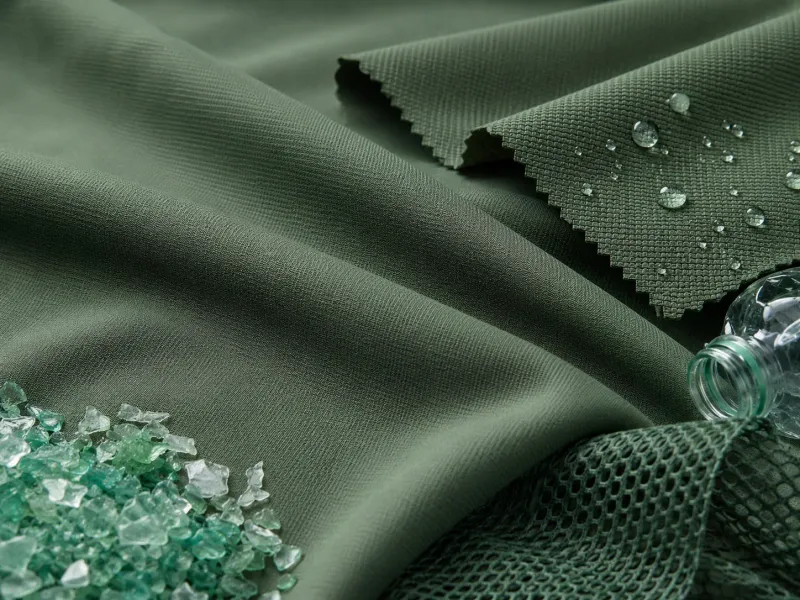
Recycled Performance Fabric
Advanced recycled performance fabric combining sustainability with technical textile functionality.
Need Sustainable Fashion Solutions?
Our engineering team can develop custom functional fabric solutions for your specific sustainable fashion requirements.
Request a Technical Quote