
Choosing the right waterproof fabric for outdoor apparel starts with understanding how waterproofing, breathability, and durability interact. In our production work on jackets, pants, and shell layers, we see specifiers often focus only on hydrostatic head while underestimating breathability and DWR. As of 2026, outdoor brands are also asking for GRS-certified recycled options and PFC-free finishes. This guide walks through the measurable criteria—waterproof rating, MVTR, weight, and construction—so you can select a fabric that matches your end use.
Start With Hydrostatic Head and Breathability
Waterproof rating is measured in millimeters of hydrostatic head—the height of a water column a fabric can withstand before leaking. For light to moderate rain, Waterproof Polyester Fabric with a 5,000–10,000 mm rating is often sufficient. For alpine or extended wet conditions, 3 Layer Waterproof Fabric or TPU Laminated Fabric rated 20,000–30,000 mm delivers a higher safety margin.
Breathability is expressed as MVTR in g/m²/24h: a 3,000–8,000 g/m²/24h fabric works for low-intensity activities, while high-output hiking or skiing typically calls for 10,000 g/m²/24h and above. Compared with a strictly coated fabric, a micro-porous PU/TPU laminate with a 15–30 micron membrane allows moisture vapor to escape while blocking liquid water.
Compare Fabric Constructions: 2-Layer, 2.5-Layer, and 3-Layer
When you learn how to choose waterproof fabric for outdoor apparel, the laminate construction is as important as the face fabric. A 2-layer waterproof breathable fabric is lightweight and flexible but typically needs a separate liner. A 2.5-layer construction adds a protective print, reducing weight while protecting the membrane. A 3-layer fabric bonds face fabric, micro-porous membrane, and a durable backer into one 180–280 gsm laminate, improving durability and simplifying garment construction.
For example, 3 Layer Waterproof Fabric rated at 20,000–30,000 mm with an MVTR of 10,000–18,000 g/m²/24h and adhesion strength above 20 N/5mm is our common starting point for technical shells. Ripstop Waterproof Fabric (80–180 gsm, 5,000–15,000 mm) offers a lighter-duty alternative with a 5–10 mm reinforcement grid for tear resistance.
Balance Weight, Durability, and End Use
Fabric weight determines how a garment performs across seasons. Sun Protective Apparel Fabric at 80–140 gsm suits ultralight summer layering. Outdoor Shell Fabric spans 100–300 gsm: 100–150 gsm for running jackets, 200–300 gsm for rugged outer layers. Marine UV Resistant Fabric in the 280–500 gsm range is built for extreme sun and salt exposure rather than next-to-skin apparel.
We recommend mapping your target weight before sampling. A 150–180 gsm ripstop shell offers a practical balance for most hiking jackets, while a 250–320 gsm 3-layer construction is better for winter or workwear. Also check abrasion resistance: Eco Friendly Outdoor Fabric and Outdoor UV Protection Fabric carry high abrasion ratings verified to ISO 12947, which matters for pack straps and high-wear zones.
Don't Forget DWR and UV Protection
A waterproof laminate handles liquid pressure, but a Durable Water Repellent (DWR) finish keeps the outer face from wetting out so moisture beads off instead of saturating the shell. Many outdoor fabrics now specify PFC-free DWR to meet current environmental standards. In addition to water repellency, UV protection is common in outdoor apparel. Eco Friendly Outdoor Fabric, Outdoor UV Protection Fabric, and UPF 50+ Fabric block more than 98% of UVA/UVB radiation, with color fastness ratings of Grade 4–5 per ISO 105-B02.
Compared with untreated fabrics, these finishes extend the garment's useful life and preserve color under prolonged sun exposure. As of 2026, PFC-free DWR and UPF 50+ have become baseline requirements in much of the outdoor category, not optional extras.
Choose Recycled Waterproof Materials Without Compromising Performance
Sustainability is now part of waterproof fabric selection. Recycled Polyester Fabric made from 100% RPET post-consumer bottles is available from 120–280 gsm in jersey, interlock, mesh, or ripstop weaves. GRS Certified Recycled Fabric offers 20–100% recycled content with full chain-of-custody documentation, ideal for brands that need traceability from post-consumer waste to fabric roll.
Eco Friendly Outdoor Fabric combines 100% recycled polyester or nylon, GRS certification, PFC-free DWR, UPF 50+, and high abrasion resistance in 150–320 gsm. For stretch shells, Recycled Performance Fabric and Sustainable Activewear Fabric provide 4-way stretch with a 150–180 cm width. Compared with virgin polyester, a well-engineered RPET fabric can match tensile strength and wicking behavior when constructed at the same GSM and density—so recycled choice doesn't have to mean lower performance.
How to Specify Waterproof Fabric for Your Outdoor Apparel Program
To narrow the options, write a spec sheet that includes: intended use, waterproof rating (e.g., 10,000–20,000 mm), minimum breathability (e.g., 8,000 g/m²/24h MVTR), target weight (e.g., 150–250 gsm), fabric width (150–180 cm), stretch requirements, DWR type (PFC-free or standard), recycled content percentage, and color fastness target.
Throughout our work with outdoor apparel manufacturing, we find this kind of specificity shortens sampling cycles and reduces miscommunication. Before committing to a full production run, request a sample yardage of a standard Waterproof Breathable Fabric or 3 Layer Waterproof Fabric and test it in the actual garment. Use the data sheet to verify hydrostatic head, MVTR, abrasion, and adhesion—especially for seam taping and lamination. This is how to choose waterproof fabric for outdoor apparel that survives both the market and the trail.
Frequently Asked Questions
What hydrostatic head rating is best for a waterproof jacket?
For light rain and everyday commuting, a 5,000–10,000 mm hydrostatic head is usually enough. For alpine use, winter sports, or prolonged heavy rain, choose 20,000–30,000 mm, which is available on 3 Layer Waterproof Fabric and TPU Laminated Fabric. The higher rating provides a larger safety margin when pressure is applied by pack straps or knees.
What is the difference between 2-layer and 3-layer waterproof fabric?
A 2-layer construction bonds the face fabric to a membrane and is normally used with a separate liner, making it lighter and easier to pack. A 3-layer construction laminates face fabric, membrane, and backer into one 180–280 gsm fabric, improving durability and reducing layers in the garment. If the outer fabric is rated 20,000–30,000 mm with an MVTR of 10,000–18,000 g/m²/24h, it is suitable for demanding outdoor activities.
Are recycled waterproof fabrics as durable as virgin polyester?
At the same GSM and construction, recycled polyester (RPET) can provide high tensile strength, moisture wicking, and quick-dry performance. GRS Certified Recycled Fabric is audited for recycled content and traceability, and Recycled Polyester Fabric is available in 120–280 gsm in both knit and woven structures. We recommend testing each style against your abrasion and tear requirements, because durability is driven by weave density, coating, and membrane selection more than by raw polymer origin alone.
What does MVTR mean and what value should I choose?
MVTR stands for moisture vapor transmission rate, measured in grams per square meter over 24 hours (g/m²/24h). It indicates how quickly sweat vapor escapes the garment. For low-intensity use, 3,000–8,000 g/m²/24h is acceptable. For high-output hiking or skiing, look for 10,000–18,000 g/m²/24h as found on 3 Layer Waterproof Fabric and Waterproof Breathable Fabric.
Do I need DWR if the fabric already has a waterproof membrane?
Yes. DWR prevents the outer face from wetting out, so water beads and rolls off instead of saturating the shell. This maintains breathability and prevents the garment from feeling clammy. If you're building a more sustainable product, choose PFC-free DWR; Eco Friendly Outdoor Fabric and Outdoor Shell Fabric offer PFC-free DWR options while still providing high abrasion resistance and UPF 50+.
Related Resources
Related Products (4)
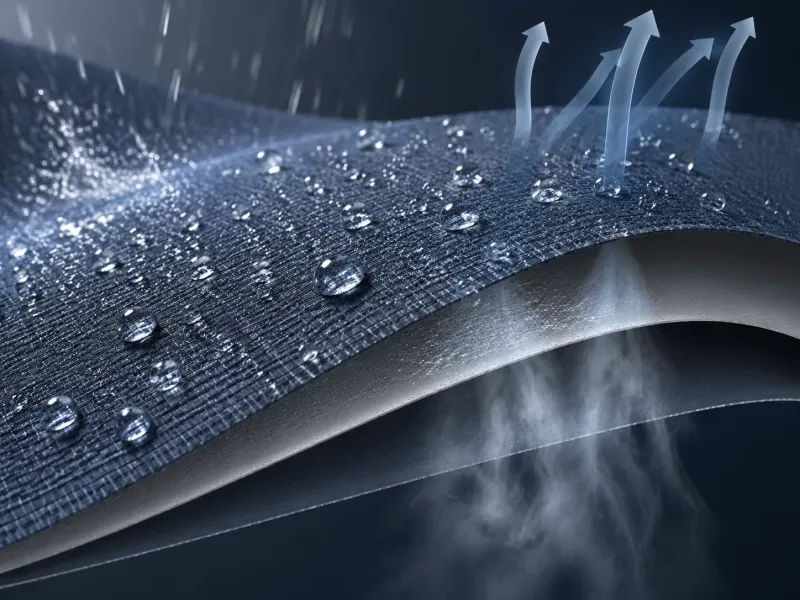
Waterproof Breathable Fabric
Advanced waterproof and breathable fabric engineered for high-performance outdoor garments.
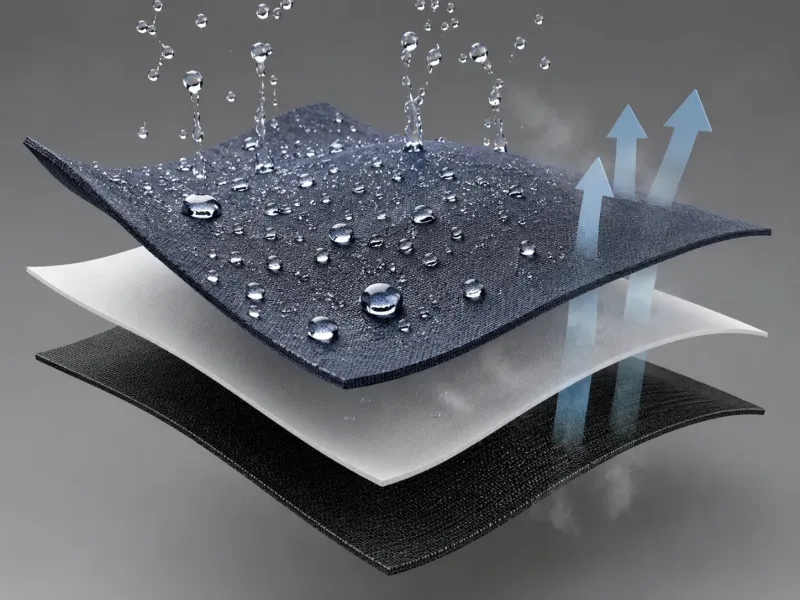
3 Layer Waterproof Fabric
Premium 3-layer waterproof fabric for professional outdoor and technical apparel.
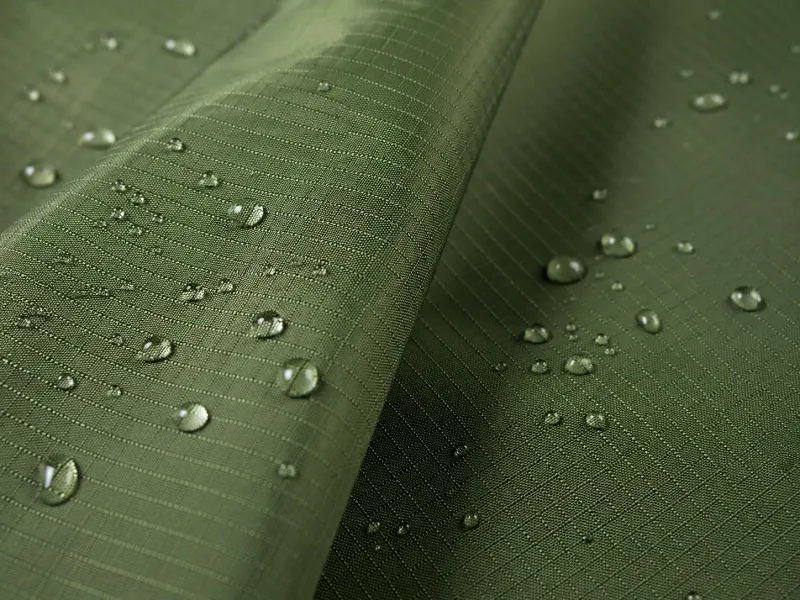
Ripstop Waterproof Fabric
Lightweight ripstop waterproof fabric with enhanced tear resistance for outdoor applications.
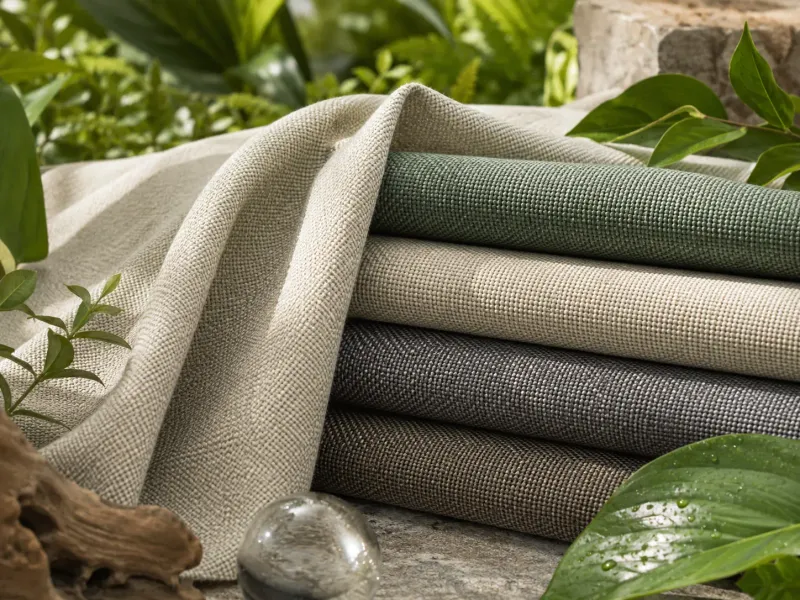
Eco Friendly Outdoor Fabric
Environmentally responsible outdoor fabric engineered for durability and sustainable performance.
Related Categories
Related Applications
Compare hydrostatic head, breathability, DWR, and laminate construction before you spec your next shell.
Request Waterproof Fabric Samples