
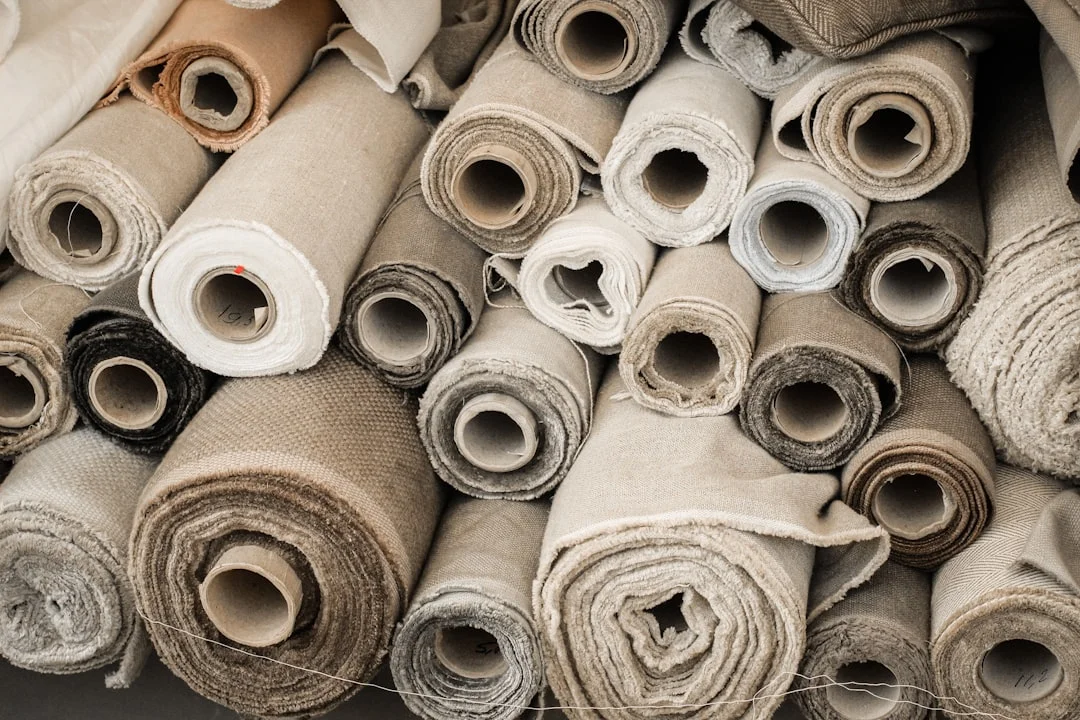
Buyers sourcing 3 layer waterproof breathable fabric quickly discover that per-yard pricing is not a single number — it is a function of membrane thickness, hydrostatic head rating, breathability (MVTR), and face-fabric denier. As of 2026, procurement teams comparing suppliers across North America and Europe need a framework, not just a quote sheet, to understand why one roll costs more than another. This guide breaks down the technical variables that drive per-yard cost differences for 3 Layer Waterproof Fabric, contrasts it against 2-layer and 2.5-layer alternatives such as Waterproof Breathable Fabric and Ripstop Waterproof Fabric, and explains how bulk order volume, customization, and construction type affect final pricing. We prep bulk fabric quotes weekly and our QC checks each roll batch before shipment, so the goal here is to give buyers a realistic, spec-driven basis for evaluating quotes rather than comparing sticker prices in isolation.
Why 3 Layer Waterproof Fabric Pricing Varies So Much
The Core Cost Drivers
Most buyers assume waterproof fabric pricing scales linearly with thickness, but that is a common misconception. In practice, per-yard cost is driven by three interacting variables: membrane technology, lamination complexity, and face-fabric weight.
- Membrane type: Micro-porous PU films cost less to produce than premium TPU films
- Membrane thickness: Ranges from 15-30 microns on standard 3-Layer Waterproof Fabric constructions
- Hydrostatic head rating: Our 3 Layer Waterproof Fabric spans 20,000mm - 30,000mm, and every 5,000mm increment typically adds cost due to tighter lamination tolerances
- Breathability (MVTR): 10,000 - 18,000 g/m²/24h on 3-layer constructions, compared to 5,000 - 15,000 g/m²/24h on standard Waterproof Breathable Fabric
- Fabric weight: 180gsm - 280gsm range, with heavier face fabrics costing more per yard due to higher raw material input
Compared to a basic 2-layer laminate, a true 3-layer construction (face fabric + membrane + durable backer) requires an additional lamination pass, which is the single biggest driver of the per-yard price gap — we typically see 3-layer constructions priced at a premium over 2-layer equivalents due to this extra processing step.
Comparing Waterproof Fabric Types by Construction
Construction-Level Comparison
Not every waterproof breathable fabric is built the same way, and construction type is the fastest way to explain a price gap to a buyer who is only looking at a quote number.
| Fabric Type | Waterproof Rating | Breathability (MVTR) | Weight (GSM) | Construction |
| 3 Layer Waterproof Fabric | 20,000mm - 30,000mm | 10,000 - 18,000 g/m²/24h | 180-280gsm | 3-layer laminate |
| Waterproof Breathable Fabric | 10,000mm - 20,000mm | 5,000 - 15,000 g/m²/24h | 140-280gsm | 2/2.5/3-layer options |
| TPU Laminated Fabric | 20,000mm - 30,000mm | 8,000 - 18,000 g/m²/24h | 150-300gsm | TPU film lamination |
| Ripstop Waterproof Fabric | 5,000mm - 15,000mm | 3,000 - 8,000 g/m²/24h | 80-180gsm | Ripstop weave + PU/TPU coat |
| Waterproof Polyester Fabric | 5,000mm - 10,000mm | 3,000 - 8,000 g/m²/24h | 120-250gsm | PU/PVC coated |
Unlike lightweight Ripstop Waterproof Fabric, which trades waterproofing for a lower weight and lower per-yard cost, 3 Layer Waterproof Fabric targets applications where sustained wet-weather performance matters more than pack weight. TPU Laminated Fabric sits in a similar performance tier but uses a TPU membrane (10-60 micron range) instead of a micro-porous PU film, which changes both hand-feel and cost structure.
How Order Volume and Customization Affect Per-Yard Cost
Volume, Customization, and Lead Time Factors
Per-yard pricing on any technical laminate is volume-sensitive. We run bulk production for export and wholesale buyers across North America and Europe, and the following factors consistently move the quoted price:
- Order volume: Larger roll quantities reduce per-yard cost by spreading fixed lamination setup costs across more output
- Custom GSM or membrane spec: Requesting a non-standard point within the 180-280gsm range or a specific hydrostatic head target (e.g., 25,000mm vs. the standard 20,000mm) adds engineering and trial-run cost
- Color and DWR finish: A PFC-Free Durable Water Repellent finish or custom dyeing adds a processing step compared to natural/standard finish
- Width customization: Standard rolled or folded widths carry lower cost than custom-cut widths requiring additional slitting
Compared to ordering a small sample run, scaling to a full production roll run typically reduces the effective per-yard price by a meaningful margin because lamination line setup is a fixed cost regardless of run length — this is the single most reliable lever buyers have to control per-yard price.
How to Request an Accurate Per-Yard Quote
What to Include in a Quote Request
To get an apples-to-apples per-yard comparison across suppliers, a quote request should specify the same technical baseline every time. Based on the specs we quote against weekly, include:
- Target hydrostatic head (e.g., 20,000mm vs. 30,000mm)
- Required MVTR breathability range (10,000-18,000 g/m²/24h for 3-layer)
- Face fabric base — nylon tricot or polyester tricot
- Target weight (GSM) within the 180-280gsm range
- Roll quantity (yards or meters) and whether it is a sample or production run
- Finish requirements (DWR type, color, width)
Suppliers who quote without asking for these details are usually quoting a generic SKU rather than pricing your actual application — a comparison across suppliers is only meaningful when the hydrostatic head, MVTR, and GSM are held constant. For applications outside pure waterproofing, related constructions like Outdoor Shell Fabric or general-purpose Waterproof & Breathable Fabric may offer a better cost-to-performance fit depending on the end use.
Frequently Asked Questions
Why is 3 layer waterproof breathable fabric more expensive than 2 layer fabric per yard?
3-layer construction adds a durable backer layer bonded to the face fabric and membrane in a second lamination pass, which increases both processing time and material input compared to a 2-layer laminate. This extra step is the primary reason 3-layer fabrics such as [3 Layer Waterproof Fabric](/products/3-layer-waterproof-fabric/) carry a higher per-yard price than 2-layer alternatives with the same membrane.
Does a higher hydrostatic head rating always mean a higher per-yard price?
Generally yes, within a given membrane technology. Moving from a 20,000mm to a 30,000mm hydrostatic head rating typically requires a thicker or higher-quality membrane film, which raises material cost per yard. However, membrane type (micro-porous PU vs. TPU) also affects price independently of the hydrostatic head number, so two fabrics with the same rating can still differ in cost.
How does order volume affect the per-yard price of waterproof breathable fabric?
Lamination lines have fixed setup costs regardless of run length, so larger roll quantities spread that fixed cost across more yards and lower the effective per-yard price. Buyers evaluating wholesale or export volumes should request quotes at their actual target quantity rather than relying on a sample-run price, since the two can differ meaningfully.
What specs should I compare when getting price quotes from multiple fabric suppliers?
Hold hydrostatic head (mm), MVTR breathability (g/m²/24h), and fabric weight (GSM) constant across all quotes. A price difference is only meaningful if these three specs match; otherwise you are comparing fundamentally different constructions, such as [Waterproof Breathable Fabric](/products/waterproof-breathable-fabric/) at 10,000-20,000mm versus a true 3-layer laminate at 20,000-30,000mm.
Is TPU laminated fabric priced differently than standard 3 layer waterproof fabric?
Yes. [TPU Laminated Fabric](/products/tpu-laminated-fabric/) uses a TPU membrane ranging from 10 to 60 microns and requires adhesion strength above 20 N/5mm, which is a different production process than the micro-porous PU film used in standard 3-layer constructions. Pricing depends on the specific micron thickness requested within that range.
Related Resources
Related Products (4)
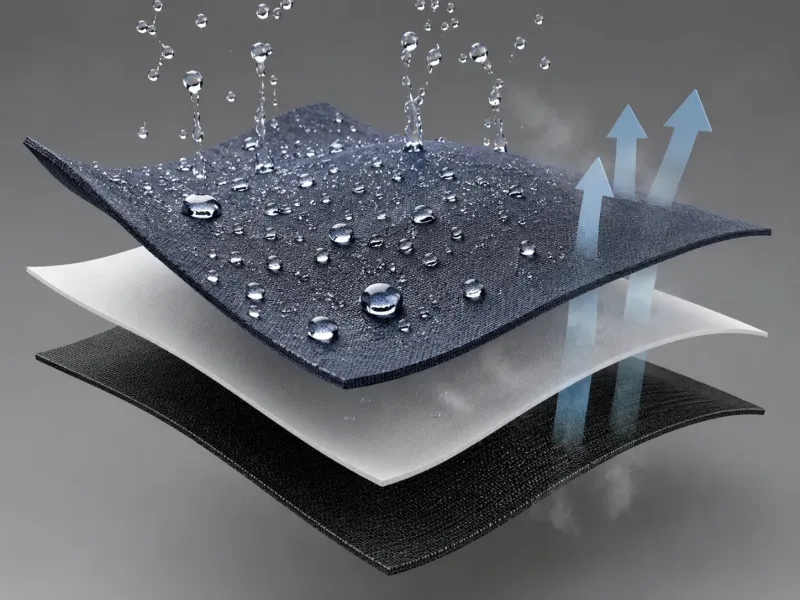
3 Layer Waterproof Fabric
Premium 3-layer waterproof fabric for professional outdoor and technical apparel.
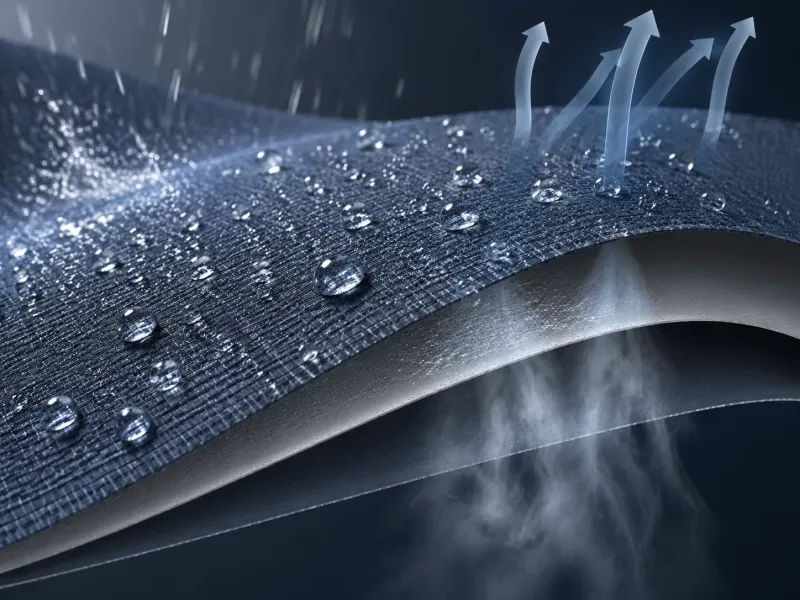
Waterproof Breathable Fabric
Advanced waterproof and breathable fabric engineered for high-performance outdoor garments.
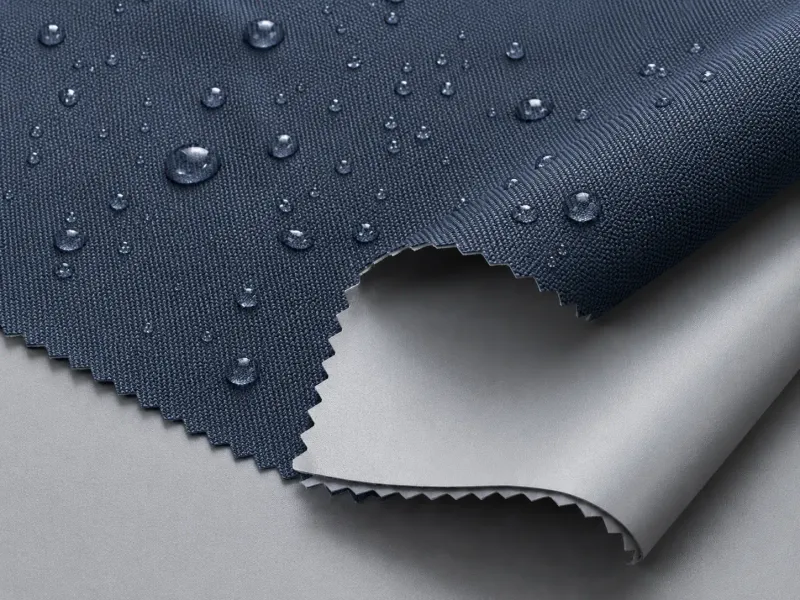
TPU Laminated Fabric
TPU laminated fabric providing superior waterproof performance and flexibility.
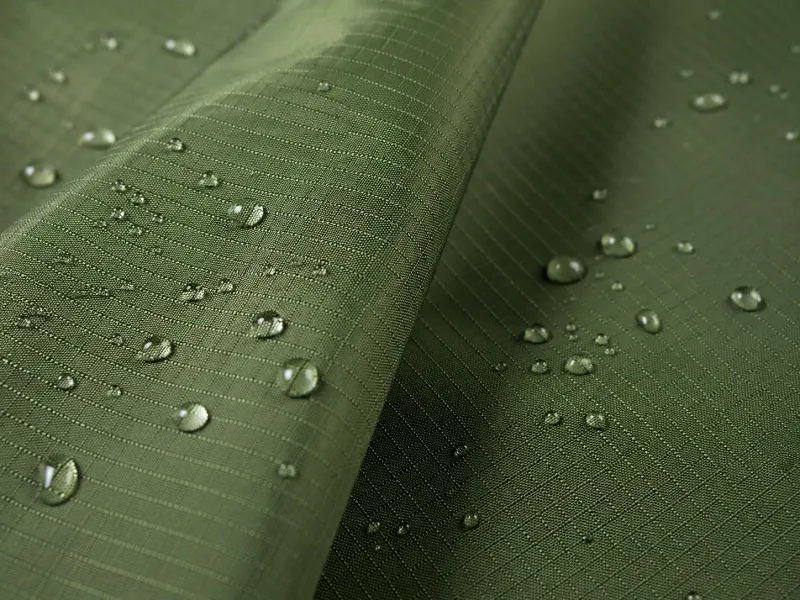
Ripstop Waterproof Fabric
Lightweight ripstop waterproof fabric with enhanced tear resistance for outdoor applications.
Related Categories
How specs like hydrostatic head and MVTR drive per-yard cost differences
Request a Per-Yard Fabric Quote