

Choosing between workwear fabric and healthcare uniform fabric is not a matter of preference—it is a matter of occupational safety and infection control. Industrial workwear must resist flame, heat, and abrasion, while healthcare uniforms must block microbial growth, withstand frequent laundering, and keep staff comfortable during long shifts. At FuncFabric, we manufacture both categories to the specific standards that each environment demands.
Why Workwear and Healthcare Uniform Fabrics Are Not Interchangeable
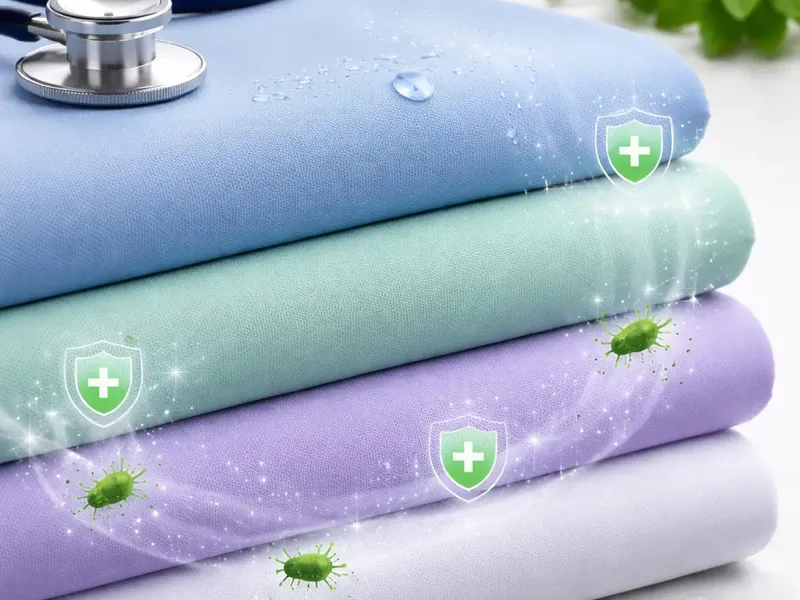
Attempting to use standard workwear fabric for medical uniforms—or medical fabric for industrial coveralls—creates serious performance gaps. FR workwear fabric is typically a heavyweight blend of modacrylic and cotton, weighing between 220 and 350 GSM, with self-extinguishing properties that prevent the fabric from supporting a flame. Healthcare uniform fabric, in contrast, is optimised for a completely different threat: it is a poly-cotton or 100% polyester construction in a lighter 100 to 140 GSM range, engineered to deliver an antibacterial rate of at least 99.9% against E. coli and S. aureus. These are not interchangeable categories; each fabric is designed for a distinct set of risks, compliance requirements, and end-user expectations. Compared to a general-purpose cotton twill, both fabric categories outperform in their respective domains, but fail when used outside their intended environment.
Key Performance Differences at a Glance
The most visible difference is protection priority. Workwear textiles such as FR Workwear Fabric and Arc Flash Protection Fabric focus on PPE compliance, with flame resistance, antistatic yarns, and high abrasion resistance for heavy industrial environments. Healthcare textiles such as Healthcare Uniform Fabric and Medical Antibacterial Fabric focus on hygiene, with OEKO-TEX Standard 100 compliance, stain-resistant finishes, and antimicrobial performance that survives 50 or more industrial launder cycles. Weight is another clear separator: workwear fabrics start around 180 GSM and range up to 360 GSM, while healthcare uniform fabric is deliberately lightweight at 100–140 GSM to improve breathability for 12-hour shifts. Wash durability also differs: healthcare fabrics are tested for colour fastness Grade 4–5 and dimensional stability, whereas FR workwear fabrics are verified to standards such as NFPA 2112 and EN ISO 11612. Understanding these benchmarks helps procurement teams select the right roll goods the first time.
How to Choose the Right Fabric for Your Application
Start with the end-use environment. If your customers work near weld sparks, electrical arcs, or petrochemical hazards, specify FR workwear fabric, Welding Protective Fabric, or Oil & Gas Protective Fabric—all engineered with self-extinguishing behaviour and heavy twill construction. If your customers are healthcare workers in hospitals, clinics, or laboratories, select healthcare uniform fabric or medical antibacterial fabric, which combine antimicrobial protection with a smooth, easy-care finish. As of 2026, the industry benchmark for medical textiles is an antibacterial rate of ≥99.9% and at least 50 industrial launder cycles, while industrial protective wear must meet standards like EN ISO 11611 and NFPA 2112. We manufacture both categories in widths of 150–180cm, and we can customise weight, finish, and recycled content to fit your brand or program requirements. We regularly supply export-quality rolls to uniform manufacturers and workwear producers across North America and Europe.
Material Specifications and Compliance
For healthcare, our Healthcare Uniform Fabric is available in poly-cotton (T/C) blends or 100% polyester, with a weight of 100–140 GSM, antibacterial protection ≥99.9%, and colour fastness Grade 4–5. Our Medical Antibacterial Fabric adds OEKO-TEX Standard 100 certification, high air permeability, and a stain-resistant finish. For workwear, our FR Workwear Fabric offers self-extinguishing properties, antistatic performance, and abrasion resistance in weights from 220 to 350 GSM, and complies with NFPA 2112 and EN ISO 11612. If sustainability is a priority, we also produce GRS Certified Recycled Fabric with 20–100% certified recycled content, suitable for both medical scrubs and base-layer workwear. Our Antibacterial Fabric and Flame Retardant Fabric collections cover the full spectrum of uniform and protective clothing applications.
Sourcing Both Fabric Categories from One Supplier
Consolidating your textile sourcing simplifies quality control and ensures consistent performance across your product lines. At FuncFabric, we manufacture both healthcare and workwear fabrics, with customisable weights—from 120 GSM to 260 GSM for knitted antibacterial fabrics, and up to 420 GSM for welded and industrial protective fabrics. We also offer GRS-certified recycled options, OEKO-TEX-compliant medical fabrics, and FR fabrics that meet international protection standards. Whether you need a short development run or full-scale production for national distribution, our team can align specifications, documentation, and quality reports for both categories. Request a consultation to compare samples side by side and confirm which fabric structure meets your performance targets.
Frequently Asked Questions
What is the difference between workwear fabric and healthcare uniform fabric?
Workwear fabric is designed for physical and thermal protection, including flame resistance, antistatic properties, and abrasion resistance, typically weighing 220–350 GSM. Healthcare uniform fabric is designed for hygiene and comfort, weighing only 100–140 GSM, with an antibacterial rate of ≥99.9% and wash durability of at least 50 industrial launder cycles. The two are manufactured to different standards and should not be interchanged.
Can healthcare uniform fabric be used for industrial workwear?
No. Healthcare uniform fabric is not flame-resistant and lacks the heavyweight construction required for welding, arc flash, or petrochemical environments. Industrial workwear needs FR-certified materials such as FR Workwear Fabric or Arc Flash Protection Fabric, which self-extinguish and meet standards like NFPA 2112. Using a medical scrub fabric in these settings would leave workers exposed to serious hazards.
What antibacterial rate is required for healthcare uniform fabric?
Current industry benchmarks for healthcare uniform fabric call for an antibacterial rate of at least 99.9% against pathogens such as E. coli and S. aureus. Products like our Medical Antibacterial Fabric achieve this efficiency and are compliant with OEKO-TEX Standard 100, providing verified protection for medical environments.
How many washes can healthcare uniform fabric withstand?
High-quality healthcare uniform fabrics are engineered to maintain their antibacterial performance and colour fastness for 50 or more industrial launder cycles. Our Healthcare Uniform Fabric is tested per AATCC 61 methods, with colour fastness Grade 4–5, ensuring the uniform remains professional and protective throughout its service life.
What standards apply to FR workwear fabric?
FR workwear fabric is tested against international standards including NFPA 2112, EN ISO 11612, and EN ISO 11611. Depending on the blend, fabrics such as our Inherent Flame Retardant Fabric can withstand long-term heat exposure and self-extinguish in under two seconds. Always verify the specific standard required for your end market.
Related Resources
Related Products (2)
Related Categories
Related Applications
A practical guide to selecting the right textile for safety and hygiene
Request a Workwear or Healthcare Fabric Consultation