
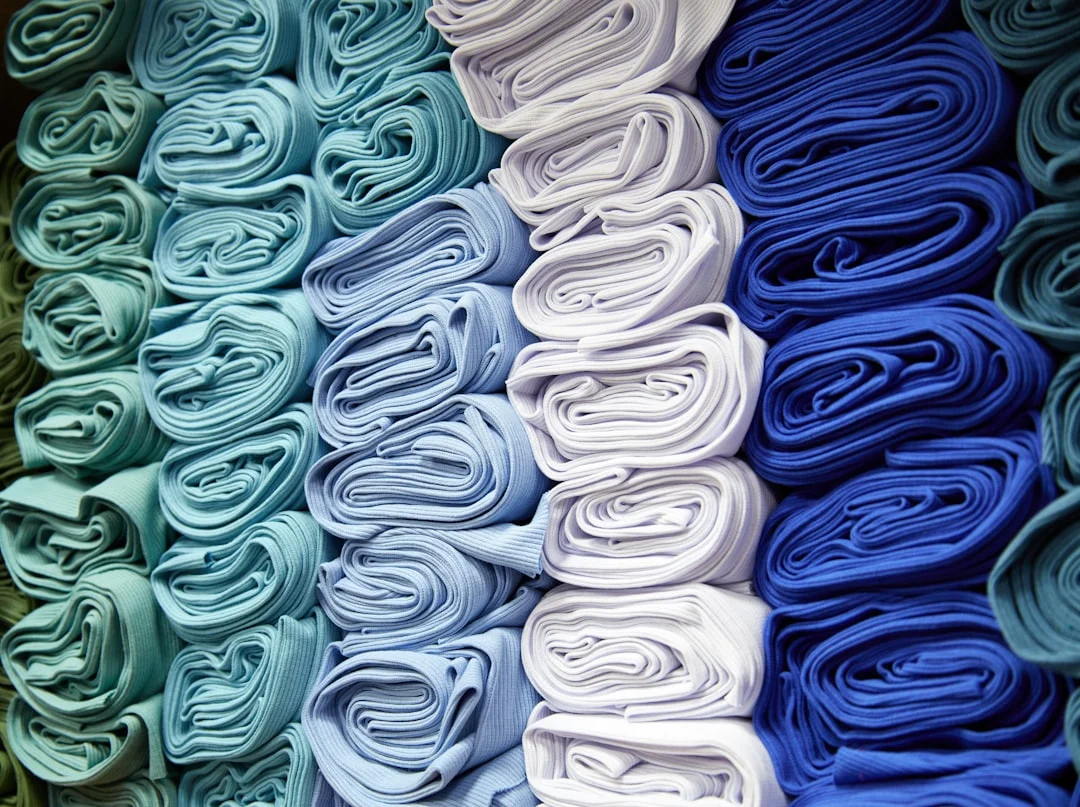
As sustainability expectations reshape the sportswear & activewear supply chain, brand developers and sourcing managers face a critical material decision: stick with conventional sportswear fabric, or transition to recycled performance fabric? Both categories deliver the stretch, moisture management, and durability that athletes demand — but they differ significantly in raw material origin, certification requirements, environmental credentials, and end-market positioning. This comparison draws on real fabric specifications from FuncFabric's 2026 product range to give you a grounded, data-backed framework for making the right call for your brand, your buyers, and your production volumes.
The Core Problem: Performance Alone Is No Longer Enough
The Changing Brief for Activewear Fabric
A decade ago, sourcing a sportswear fabric meant optimising for three variables: stretch, wicking speed, and GSM. Today, a fourth variable — verified sustainability — has become a non-negotiable for a growing segment of retail buyers, particularly in North America and Europe.
The problem facing many brands is not a lack of performance options. Both conventional and recycled routes can deliver 4-way stretch, moisture wicking, and quick-dry finishes. The problem is that conventional virgin-polyester fabric carries no chain-of-custody documentation, which increasingly disqualifies it from retailer ESG scorecards and B-Corp-aligned procurement programmes.
Why This Comparison Matters in 2026
As of 2026, the Global Recycled Standard (GRS) has become the de facto certification benchmark for recycled content claims across major sportswear retail channels. Brands that cannot present GRS documentation risk losing shelf space — not because their product performs worse, but because they cannot prove what it is made from.
Compared to sourcing conventional fabric and adding a generic 'eco' marketing claim, switching to a GRS-certified, traceable recycled performance fabric removes the audit risk entirely and provides retailers with the chain-of-custody (COC) documentation they now routinely require.
Technical Specifications: Side-by-Side Comparison
Head-to-Head Specification Table
Below is a direct comparison using verified specs from FuncFabric's current product range. Conventional sportswear specs are drawn from the Moisture Wicking Stretch Fabric; recycled performance specs from the Recycled Performance Fabric and RPET Sports Fabric.
| Attribute | Conventional Sportswear Fabric | Recycled Performance Fabric |
| **Material Origin** | Virgin Polyester / Elastane | 100% RPET or Recycled Nylon Blends |
| **Typical Composition** | 82% Polyester / 18% Elastane | 100% Recycled Polyester (RPET) |
| **Weight Range (GSM)** | 160 – 220 gsm | 130 – 240 gsm (customizable) |
| **Stretch** | 4-Way, 25%–50% | 4-Way Stretch |
| **Wicking Speed** | < 30 seconds contact time | Moisture Wicking / Quick-Dry |
| **Shape Recovery** | > 95% | High Abrasion Resistance + Recovery |
| **Fabric Width** | 160 – 180 cm | 150 – 180 cm |
| **Sustainability Cert** | OEKO-TEX / REACH | GRS Certified & Traceable |
| **Construction Options** | Jersey / Mesh / Interlock | Single Jersey, Interlock, Mesh, Technical Woven |
| **COC Documentation** | Not applicable | Full Chain of Custody from post-consumer waste |
Key Takeaway on Specs
The performance numbers are closely matched. The decisive differentiator is certification and traceability: recycled performance fabric ships with GRS documentation and full COC, whereas conventional sportswear fabric does not. For brands selling into sustainability-conscious retail channels, this single difference is often the deciding factor.
Fabric Constructions and Application Fit
Matching Fabric Construction to End Use
Both conventional and recycled routes offer multiple construction types — but the available builds differ slightly, which affects which garment categories each fabric is best suited for.
Conventional Sportswear Fabric — Best Construction Fits
- Single Jersey (140–220 gsm): T-shirts, training tops, running vests
- Interlock (160–220 gsm): Compression leggings, base layers requiring stable recovery
- Moisture Wicking Mesh (90–150 gsm): Ventilation panels, lightweight running shorts
- Rib Knit: Cuffs, collars, fitted crop tops
Recycled Performance Fabric — Best Construction Fits
- Single Jersey / Interlock (130–240 gsm): Full activewear sets, yoga wear, cycling kit
- Open Mesh Knit (lighter GSM): Breathable jerseys, panel inserts, sports bras
- Technical Woven: Outerwear facings, wind-resistant running jackets
- Interlock with wicking finish: Performance leggings where GRS certification is required by the buyer
Construction Comparison
| Construction | Available in Conventional | Available in Recycled | Notes |
| Single Jersey | ✓ | ✓ | Both routes comparable |
| Interlock | ✓ | ✓ | Both routes comparable |
| Open Mesh | ✓ | ✓ | Recycled option via RPET Sports Fabric |
| Technical Woven | Limited | ✓ | Recycled route offers broader woven options |
| Rib Knit | ✓ | ✓ | Available in Sustainable Activewear Fabric |
For brands designing full activewear collections across multiple silhouettes, recycled performance fabric actually provides a broader construction menu — including technical woven options not readily available in standard sportswear jersey lines.
Sustainability Credentials and Certification Deep Dive
GRS Certification: What It Actually Means
The Global Recycled Standard (GRS) is an international, third-party verified standard that certifies both the recycled content of a product and the social and environmental practices used in its production. It is the standard most commonly required by major sportswear retailers for recycled content claims.
FuncFabric's Recycled Fabric Certification Tiers
- Recycled Performance Fabric: GRS Certified, 100% RPET or Recycled Nylon, full traceability
- GRS Certified Recycled Fabric: Recycled content from 20% to 100% (independently audited), full COC documentation from post-consumer waste to fabric roll, weight range 120–300 gsm
- RPET Sports Fabric: 100% RPET from post-consumer PET bottles, GRS certified, moisture wicking / quick-dry / 4-way stretch, available in Single Jersey, Interlock, Rib, or Open Mesh
- Sustainable Activewear Fabric: 85%–100% recycled content (GRS Certified & Traceable), weight 140–260 gsm
What Conventional Fabric Can and Cannot Claim
| Claim | Conventional Sportswear Fabric | Recycled Performance Fabric |
| OEKO-TEX Standard 100 | Available | Available |
| GRS Certification | ✗ Not applicable | ✓ Available |
| Chain of Custody (COC) | ✗ Not applicable | ✓ Provided |
| Post-Consumer Waste Origin | ✗ | ✓ PET bottle source |
| Retailer ESG Scorecard Compliance | Partial | Full |
A Practical Note on Blended Options
For brands not yet ready for 100% recycled content, GRS Certified Recycled Fabric is available with recycled content as low as 20%, independently audited. This provides a traceable, certifiable entry point — without requiring a full supply chain overhaul — and is a meaningful step compared to zero-certification conventional sourcing.
Wholesale, MOQ, and Sourcing Considerations for B2B Buyers
Sourcing at Scale: What B2B Buyers Need to Know
We supply both conventional and recycled performance fabrics in wholesale and export volumes, serving activewear brands, private label manufacturers, and OEM operations globally. Here is what buyers typically need to evaluate beyond the technical spec sheet.
Width and Roll Format
- Conventional sportswear fabric (e.g., Moisture Wicking Stretch Fabric): 160–180 cm wide, rolled or folded
- Recycled Performance Fabric: 150–180 cm wide, rolled or folded
- GRS Certified Recycled Fabric: 150–250 cm wide — the widest option, relevant for cut-and-sew operations minimising fabric waste
Customisation Availability
Both fabric routes support bulk customisation:
- GSM adjustment — conventional range 160–220 gsm; recycled range 130–240 gsm (wider window)
- Colour: Custom dyeing available across both routes to Pantone specification
- Finish: Moisture wicking, quick-dry, and anti-odour finishes available on recycled substrates (see Odor Resistant Sports Fabric for antimicrobial options)
- Construction: Single Jersey, Interlock, Mesh, Rib, or Technical Woven depending on route
Documentation for Export
Recycled performance fabric orders include:
- GRS Certificate of Conformity
- Chain of Custody (COC) documentation
- Material test reports
Conventional sportswear fabric orders include OEKO-TEX and REACH documentation where applicable.
Recommendation by Brand Stage
| Brand Stage | Recommended Route | Reason |
| Start-up / sampling phase | Conventional or low-MOQ recycled blend | Lower tooling complexity |
| Scaling (export to EU/NA) | Recycled Performance Fabric (GRS) | Retailer compliance requirements |
| Sustainability-positioned brand | RPET Sports Fabric / Sustainable Activewear Fabric | Full GRS certification + COC |
| OEM / private label for certified retailer | GRS Certified Recycled Fabric | 20–100% recycled content flexibility |
Compared to conventional sourcing, moving to GRS-certified recycled fabric does not significantly increase production complexity at our facility — we run both routes on the same knitting infrastructure and QC our recycled fabric batches to the same dimensional and colorfastness standards.
Frequently Asked Questions
Does recycled performance fabric perform as well as conventional sportswear fabric for high-intensity athletics?
Yes, for the majority of activewear applications. Both fabric routes deliver 4-way stretch, moisture wicking, and quick-dry performance at comparable GSM ranges (130–240 gsm for recycled vs. 160–220 gsm for conventional). The key difference is material origin and certification, not athletic performance. RPET Sports Fabric, for example, is constructed in Single Jersey, Interlock, Rib, or Open Mesh — the same constructions used in conventional performance apparel — and passes the same moisture wicking and colorfastness tests. For compression applications requiring very high elastane content, a conventional composition (e.g., 82% polyester / 18% elastane) may still be specified, though recycled nylon-elastane blends are available as an alternative.
What does GRS certification actually require, and do I need it for my activewear brand?
GRS (Global Recycled Standard) is a third-party certification that independently audits and verifies the recycled content percentage in a fabric, from post-consumer or post-industrial waste through to the finished roll. It also includes social and environmental production criteria. Whether you need it depends on your sales channels: most major EU and North American sportswear retailers now require GRS documentation for any 'recycled' content claim. Without it, recycled content claims cannot be substantiated in those markets. FuncFabric's recycled fabric range — including Recycled Performance Fabric, GRS Certified Recycled Fabric, RPET Sports Fabric, and Sustainable Activewear Fabric — all ship with GRS certification and full Chain of Custody (COC) documentation, covering recycled content levels from 20% to 100%.
Can I order recycled performance fabric in custom GSM and width for a specific garment cut?
Yes. FuncFabric's recycled performance fabric range is fully customisable in GSM and width within the following verified ranges: Recycled Performance Fabric is available from 140 gsm to 280 gsm and 150–180 cm wide; GRS Certified Recycled Fabric extends from 120 gsm to 300 gsm and up to 250 cm wide. Custom GSM is particularly relevant for brands designing lightweight training tops (lower GSM) versus compression leggings (higher GSM). Both width and GSM adjustments are supported in bulk wholesale orders, and samples can be produced to your specification before bulk commitment.
What is the environmental difference between RPET fabric and conventional virgin polyester sportswear fabric?
RPET (Recycled Polyethylene Terephthalate) fabric is produced from post-consumer PET bottles — the same plastic used in single-use beverage containers — rather than from virgin petroleum feedstock. The production of recycled polyester from PET bottles uses significantly less energy and produces lower CO₂ emissions compared to virgin polyester production, according to current industry lifecycle assessment data. Critically, RPET fabric from FuncFabric is GRS certified with full chain-of-custody documentation, meaning the post-consumer waste origin is independently verified — not a marketing claim. Conventional virgin polyester sportswear fabric carries no equivalent certification or traceability, which is the primary environmental distinction from a documentation and compliance standpoint.
Is there a blended option for brands that want partial recycled content without going to 100% RPET?
Yes. GRS Certified Recycled Fabric is available with recycled content from 20% to 100%, independently audited and verified. This is an important option for brands managing a transition to more sustainable materials, or for applications where a specific virgin fibre blend is required for performance reasons (e.g., a small elastane component). Any percentage of recycled content within that 20%–100% range can be documented and certified, providing a traceable, retail-compliant claim even at lower recycled content levels. This compares favourably to sourcing conventional fabric and adding an uncertified eco claim, which increasingly fails retailer due diligence checks.
Related Resources
Related Products (4)
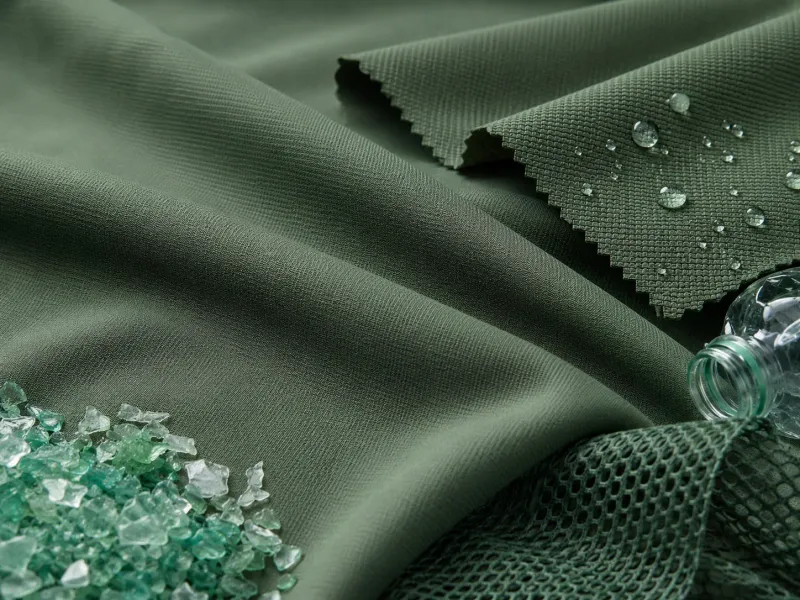
Recycled Performance Fabric
Advanced recycled performance fabric combining sustainability with technical textile functionality.
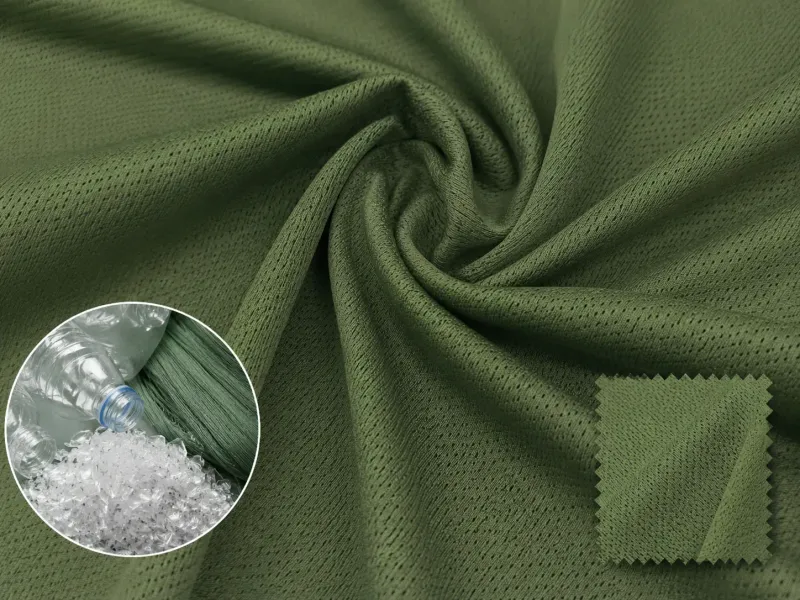
RPET Sports Fabric
Eco-friendly RPET sports fabric designed for activewear brands seeking sustainable performance textiles.
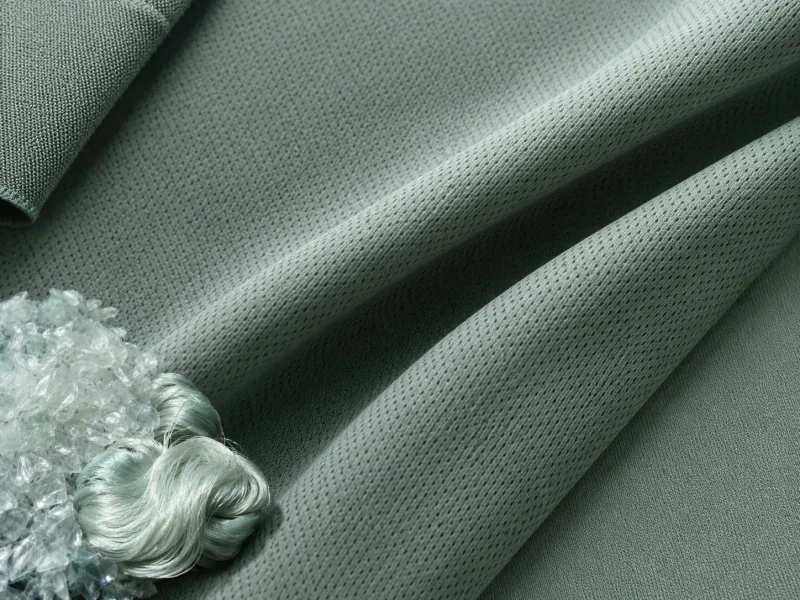
Sustainable Activewear Fabric
Sustainable performance fabric combining recycled materials with modern athletic apparel requirements.
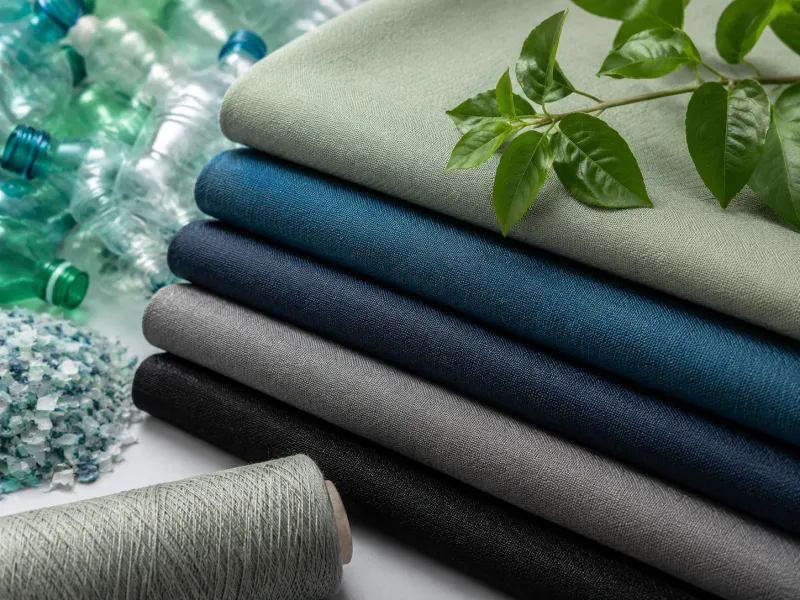
GRS Certified Recycled Fabric
Global Recycled Standard certified fabric providing traceable sustainability for international brands.
Related Applications
Related Industries
A technical comparison to help activewear brands and manufacturers choose the best fabric for performance, sustainability, and scale
Request a Sample of Our Recycled Performance Fabric