
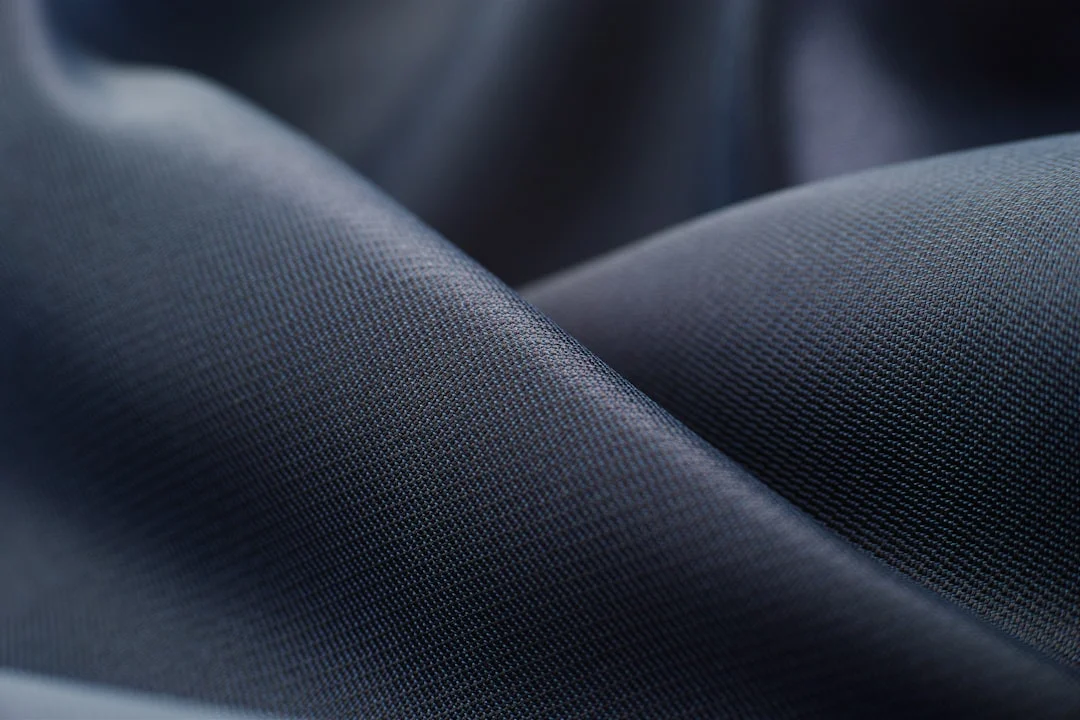
Choosing recycled polyester for activewear is not simply a matter of selecting an RPET label. A fabric must suit the garment’s movement, sweat load, weight target, surface feel, and sustainability documentation. For leggings, training tops, running layers, and teamwear, buyers need to balance recycled content with stretch, recovery, moisture management, and construction. At FuncFabric, we help product teams compare knit structures and performance specifications before moving into bulk or export sourcing. This guide explains how to choose recycled polyester fabric for sustainable activewear with practical ranges and documentation points relevant as of 2026.
Start With the Garment Problem
Define the activewear use case first
A recycled-polyester selection should begin with where and how the garment is worn. A 140 GSM running tee, a 220 GSM training top, and a 260 GSM structured jogger face very different demands. Selecting one fabric specification for an entire collection can create avoidable compromises in opacity, airflow, or drape.
- High-sweat tops: prioritize rapid moisture transport, low weight, and airflow.
- Leggings and fitted layers: prioritize 4-way stretch compatibility, recovery, and suitable opacity after extension.
- Warm-up and lifestyle pieces: consider interlock, rib, or French terry constructions with more body.
- Outdoor training apparel: evaluate UV and abrasion needs alongside moisture management.
| Garment type | Useful starting range | Construction direction |
| Running tee | **130–180 GSM** | Single jersey or open mesh |
| Training top | **160–220 GSM** | Jersey or interlock |
| Jogger or warm-up layer | **200–260 GSM** | Interlock, rib, or French terry |
Compared with a heavier interlock, an open mesh can provide greater ventilation for high-output tops, but it may be less appropriate where coverage and a smooth hand feel are the priority. For product development in Sportswear & Activewear, make the end use—not the sustainability claim—the first filter.
Verify Recycled Content and Traceability
Check what the recycled claim actually covers
Recycled polyester is commonly made from post-consumer PET bottles, but recycled-content percentages and supporting records can differ by fabric program. Ask for the composition, the certified recycled-content range, and the chain-of-custody documentation before approving a material for a sustainable collection.
- GRS Certified Recycled Fabric is available with 20%–100% GRS-certified recycled content and full chain-of-custody documentation from post-consumer waste to fabric roll.
- Sustainable Activewear Fabric offers 85%–100% recycled content in RPET or recycled-nylon blend options.
- Recycled Performance Fabric is available in 100% Recycled Polyester (RPET) or recycled nylon blends.
- Confirm whether certification and traceability documents correspond to the specific bulk fabric, not only an earlier development sample.
| Documentation check | Why it matters |
| Recycled-content percentage | Supports accurate garment claims |
| GRS status | Provides an independently audited recycled-content framework |
| Chain-of-custody record | Connects source material to the finished roll |
| Composition statement | Identifies RPET-only versus blended constructions |
As of 2026, traceable material documentation is a practical sourcing requirement for many export-oriented Sustainable Fashion programs serving North America and Europe. It also helps merchandising, compliance, and purchasing teams use consistent product language.
Match Construction, GSM, and Stretch
Select the structure before approving the hand feel
Construction determines how recycled polyester behaves in wear. Single jersey is often selected for lighter tops; interlock gives a denser, more stable surface; mesh improves ventilation; and technical woven structures can suit pieces requiring more abrasion resistance. Review the fabric both relaxed and stretched, because a hand feel that seems suitable on a swatch may change in a fitted garment.
- Recycled Performance Fabric is available in single jersey, interlock, mesh, or technical woven structures at 140–280 GSM.
- Recycled Polyester Fabric covers 120–280 GSM across jersey, interlock, mesh, twill, and ripstop constructions.
- Sustainable Activewear Fabric is offered at 140–260 GSM in single jersey, interlock, rib, or French terry knit.
- Available roll or folded widths commonly range from 150 cm to 180 cm for activewear-oriented recycled fabrics.
| Selection factor | Lighter construction | Denser construction |
| Typical weight | **120–180 GSM** | **200–280 GSM** |
| Best fit | Tees, singlets, ventilated panels | Training layers, joggers, structured tops |
| Primary trade-off | Lower coverage and body | More weight and reduced airflow |
For movement-focused styles, assess 4-way stretch compatibility and recovery at the garment’s intended extension. Unlike a generic recycled woven, a knit construction designed for activewear can better support body movement and moisture transfer when the style calls for it.
Specify Measurable Performance Requirements
Turn performance expectations into testable criteria
Sustainable sourcing should not remove the need for performance specifications. Write the product brief around measurable properties: wicking, drying behavior, air permeability, abrasion exposure, and, where relevant, UV protection. This gives sourcing teams a clear basis for comparing sample options.
- RPET Sports Fabric is available at 130–240 GSM with moisture-wicking, quick-dry, and 4-way-stretch-compatible options.
- Moisture Wicking Mesh Fabric provides air permeability above 500 mm/s and wicking speed below 15 seconds under AATCC 195.
- Moisture Wicking Jersey Fabric can achieve a wicking height above 8 cm in 30 minutes under AATCC 197.
- Antibacterial Moisture Wicking Fabric uses 100% RPET with silver-ion treatment, a stated antibacterial rate of ≥99% against E. coli and S. aureus, and wicking speed below 25 seconds.
| Requirement | Relevant benchmark | Suitable direction |
| Ventilated panel | **>500 mm/s** air permeability | Lightweight mesh |
| Rapid moisture contact | **<15–25 seconds** | Wicking mesh or treated knit |
| Sun-exposed training | **UPF 50+** | UV-focused stretch fabric |
| Abrasion-prone use | High abrasion resistance | Technical knit or woven |
Do not assume that a recycled-content claim automatically means quick-dry or high stretch. Confirm each requested property in the chosen construction, especially when adapting fabric for wholesale uniforms, clubwear, or bulk activewear assortments.
Use a Sampling and Bulk-Sourcing Checklist
Approve fabric through a controlled development process
Before bulk production, compare swatches and sample garments under the conditions the style will face. Review color, weight, stretch, recovery, surface appearance, and moisture behavior after making the actual pattern. At FuncFabric, a useful brief identifies the garment category, target GSM, construction, recycled-content expectation, width, finish, and required documentation from the start.
1. Define the garment use and target weight, such as 160–220 GSM for a training top.
2. Select the construction: jersey, interlock, mesh, rib, French terry, or technical woven.
3. Specify recycled content, for example 85%–100% where the product program requires it.
4. Request material documentation and evaluate bulk-relevant roll width, typically 150–180 cm for activewear options.
5. Test a finished garment for fit, coverage, seam behavior, and performance before scale-up.
| Brief item | Example decision |
| Product | Lightweight running tee |
| Fabric | RPET single jersey or mesh |
| Target weight | **130–180 GSM** |
| Key performance | Wicking and quick-dry |
| Documentation | GRS and chain of custody where required |
For export-quality sourcing, align the approved sample, technical specification, and documentation requirements before committing to bulk quantities. This approach is more reliable than choosing only by color card or composition, and it supports consistent communication across design, buying, and manufacturing teams.
Frequently Asked Questions
What GSM is suitable for recycled polyester activewear?
The appropriate weight depends on the garment. Lightweight running or training tops often begin around 130–180 GSM, while mid-weight training pieces commonly sit around 160–220 GSM. More structured joggers, warm-up layers, and French terry styles may require 200–260 GSM. Always review coverage, drape, and stretch in a finished sample.
How can I verify recycled polyester content in activewear fabric?
Request the fabric composition and applicable GRS documentation for the material being sourced. GRS Certified Recycled Fabric offers 20%–100% certified recycled content with chain-of-custody documentation from post-consumer waste to fabric roll. Match these documents to the approved bulk fabric specification.
Is recycled polyester suitable for moisture-wicking sportswear?
Yes, when the construction and finish are selected for moisture management. RPET Sports Fabric is available with moisture-wicking and quick-dry performance, while moisture-wicking mesh can provide air permeability above 500 mm/s and wicking speed below 15 seconds. Confirm the required test method and target with the final fabric construction.
Which knit construction should I choose for sustainable activewear?
Choose single jersey for lighter tops, mesh for ventilation zones, interlock for a denser and more stable surface, rib for stretch-focused details, and French terry for warmer layers. Recycled activewear options are available across 140–280 GSM, so construction and weight should be selected together rather than separately.
Related Resources
Related Products (3)
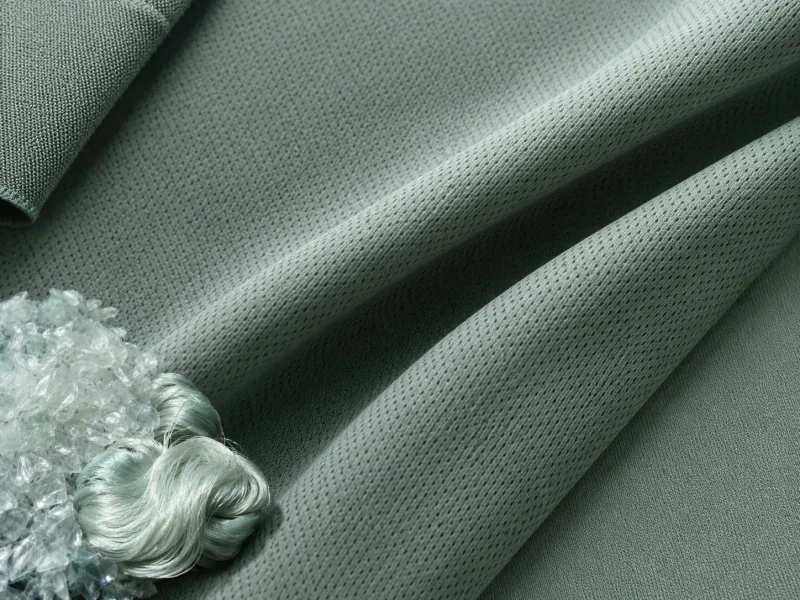
Sustainable Activewear Fabric
Sustainable performance fabric combining recycled materials with modern athletic apparel requirements.
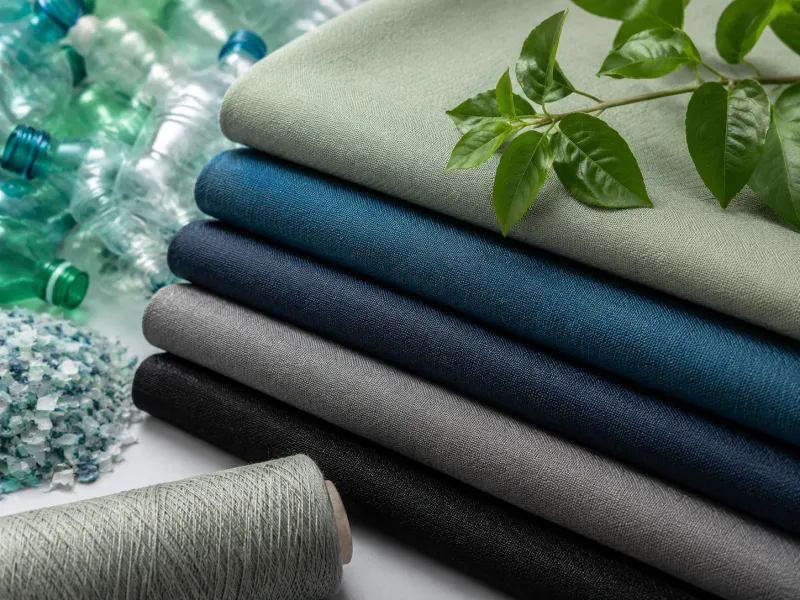
GRS Certified Recycled Fabric
Global Recycled Standard certified fabric providing traceable sustainability for international brands.
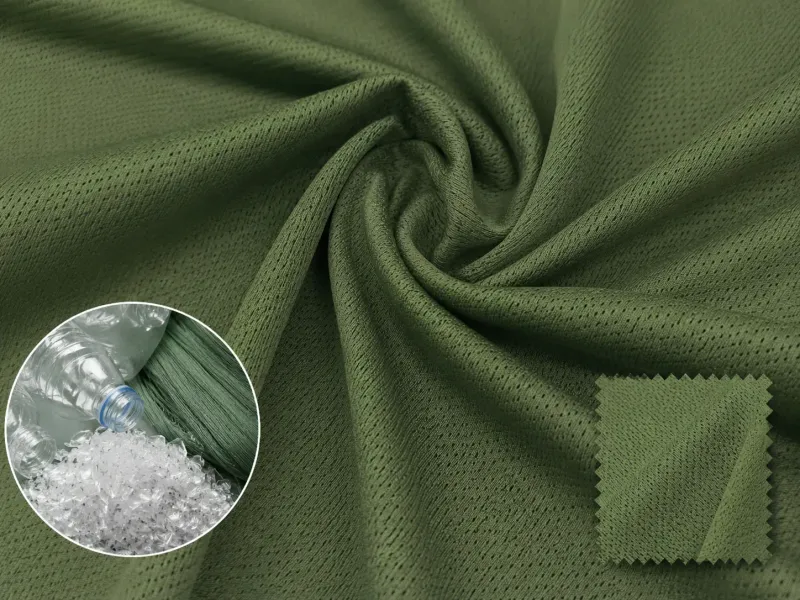
RPET Sports Fabric
Eco-friendly RPET sports fabric designed for activewear brands seeking sustainable performance textiles.
Related Categories
Related Applications
Related Industries
Match verified recycled content, comfort, and performance to every activewear style.
Request Recycled Activewear Fabric Specifications