
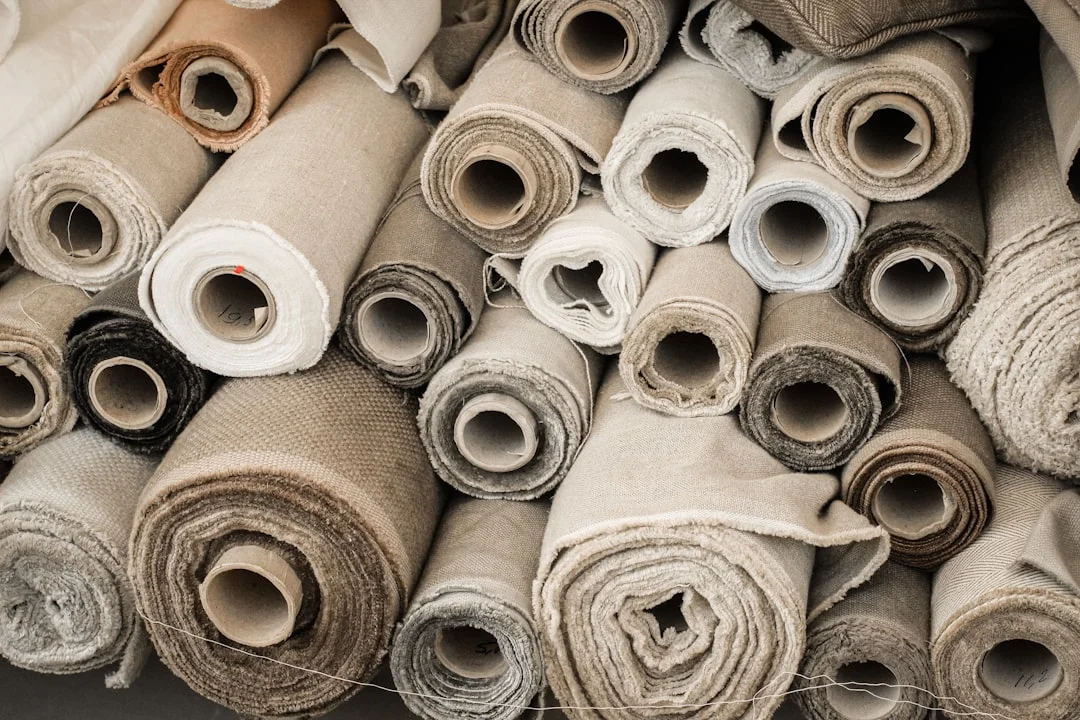
What is recycled polyester fabric? It is a textile made with recycled polyester, commonly called RPET, produced from recovered PET material such as post-consumer bottles. For apparel brands, product developers, and wholesale buyers, the important question is not only recycled content: it is whether the construction, weight, finish, performance, and documentation fit the final application. As of 2026, recycled polyester can be developed as jersey, interlock, mesh, woven fabric, and technical blends. FuncFabric helps buyers compare export-quality RPET options for bulk programs serving North America, Europe, and global markets.
Recycled Polyester Fabric Defined
What recycled polyester fabric means
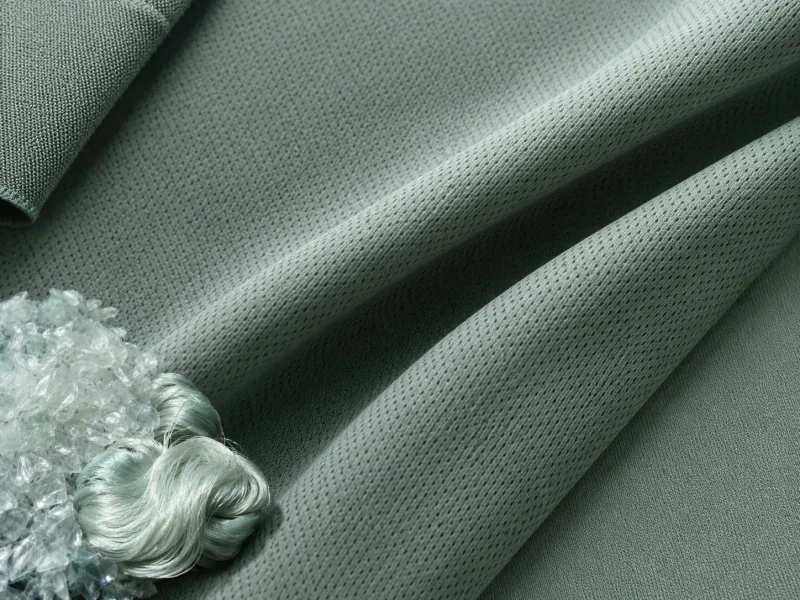
Recycled polyester fabric is made from recycled polyester feedstock rather than exclusively virgin polyester. In the FuncFabric range, Recycled Polyester Fabric is specified as 100% Recycled Polyester (RPET) from post-consumer PET bottles. The resulting yarn can be knitted or woven into fabrics for performance apparel and other textile products.
- RPET is the common abbreviation for recycled polyethylene terephthalate.
- Recycled content is distinct from a fabric’s weight, knit structure, coating, and stretch specification.
- A recycled fabric may be a 120–280 GSM jersey, interlock, mesh, twill, ripstop, or another approved construction.
- Available fabric widths for this product range are 150–180 cm, supplied rolled or folded.
| Term | Practical sourcing meaning |
| Recycled polyester / RPET | Polyester made with recycled feedstock |
| Post-consumer PET | Recovered PET material such as used bottles |
| Fabric construction | The knit or weave that determines handle and end use |
| Traceability | Documentation that follows recycled material through the supply chain |
Unlike a claim based only on a product’s appearance, a recycled-content claim should be supported by the applicable material and chain-of-custody documentation. That distinction matters when a buyer is preparing specifications for Sustainable Fashion or formal supplier review.
How RPET Moves from Feedstock to Fabric
From recovered PET to a usable textile
At a high level, recycled polyester production converts suitable recovered PET into material for polyester yarn, then converts that yarn into a knit or woven textile. For buyers, the manufacturing route is relevant because the final fabric must still be selected by measurable construction and end-use requirements.
- Step 1: Post-consumer PET is collected and prepared as recycled feedstock.
- Step 2: The feedstock is processed into recycled polyester suitable for yarn production.
- Step 3: Yarn is made into single jersey, interlock, mesh, technical woven, or other specified structures.
- Step 4: The fabric is finished and supplied in the requested weight and width range.
| Development checkpoint | What to confirm |
| Recycled-content target | **20%–100%** for GRS Certified Recycled Fabric options |
| Construction | Woven, jersey, interlock, mesh, non-woven, or technical blend |
| Weight | **120–300 GSM** for GRS Certified Recycled Fabric |
| Width | **150–250 cm** for GRS Certified Recycled Fabric |
GRS Certified Recycled Fabric provides a useful framework when traceability is required: its published specification includes independently audited recycled content and full chain-of-custody documentation from post-consumer waste to fabric roll. Compared with selecting by color or hand feel alone, confirming these 4 checkpoints early reduces ambiguity between a development sample and a bulk textile specification.
Performance, Constructions, and Applications
Match the RPET construction to the application
Recycled polyester is not one fixed fabric type. A lightweight mesh, a stable interlock, and a ripstop woven fabric can all use recycled polyester while serving very different products. We recommend documenting the construction first, then aligning performance requirements with the intended garment or equipment category.
- Single jersey and interlock: common options for activewear and next-to-skin pieces.
- Open mesh: an option where air movement and low weight are priorities.
- Woven twill or ripstop: options for more structured or durable product directions.
- Technical woven and knit blends: allow a specification to balance recovery, stretch, moisture management, and abrasion needs.
| RPET option | Published specification | Typical application direction |
| Recycled Performance Fabric | **140–280 GSM**, 4-way stretch, moisture wicking, high abrasion resistance | Technical apparel |
| Sustainable Activewear Fabric | **85%–100%** recycled content, **140–260 GSM** | Sports and fitness apparel |
| RPET Sports Fabric | **130–240 GSM**, quick-dry and 4-way-stretch compatible | Training and sportswear |
| Eco Friendly Outdoor Fabric | **150–320 GSM**, PFC-free DWR, **UPF 50+** | Outdoor products |
For Sportswear & Activewear, Sustainable Activewear Fabric can be specified in single jersey, interlock, rib, or French terry knit. For outdoor designs, Eco Friendly Outdoor Fabric offers UPF 50+, blocking more than 98% of UVA/UVB radiation, plus a PFC-free durable water-repellent finish. The comparison is functional: moisture-wicking knit prioritizes body-climate management, while treated outdoor fabric prioritizes weather-facing performance.
How to Source Recycled Polyester Fabric
A buyer’s specification checklist
A successful RPET sourcing brief defines more than “recycled polyester.” For export and wholesale programs, we work from a clear technical request so the selected fabric can be reviewed against the intended product, market, and documentation needs before bulk production planning.
- Set the recycled-content requirement, such as 85%–100% for an activewear direction or 20%–100% where GRS-certified content options are being evaluated.
- Specify the construction: jersey, interlock, mesh, woven twill, ripstop, or technical woven.
- Choose a target weight; recycled polyester options in this range span 120–320 GSM depending on product.
- Confirm usable width, commonly 150–180 cm for Recycled Polyester Fabric and 150–250 cm for GRS Certified Recycled Fabric.
- List required functions, such as moisture wicking, quick-dry, 4-way stretch, abrasion resistance, PFC-free DWR, or UV protection.
- Request the relevant traceability documents where a certified recycled-content claim will be used.
| Sourcing question | Why it should be answered |
| What percentage of recycled content is needed? | Keeps sustainability claims aligned with the selected fabric |
| What is the end use? | Determines whether knit, mesh, or woven construction is appropriate |
| Which performance functions are required? | Prevents a generic fabric choice from missing the application need |
| Is traceability required? | Establishes documentation expectations before bulk ordering |
For current 2026 procurement, the practical approach is to treat recycled content, performance, and documentation as separate specification lines. FuncFabric can support bulk and export discussions around Recycled Performance Fabric and related RPET constructions, helping global buyers create a clearer comparison set before selecting fabric for production.
Frequently Asked Questions
What is recycled polyester fabric made from?
Recycled polyester fabric is made from recycled polyester feedstock. FuncFabric’s Recycled Polyester Fabric is specified as 100% RPET from post-consumer PET bottles. The recycled polyester is made into yarn and then knitted or woven into fabric.
Is recycled polyester fabric the same as RPET fabric?
In textile sourcing, RPET commonly refers to recycled polyethylene terephthalate and is used to describe recycled polyester fabric. The exact recycled-content percentage should still be confirmed in the product specification and supporting documentation.
What fabric weights are available in recycled polyester?
Available weight depends on the construction. Recycled Polyester Fabric is listed at 120–280 GSM, Recycled Performance Fabric at 140–280 GSM, and GRS Certified Recycled Fabric at 120–300 GSM. Specify the application before choosing a weight.
Can recycled polyester fabric be used for activewear?
Yes. Sustainable Activewear Fabric is available in 85%–100% recycled content with single jersey, interlock, rib, or French terry constructions. Its published performance options include 4-way stretch, moisture wicking, and quick-dry functionality.
How can buyers verify recycled polyester claims?
Buyers should request product-specific documentation. GRS Certified Recycled Fabric offers independently audited and verified recycled content from 20% to 100%, with full chain-of-custody documentation from post-consumer waste to fabric roll.
Related Resources
Related Products (4)
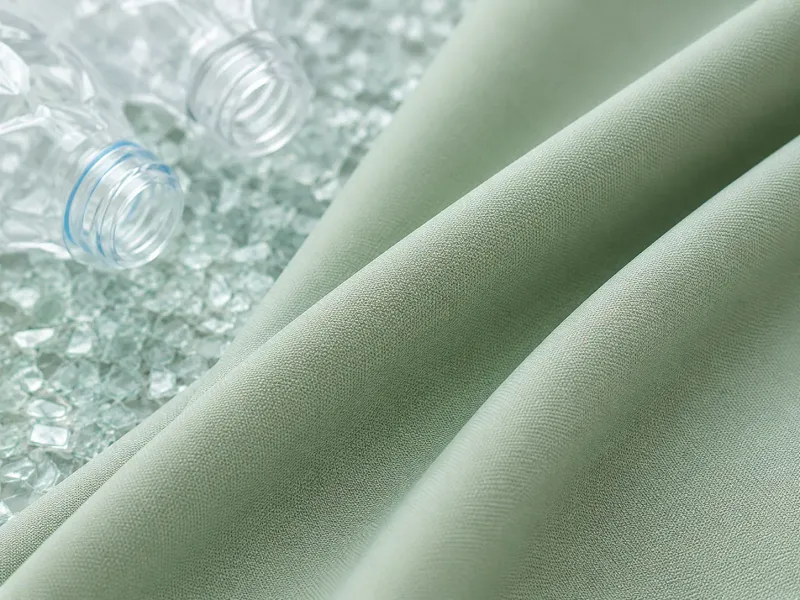
Recycled Polyester Fabric
High-performance recycled polyester fabric manufactured from post-consumer PET bottles for sustainable apparel and technical textile applications.
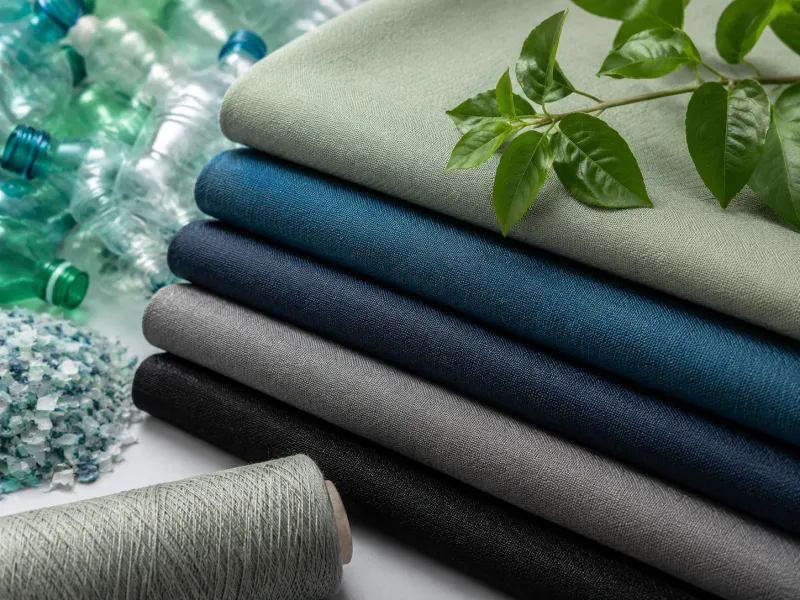
GRS Certified Recycled Fabric
Global Recycled Standard certified fabric providing traceable sustainability for international brands.
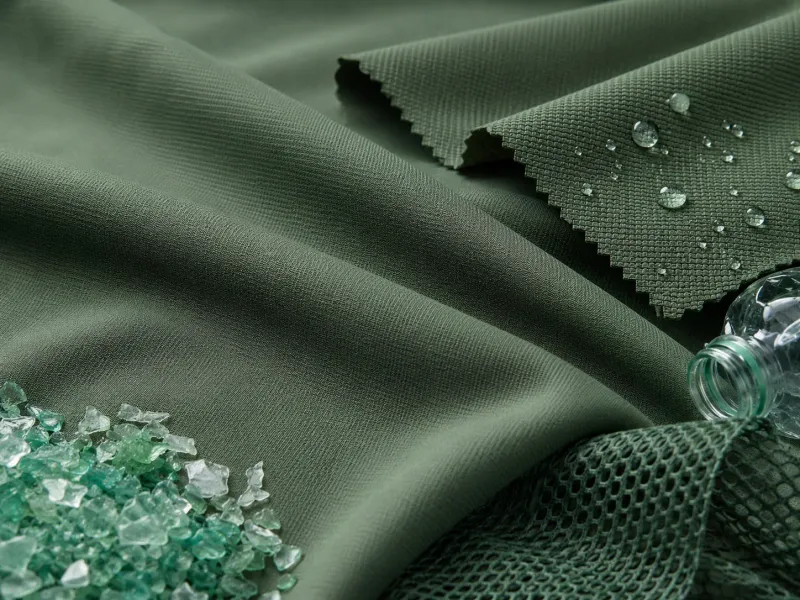
Recycled Performance Fabric
Advanced recycled performance fabric combining sustainability with technical textile functionality.
Sustainable Activewear Fabric
Sustainable performance fabric combining recycled materials with modern athletic apparel requirements.
Related Categories
Related Applications
Understand RPET composition, performance, traceability, and sourcing options.
Request Recycled Fabric Specifications Today