
Standardized moisture wicking fabric testing methods are essential for verifying performance claims in athletic, outdoor, and technical textiles. As of 2026, industry professionals rely on AATCC and ISO protocols to quantify wicking speed, absorbency, and drying performance across different fabric constructions and fiber compositions. These testing methods provide objective data that helps manufacturers select appropriate materials for sportswear, activewear, and performance apparel applications.
Understanding Moisture Wicking Testing Standards
## Primary Testing Methods for Moisture Wicking Fabrics
The most widely adopted moisture wicking fabric testing methods include AATCC 195 (Wicking Length Test) and AATCC 197 (Wicking Height Test). These standardized protocols measure how quickly and how far moisture travels through fabric via capillary action. Unlike informal water-drop tests, these methods provide reproducible, comparable data across different material types and suppliers.
## Comparison of Key Testing Standards
| Test Method | What It Measures | Typical Result Range | Industry Application ||-------------|------------------|----------------------|----------------------|| AATCC 195 | Wicking speed (time for water to reach mark) | 15-30 seconds for performance fabrics | Sportswear, activewear || AATCC 197 | Wicking height over time (cm in 30 minutes) | 8-15 cm for technical knits | Outdoor apparel, uniforms || ISO 11092 | Evaporative thermal resistance (Ret value) | 0.06-0.12 m²·K/W for breathable fabrics | Performance workwear || ASTM D7303 | Moisture regain and content | 0.4%-0.8% for polyester, 8%-10% for cotton | Fiber identification |
These testing methods are critical for quality control in bulk manufacturing. Our facility performs routine AATCC 195 and AATCC 197 testing on every production batch to ensure consistent wicking performance across orders.
Key Performance Metrics & Specifications
## Wicking Speed and Drying Performance Data
Performance specifications vary significantly between fabric constructions. Below are typical test results for common moisture wicking fabric types we manufacture:
| Fabric Type | Wicking Speed (AATCC 195) | Drying Time | Weight (GSM) | Width (cm) ||-------------|---------------------------|-------------|--------------|------------|| **Moisture Wicking Mesh Fabric** | < 15 seconds | < 20 seconds | 90-150 gsm | 160-180 cm || **Quick Dry Sports Fabric** | < 20 seconds | < 25 seconds | 130-200 gsm | 160-180 cm || **Antibacterial Moisture Wicking Fabric** | < 25 seconds | < 30 seconds | 150-220 gsm | 160-180 cm || **Moisture Wicking Stretch Fabric** | < 30 seconds | < 35 seconds | 160-220 gsm | 150-180 cm || **Moisture Wicking Jersey Fabric** | > 8 cm height in 30 min (AATCC 197) | Variable | 140-220 gsm | 160-180 cm |
## How Fabric Construction Affects Wicking Performance
Wicking performance depends on multiple factors including fiber type, yarn structure, fabric weight, and surface treatments. Compared to loose synthetic fibers, engineered knit structures with capillary channels in **Moisture Wicking Mesh Fabric** achieve faster wicking speeds due to optimized air permeability and moisture transport pathways.
For applications requiring both wicking and antimicrobial properties, **Antibacterial Moisture Wicking Fabric** combines silver ion treatment with engineered wicking structures, maintaining **≥99% antibacterial rate** while achieving wicking speeds under **25 seconds** per AATCC 195 testing.
How to Interpret Test Results for Fabric Selection
## Selecting Fabrics Based on Wicking Performance Data
When evaluating moisture wicking fabric testing methods results, consider your end-use requirements. High-intensity athletic applications benefit from fabrics with wicking speeds under **20 seconds**, while everyday activewear may perform adequately with speeds up to **30 seconds**.
## Performance Thresholds by Application
| Application Category | Minimum Wicking Speed | Recommended GSM Range | Key Features ||----------------------|-----------------------|-----------------------|--------------|| High-Performance Sportswear | < 20 seconds | 130-180 gsm | Quick-dry, 4-way stretch || Outdoor & Adventure Apparel | < 25 seconds | 150-220 gsm | UV protection, abrasion resistance || Medical & Healthcare Uniforms | < 30 seconds | 100-140 gsm | Antibacterial, easy care || Everyday Activewear | < 35 seconds | 140-200 gsm | Comfort, durability |
Our technical team can provide detailed test reports for each fabric type, including AATCC 195, AATCC 197, and additional performance data such as tensile strength, color fastness, and dimensional stability.
Quality Assurance & Certification Processes
## In-House Testing and Quality Control
We maintain an in-house laboratory equipped for comprehensive moisture wicking fabric testing methods. Each production batch undergoes routine AATCC 195 and AATCC 197 testing to verify wicking performance meets specified tolerances. Our QC process includes sampling from multiple positions across each fabric roll to ensure consistency.
## Third-Party Certifications and Compliance
Several of our moisture wicking fabric lines carry additional certifications that verify performance claims and safety standards:
- **GRS (Global Recycled Standard)**: Verified for **Recycled Performance Fabric** and **Antibacterial Moisture Wicking Fabric** with 20%-100% recycled content- **OEKO-TEX Standard 100**: Tested for harmful substances in **Moisture Wicking Stretch Fabric** and **Quick Dry Sports Fabric**- **AATCC 61 Wash Durability**: Verified for **Antibacterial Moisture Wicking Fabric** maintaining ≥99% antibacterial rate after 30-50 industrial launder cycles
All test reports and certifications are available upon request for bulk orders. We provide full documentation including material composition, performance specifications, and compliance statements for import and regulatory purposes.
Frequently Asked Questions
What is the difference between AATCC 195 and AATCC 197 testing methods?
AATCC 195 measures wicking speed (time for water to reach a marked distance), while AATCC 197 measures wicking height (distance moisture travels in 30 minutes). AATCC 195 results are expressed in seconds, typically **15-30 seconds** for performance fabrics. AATCC 197 results are expressed in centimeters, with **>8 cm in 30 minutes** considered good for technical knits.
How do fabric construction and weight affect wicking performance?
Lighter fabrics (**90-150 gsm**) with open constructions like mesh typically wick faster than heavier fabrics (**200-280 gsm**). However, fabric weight must balance wicking speed with durability and opacity. Our **Moisture Wicking Mesh Fabric** at **90-150 gsm** achieves wicking speeds under **15 seconds**, while heavier **Moisture Wicking Jersey Fabric** at **140-220 gsm** provides balanced performance with **>8 cm wicking height**.
Can moisture wicking performance be maintained after multiple wash cycles?
Yes, when properly engineered. Our **Antibacterial Moisture Wicking Fabric** maintains wicking performance after **30-50 industrial launder cycles** (AATCC 61 verified). Performance depends on fiber selection, fabric construction, and finishing processes. Virgin polyester and RPET fibers generally maintain wicking properties better than treated cotton blends.
What additional tests are performed alongside moisture wicking testing?
Comprehensive testing includes color fastness (ISO 105-C06 washing, ISO 105-X12 rubbing), tensile strength, dimensional stability, abrasion resistance (ISO 12947), and antimicrobial efficacy (AATCC 100). For **Moisture Wicking Stretch Fabric**, we also test 4-way stretch recovery (**>95%**) and compression properties.
Related Resources
Related Products (4)
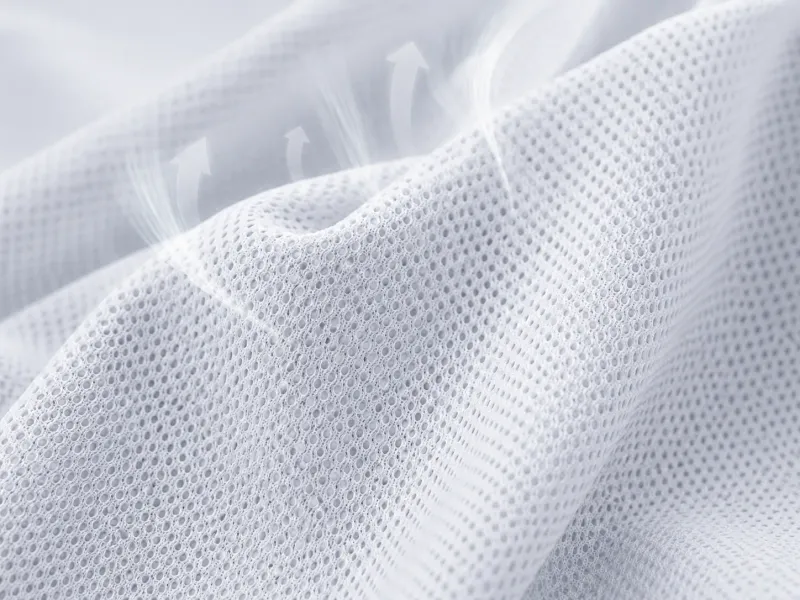
Moisture Wicking Mesh Fabric
Breathable mesh fabric designed for maximum airflow and moisture evaporation.
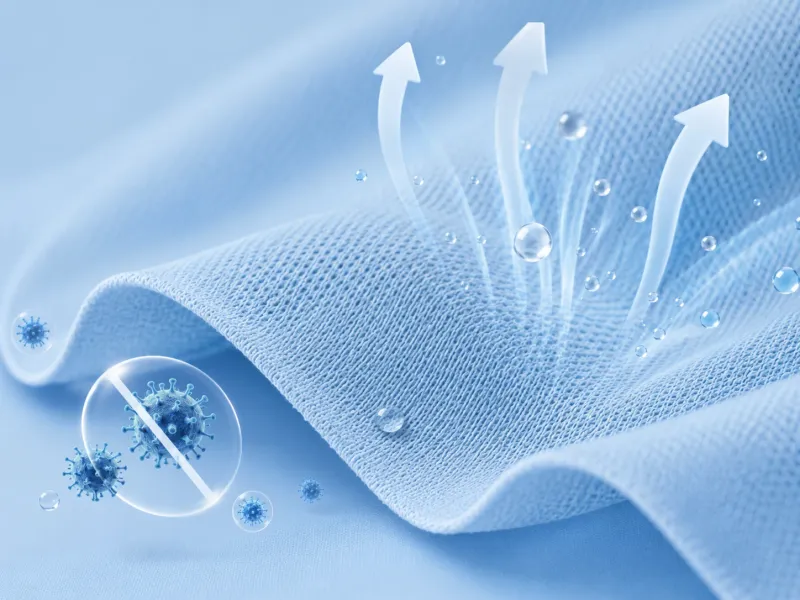
Antibacterial Moisture Wicking Fabric
Advanced moisture wicking fabric with antibacterial treatment for hygiene-sensitive applications.
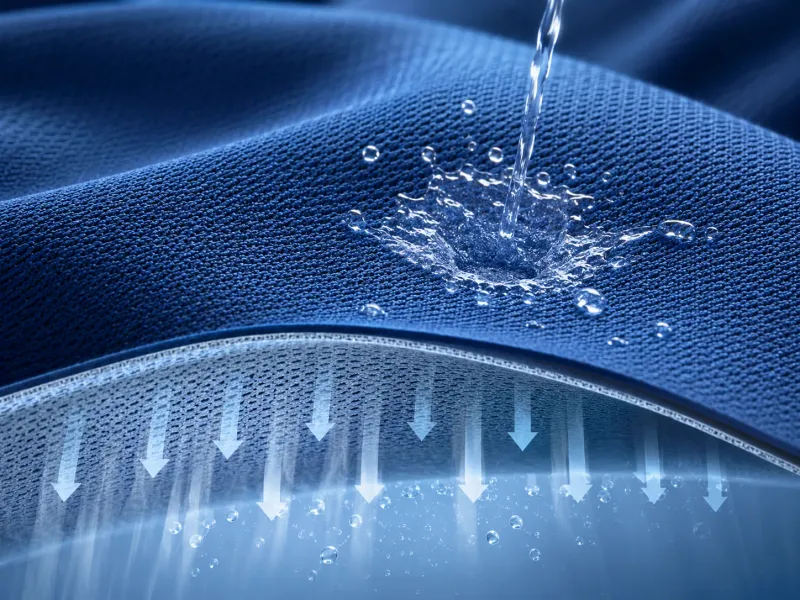
Quick Dry Sports Fabric
Technical quick dry fabric optimized for sportswear, team uniforms and fitness apparel.
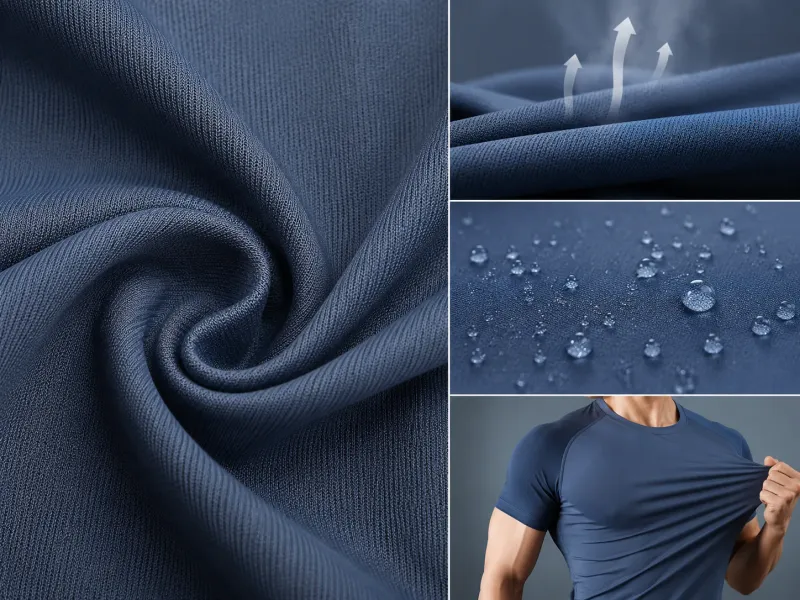
Moisture Wicking Stretch Fabric
Stretch performance fabric combining elasticity and moisture management for activewear.
Related Categories
Standardized testing protocols for wicking performance, absorbency, and drying speed
Request Moisture Wicking Fabric Test Reports