
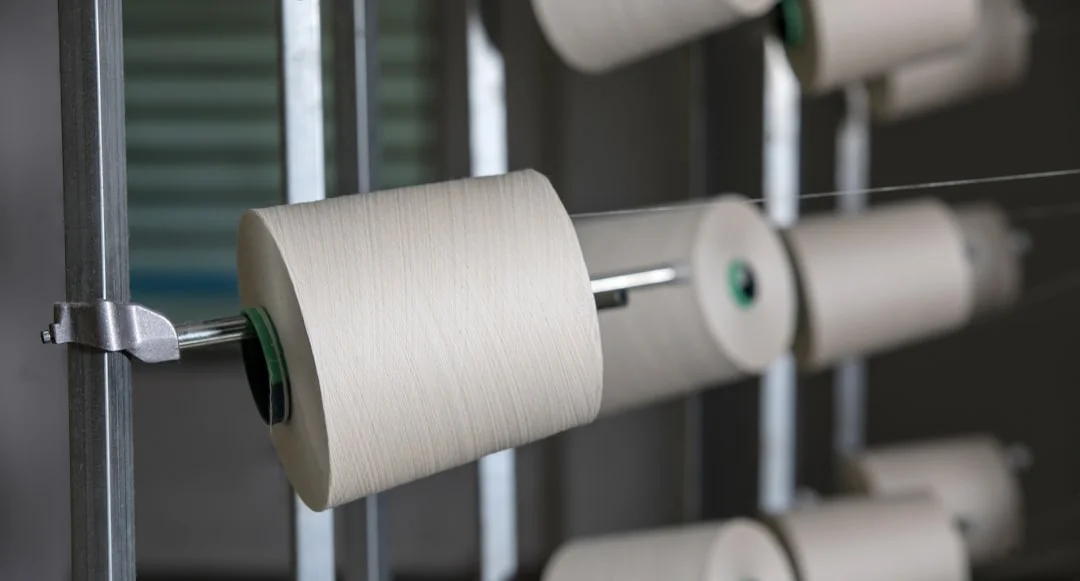
Finding the right moisture wicking fabric requires more than checking surface labels—you need to understand how fabric structure determines actual performance. Our moisture wicking fabric structure test methodology evaluates capillary action, fiber cross-section geometry, and knit or weave density to predict how quickly sweat moves away from skin. Whether you're sourcing for sportswear, activewear, or technical uniforms, understanding these structural variables helps you specify fabrics that meet real-world performance demands rather than relying on marketing claims alone.
Understanding Moisture Wicking Fabric Structure
## What Is Moisture Wicking and How Does It Work?
Moisture wicking is the capillary action that draws liquid sweat away from the skin through fabric channels to the outer surface where it can evaporate. Unlike absorbent cotton, which holds moisture against the skin, wicking fabrics transport water through microscopic gaps between fibers or through engineered fiber cross-sections. The efficiency of this process depends on three structural factors: fiber morphology, fabric construction density, and surface treatment chemistry.
## Key Structural Components That Drive Wicking Performance
The foundation of any moisture wicking fabric structure test begins with understanding how fiber geometry influences liquid transport. Polyester fibers used in Moisture Wicking Fabric typically feature trilobal or hollow cross-sections that create internal capillary channels. These engineered shapes increase surface area and promote faster wicking compared to round-profile fibers. The weight range of **120–220 GSM** across our product lines reflects different construction densities optimized for varying activity levels.
- **Fiber Cross-Section Geometry**: Trilobal, hollow, or grooved profiles enhance capillary action - **Yarn Count and Twist**: Finer yarns with moderate twist create tighter inter-yarn channels - **Knit or Weave Density**: Open structures allow faster airflow but may reduce durability - **Surface Finish Chemistry**: Hydrophilic treatments lower surface tension for faster liquid uptake
Unlike generic polyester fabrics that rely solely on chemical finishes, our Quick Dry Sports Fabric combines structural engineering with performance treatments. The single jersey and interlock constructions achieve wicking speeds under **20 seconds** for rapid evaporation, making them suitable for high-intensity athletic applications across North America and Europe.
Key Testing Methods for Moisture Wicking Fabrics
## AATCC 195: Test Method for Wicking of Textiles
The AATCC 195 standard measures the vertical wicking height of fabric over a specified time period. During a moisture wicking fabric structure test, a fabric strip is suspended with one end immersed in water, and the distance the liquid travels upward is recorded at 30-minute intervals. Fabrics rated for sportswear applications typically achieve wicking heights exceeding **8 cm within 30 minutes**, while premium performance fabrics can reach **12–15 cm** under identical conditions.
| Test Standard | Measurement Parameter | Typical Performance Range | Application Relevance | |---|---|---|---| | AATCC 195 | Vertical wicking height | 8–15 cm in 30 min | General sportswear and activewear | | AATCC 197 | Horizontal wicking distance | 10–25 cm in 60 min | Seamless garment construction | | ISO 11092 | Evaporative thermal resistance | 0.02–0.06 m²·K/W | High-performance outdoor gear | | ASTM D3776 | Fabric weight (GSM) | 90–280 GSM | Weight class specification |
## AATCC 197: Horizontal Wicking Test
While AATCC 195 measures vertical rise, AATCC 197 evaluates horizontal wicking distance—critical for garments where lateral moisture spread affects comfort. In this test, a fabric specimen is placed on a platform with a water droplet applied at the center, and the radius of wetting is measured at set intervals. Our Moisture Wicking Mesh Fabric with air permeability exceeding **500 mm/s** demonstrates horizontal wicking distances of **20–25 cm within 60 minutes**, making it ideal for ventilation panels in athletic apparel.
## Contact Time and Drying Speed Measurements
Beyond wicking height and distance, contact time testing measures how quickly fabric absorbs and releases moisture. Fabrics like our Moisture Wicking Stretch Fabric achieve contact times under **30 seconds**, meaning sweat is drawn away from skin almost immediately upon contact. This rapid response differentiates performance fabrics from standard textiles that may take several minutes to begin absorbing moisture.
Structural Factors That Influence Wicking Performance
## Fabric Construction and Its Impact on Moisture Transport
The construction method—whether knit, woven, or non-woven—significantly affects wicking efficiency. Knit structures like single jersey and interlock create natural loops and air pockets that facilitate moisture movement through capillary action. Woven constructions, while denser, can achieve comparable wicking when engineered with specific thread counts and finishing treatments.
Our Moisture Wicking Jersey Fabric utilizes a 1x1 single jersey construction with weights ranging from **140–220 GSM**, optimized for balanced breathability and durability. Compared to loose-weave alternatives, this construction maintains structural integrity through **30–50 industrial launder cycles** while preserving wicking performance—a critical consideration for manufacturers producing uniforms and activewear for global markets.
## Fiber Composition and Blend Ratios
Pure polyester fabrics exhibit superior wicking compared to cotton blends because polyester is hydrophobic—meaning it repels water while allowing capillary action to move moisture through inter-fiber channels. Our Antibacterial Moisture Wicking Fabric combines 100% recycled polyester with silver ion treatment to achieve wicking speeds under **25 seconds** while maintaining antibacterial efficacy above **99%** against E. coli and S. aureus.
- **100% Polyester**: Maximum wicking speed and durability; ideal for high-performance sportswear - **Polyester/Elastane Blends**: Added stretch (25–50%) without sacrificing wicking; used in compression garments - **Recycled Polyester (RPET)**: Equivalent performance to virgin polyester with sustainability certification - **Polyester/Cotton Blends**: Reduced wicking efficiency but improved hand feel; suitable for casual activewear
## Weight and Thickness Considerations
Fabric weight directly correlates with wicking capacity and drying speed. Ultra-lightweight constructions under **100 GSM**, such as our Moisture Wicking Mesh Fabric, prioritize maximum airflow and rapid evaporation but offer less durability. Mid-weight fabrics in the **140–220 GSM** range provide the best balance for most sportswear applications, while heavier constructions above **250 GSM** are reserved for outdoor and workwear applications where durability takes precedence over breathability.
Quality Control and Testing Standards
## Our Moisture Wicking Fabric Structure Test Protocol
At FuncFabric, every batch of moisture wicking fabric undergoes a structured testing protocol before shipment. Our quality control process includes vertical wicking tests per AATCC 195, horizontal spread measurements per AATCC 197, contact time analysis, and colorfastness verification per ISO 105-C06. Fabrics must meet minimum wicking height thresholds of **8 cm in 30 minutes** and contact times under **30 seconds** to pass our quality standards.
We maintain testing documentation for every production run, including GSM verification, width measurements (typically **150–180 cm** for knit constructions), and tensile strength assessments. This documentation supports your product development process and provides traceability for compliance requirements in North American and European markets.
## Certification and Compliance Considerations
For manufacturers targeting sustainable fashion markets, our Recycled Performance Fabric and GRS Certified Recycled Fabric lines carry Global Recycled Standard certification with chain-of-custody documentation. These fabrics combine moisture wicking performance with environmental credentials—achieving wicking speeds comparable to virgin polyester while containing **85–100% recycled content**.
All moisture wicking fabrics are tested for compliance with OEKO-TEX Standard 100 and REACH regulations, ensuring they are free from harmful substances. This is particularly important for Sportswear & Activewear applications where fabrics are in direct contact with skin during extended wear.
| Product Line | Wicking Speed | Weight Range | Certification | Width | |---|---|---|---|---| | Antibacterial Moisture Wicking Fabric | <25 seconds | 150–220 GSM | OEKO-TEX, AATCC 61 | 160–180 cm | | Moisture Wicking Stretch Fabric | <30 seconds | 160–220 GSM | OEKO-TEX, REACH | 150–180 cm | | Quick Dry Sports Fabric | <20 seconds | 130–200 GSM | GRS (RPET options) | 160–180 cm | | Moisture Wicking Mesh Fabric | <15 seconds | 90–150 GSM | Standard | 160–180 cm | | Moisture Wicking Jersey Fabric | >8 cm/30min | 140–220 GSM | Standard | 160–180 cm |
Choosing the Right Moisture Wicking Fabric
## Matching Fabric Structure to Application Requirements
Selecting the appropriate moisture wicking fabric requires aligning structural properties with end-use demands. For high-intensity athletic applications, fabrics with wicking speeds under **20 seconds** and air permeability above **500 mm/s** are essential. These specifications are met by constructions like our RPET Sports Fabric and Moisture Wicking Mesh Fabric, which prioritize rapid moisture transport and ventilation.
For uniform and corporate apparel applications, durability and ease of care take precedence. Our Moisture Wicking Polyester Fabric lines offer colorfastness ratings of **Grade 4–5** (ISO 105-C06) and can withstand **30–50 industrial launder cycles** while maintaining wicking performance. This makes them suitable for Uniforms & Corporate Apparel where frequent washing is required.
## Sustainability and Performance Balance
Modern manufacturers increasingly demand moisture wicking fabrics that meet both performance and sustainability criteria. Our Sustainable Activewear Fabric and Eco Friendly Outdoor Fabric lines demonstrate that recycled content does not compromise wicking efficiency. These fabrics achieve wicking performance comparable to virgin polyester while containing **85–100% recycled materials** and carrying GRS certification.
Unlike conventional fabrics that rely on chemical finishes for moisture management, our structural wicking approach integrates performance into the fabric architecture. This means wicking properties remain effective even after repeated laundering—a critical advantage for Outdoor Apparel and Workwear & Protective Clothing applications where garments undergo industrial washing cycles.
## Next Steps for Product Development
When specifying moisture wicking fabrics for your product line, request test reports that include AATCC 195 and AATCC 197 results, GSM verification, and colorfastness ratings. Our technical team can provide detailed specification sheets for each fabric construction and assist with sample development for your evaluation process. With production capabilities serving global markets and widths up to **180 cm**, we support both small-batch prototyping and large-scale manufacturing requirements.
Frequently Asked Questions
What is the difference between AATCC 195 and AATCC 197 wicking tests?
AATCC 195 measures vertical wicking height—how far moisture travels upward through fabric over 30 minutes. AATCC 197 measures horizontal wicking distance—how far moisture spreads laterally from a contact point over 60 minutes. Both tests are complementary: vertical wicking indicates how quickly fabric draws sweat away from skin, while horizontal wicking shows how effectively moisture spreads across the fabric surface for evaporation. Our moisture wicking fabric structure test protocol includes both measurements for comprehensive performance evaluation.
How many times can moisture wicking fabric be laundered before losing performance?
High-quality moisture wicking fabrics like our Antibacterial Moisture Wicking Fabric and Moisture Wicking Stretch Fabric maintain wicking performance through **30–50 industrial launder cycles** per AATCC 61 testing standards. Unlike chemically treated fabrics where wicking finishes degrade after repeated washing, our structural wicking approach integrates moisture transport into the fabric construction, ensuring consistent performance throughout the garment lifecycle.
Does recycled polyester wick as well as virgin polyester?
Yes. Recycled polyester (RPET) used in our Recycled Performance Fabric and RPET Sports Fabric lines exhibits identical wicking performance to virgin polyester. The recycling process does not alter the fiber's chemical structure or cross-section geometry. Both material types achieve wicking speeds under **25 seconds** and maintain the same GSM ranges (**130–240 GSM**), making RPET a viable option for manufacturers prioritizing sustainability without compromising technical performance.
What fabric weight is best for moisture wicking sportswear?
For sportswear and activewear applications, weights between **140–200 GSM** provide the optimal balance of breathability, durability, and drape. Ultra-lightweight fabrics under **100 GSM**, such as our Moisture Wicking Mesh Fabric, excel in ventilation but may lack durability for heavy-use applications. Heavier fabrics above **220 GSM** offer more structure but reduce airflow. Our Moisture Wicking Jersey Fabric at **140–220 GSM** represents the industry standard range for performance sportswear.
How do you test moisture wicking fabric structure at the factory?
Our factory testing protocol includes vertical wicking per AATCC 195, horizontal spread per AATCC 197, contact time measurement, GSM verification, width confirmation, and colorfastness testing per ISO 105-C06. Each production batch is sampled and tested before shipment. Test reports are provided with orders, documenting wicking heights, contact times, and durability ratings. This quality assurance process ensures consistent performance for Sportswear & Activewear manufacturers across North America, Europe, and global markets.
Related Resources
Related Products (4)
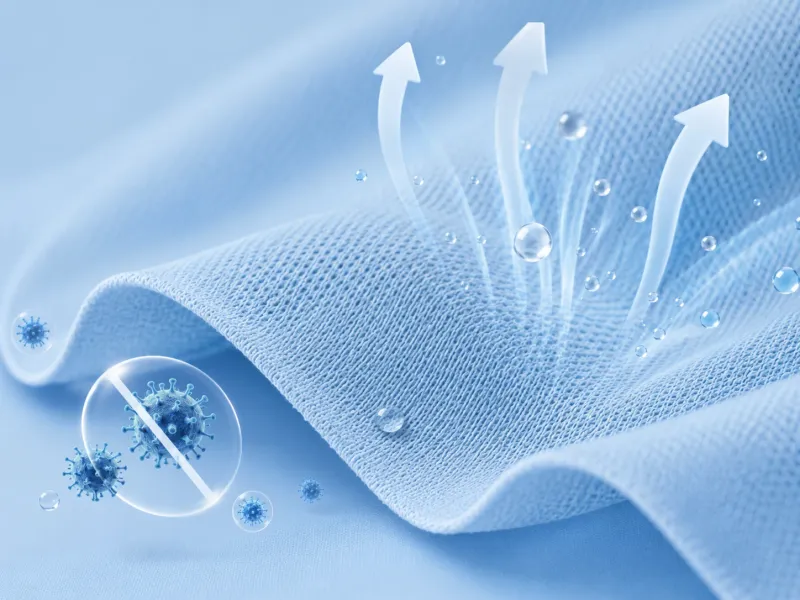
Antibacterial Moisture Wicking Fabric
Advanced moisture wicking fabric with antibacterial treatment for hygiene-sensitive applications.
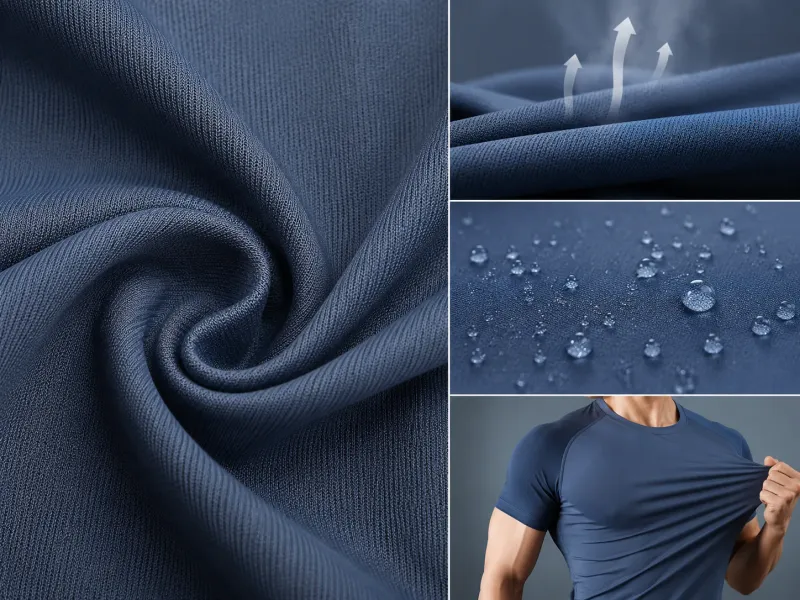
Moisture Wicking Stretch Fabric
Stretch performance fabric combining elasticity and moisture management for activewear.
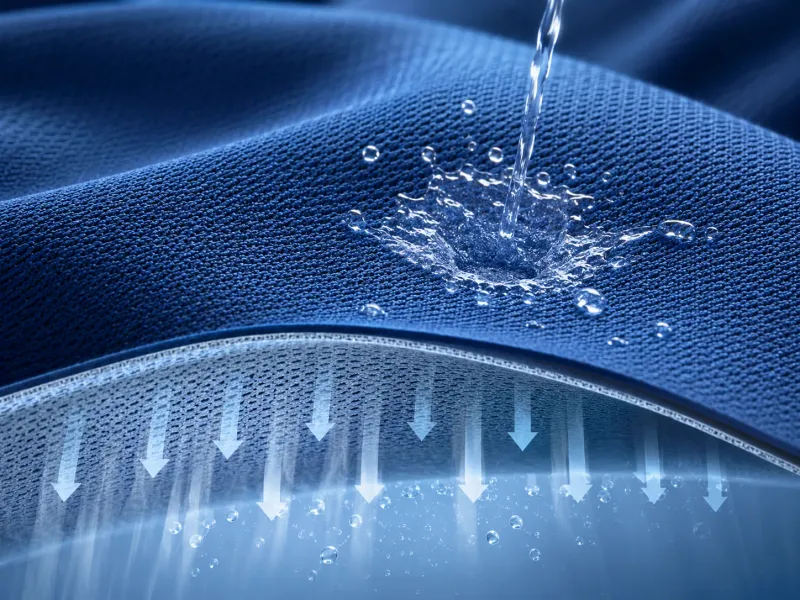
Quick Dry Sports Fabric
Technical quick dry fabric optimized for sportswear, team uniforms and fitness apparel.
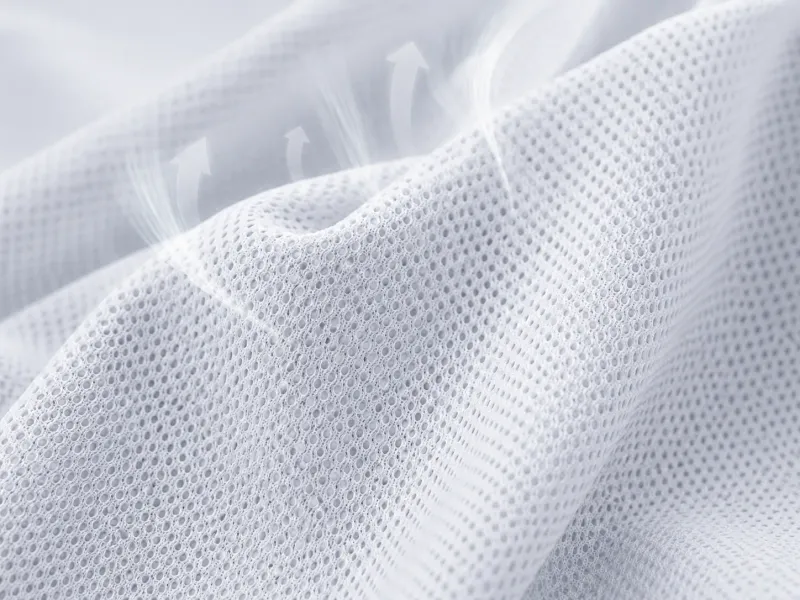
Moisture Wicking Mesh Fabric
Breathable mesh fabric designed for maximum airflow and moisture evaporation.
Related Categories
Related Applications
Comprehensive testing standards and structural analysis for moisture management fabrics
Request Moisture Wicking Fabric Test Reports