
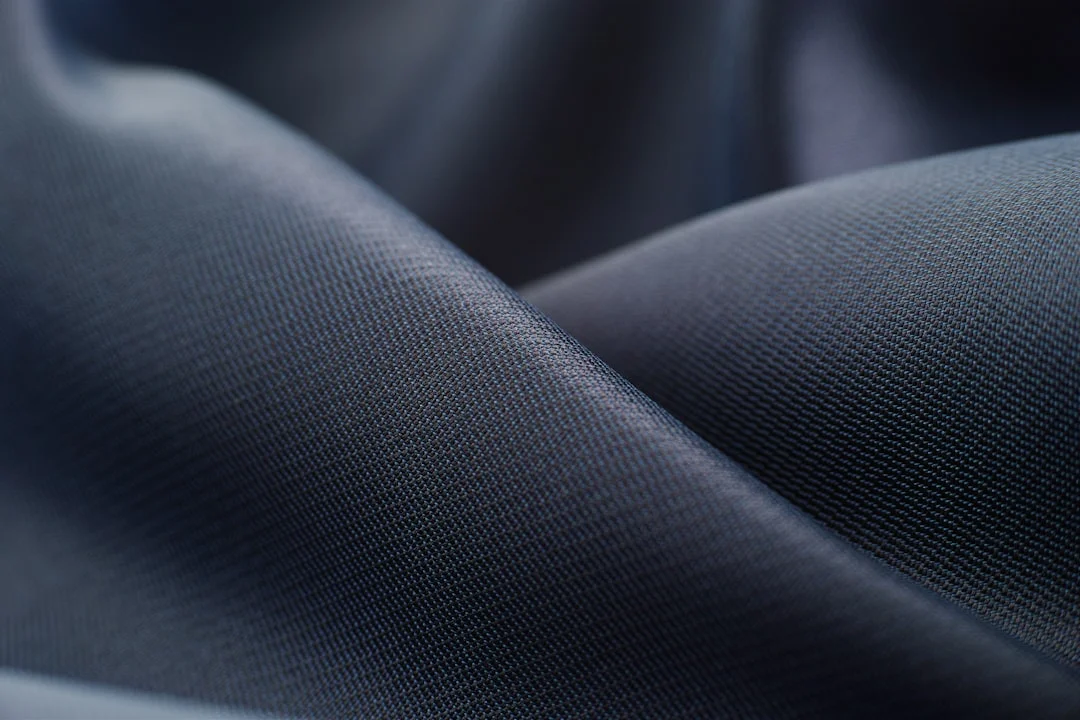
Sourcing the right fabric for workwear is one of the most consequential decisions in any protective clothing supply chain. The wrong choice — a fabric that fails a flame test, loses its antimicrobial finish after 10 washes, or degrades under UV exposure — puts workers at risk and brands at liability. At FuncFabric, we manufacture functional fabrics built specifically for workwear and protective clothing, serving wholesale buyers, uniform manufacturers, and OEM brands across North America, Europe, and beyond. As of 2026, our portfolio covers flame retardant, antibacterial, moisture-wicking, UV-protective, and waterproof constructions — each verified against recognized international standards and available in export-ready bulk rolls.
Why Choosing the Right Functional Fabric Manufacturer Matters
The Problem with Generic Workwear Textiles
Many buyers discover too late that a fabric passed basic mill specs but failed under real worksite conditions. A standard polyester twill, for example, offers no flame resistance and can melt onto skin — a critical hazard in oil and gas or electrical environments. Similarly, a plain cotton uniform that tests antibacterial when new may lose that protection entirely after 15 industrial launder cycles if the finish was only surface-applied.
The difference between a compliant workwear fabric and a functional one comes down to three factors:
- Permanence of performance — does the finish last for ≥50 wash cycles or just 10?
- Verified compliance — is the spec backed by AATCC, EN ISO, or NFPA test data?
- Construction match — is the fabric weight, weave, and fiber appropriate for the specific hazard?
Why Buyers Switch Manufacturers
Based on what we see when buyers come to us, the most common failure points with lower-tier suppliers are:
| Failure Point | Impact on Workwear Program |
| FR finish washes out before 30 cycles | Non-compliance, potential liability |
| No chain-of-custody documentation | Fails brand sustainability audits |
| Inconsistent GSM across batches | Poor cut-and-sew yields, re-orders needed |
| No antistatic treatment on FR fabric | ATEX/IECEx compliance gaps |
| Single-layer constructions for outdoor work | Inadequate weather and UV protection |
Unlike commodity fabric mills, functional fabric manufacturers invest in in-house testing, certified fiber sourcing, and process controls that hold performance across every production run — not just the sample roll.
FuncFabric's Core Workwear Fabric Range
Flame Retardant & Arc Flash Protection Fabrics
Our FR Workwear Fabric is the foundation of our protective clothing range. Built from modacrylic/cotton or polyester/modacrylic blends, it is engineered for heavy-duty industrial use and complies with NFPA 2112, EN ISO 11612, and EN ISO 11611.
Key specifications:
- Weight: 220gsm – 350gsm (heavy duty)
- Flame resistance: Self-Extinguishing (SE) / Carbonizing
- Antistatic: Conductive yarn finish to prevent electrical discharges
- Abrasion resistance: High (suitable for heavy industrial environments)
For arc flash hazards specifically, our Arc Flash Protection Fabric delivers an ATPV rating of 12–45+ cal/cm² and an EBT rating above 30 cal/cm², using meta-aramid (Nomex-type) or modacrylic blends at 220gsm–360gsm.
For applications where chemical treatment is a concern — or where the fabric must survive years of hard use — our Inherent Flame Retardant Fabric uses intrinsic FR fiber (95% meta-aramid / 5% PPTA) that does not rely on surface coatings. It withstands temperatures up to 360°C (680°F) for long-term exposure, making it the specification of choice for foundry, petrochemical, and utility workwear.
Comparison: Treated FR vs. Inherent FR
| Property | Treated FR (e.g., Cotton FR) | Inherent FR (e.g., Meta-Aramid) |
| FR mechanism | Chemical finish applied post-weave | Built into the fiber structure |
| Wash durability | Degrades over time | Permanent for life of garment |
| Weight range | 200–340gsm | 180–320gsm |
| Compliance | EN ISO 11611/11612, NFPA 2112 | EN ISO 11611/11612, NFPA 2112, ASTM F1506 |
| Best for | Cost-sensitive programs, lower exposure risk | High-risk, long-lifecycle garment programs |
Welding & Oil/Gas Protective Fabrics
Our Welding Protective Fabric uses heavy-duty cotton or cotton-FR blends at 260gsm–420gsm, rated to EN ISO 11611 Class A1/A2 for spark and slag resistance, with a self-extinguishing surface (less than 2 seconds after ignition).
For oil and gas field workwear, the Oil & Gas Protective Fabric combines FR properties with AATCC 118 Grade 8–9 oil and water repellency and antistatic resistance below 100 Ohms (ATEX/IECEx compliant) — a specification set that generic industrial fabrics simply cannot match.
Antibacterial & Hygiene Fabrics for Uniform Programs
Antibacterial Performance That Lasts Through Industrial Washing
For healthcare uniforms, food processing workwear, and facility management garments, antibacterial durability is the defining specification. A fabric that tests at ≥99% bacterial reduction on the roll but drops to 60% after 20 washes is not a workwear fabric — it's a liability.
We check every batch from our antibacterial lines against AATCC 61 for wash durability and AATCC 100 for antimicrobial efficacy. Here is how our main antibacterial workwear fabrics compare:
| Fabric | Antibacterial Rate | Wash Durability | Weight (GSM) |
| [Antibacterial Knitted Fabric](/products/antibacterial-knitted-fabric/) | ≥99% (E. coli, S. aureus, C. albicans) | ≥30–50 industrial cycles | 140–260gsm |
| [Healthcare Uniform Fabric](/products/healthcare-uniform-fabric/) | ≥99.9% (E. coli, S. aureus) | ≥50 industrial cycles | 100–140gsm |
| [Antimicrobial Polyester Fabric](/products/antimicrobial-polyester-fabric/) | ≥99% (E. coli, S. aureus, C. albicans) | ≥50 industrial wash cycles | 130–240gsm |
| [Silver Ion Antibacterial Fabric](/products/silver-ion-antibacterial-fabric/) | ≥99.9% (E. coli, S. aureus, P. acnes, C. albicans) | 50–100 industrial cycles | 120–250gsm |
Healthcare & Medical Workwear Specifications
Our Healthcare Uniform Fabric is optimized for scrubs and tunics at 100gsm–140gsm, with color fastness at Grade 4–5 (resistant to perspiration and industrial detergents) and finish options including wrinkle-resistant, easy care, and anti-static. Compared to standard poly-cotton uniform fabric, the antimicrobial finish on this construction has been independently verified to maintain efficacy through 50 industrial launder cycles — roughly two years of weekly hospital washing.
Key finish options available:
- Wrinkle-Resistant / Easy Care
- Anti-Static
- Oleophobic & Hydrophobic (stain-resistant)
- OEKO-TEX Standard 100 compliant options
For Medical & Healthcare Textiles buyers requiring the highest antibacterial specification, our Silver Ion Antibacterial Fabric integrates silver ions at optimized ppm levels directly into the fiber — not as a surface coating — delivering performance that persists for the life of the garment.
Moisture Management & Comfort Fabrics for Active Workwear
Why Moisture Management Matters in Workwear
In physically demanding roles — construction, logistics, military, and field services — heat stress is a documented occupational hazard. Fabrics that trap moisture against the skin raise core body temperature, reduce concentration, and in extreme conditions contribute to heat exhaustion. The current industry standard (as of 2026) for moisture management in workwear specifies wicking speeds under 30 seconds and quick-dry performance verified by AATCC 195.
Our moisture wicking range for workwear covers several constructions depending on the end use:
| Fabric | Wicking Speed | Weight (GSM) | Construction |
| [Moisture Wicking Polyester Fabric](/products/moisture-wicking-polyester-fabric/) | Grade 4–5 colorfastness (ISO 105-C06) | 120–220gsm | Jersey / Mesh / Interlock |
| [Quick Dry Sports Fabric](/products/quick-dry-sports-fabric/) | < 20 seconds (rapid evaporation) | 130–200gsm | Single Jersey / Interlock |
| [Moisture Wicking Mesh Fabric](/products/moisture-wicking-mesh-fabric/) | < 15 seconds (AATCC 195) | 90–150gsm | Raschel Weft Knit / Mesh |
| [Antibacterial Moisture Wicking Fabric](/products/antibacterial-moisture-wicking-fabric/) | < 25 seconds (AATCC 195) | 150–220gsm | Single Jersey / Interlock |
Combining Moisture Wicking with Antibacterial Performance
For workwear programs that require both comfort and hygiene — think food processing uniforms, logistics base layers, or security apparel — our Antibacterial Moisture Wicking Fabric combines RPET-based construction with silver ion treatment, delivering ≥99% antibacterial rate (against E. coli and S. aureus) alongside a wicking speed under 25 seconds. This single fabric eliminates the need to layer a moisture management base under a separate antimicrobial shell — reducing garment complexity and production cost.
How to Specify and Order Workwear Fabrics from FuncFabric
Our Export and Wholesale Process
We supply workwear fabric manufacturers, uniform OEMs, and procurement teams across North America, Europe, and Southeast Asia. Here is how our specification and ordering process works:
Step 1 — Hazard and end-use specification
Identify the primary hazard (flame, chemical, UV, microbial, physical abrasion) and the garment type (outerwear, base layer, uniform shirt, coverall). This determines the fabric category and the relevant compliance standard.
Step 2 — Fabric selection and sample request
We dispatch lab-certified samples in rolls or swatches, accompanied by the relevant test reports (AATCC, EN ISO, or NFPA as applicable).
Step 3 — Customization
Most fabrics in our range are available with:
- Custom GSM within the stated range
- Custom width (typically 150cm–180cm, up to 250cm on select constructions)
- Custom color (Pantone-matched dyeing)
- Custom finish combinations (e.g., FR + antistatic, or antibacterial + moisture wicking)
Step 4 — Bulk production and export
Production runs are fulfilled in export-quality rolls with full batch documentation. We support both FOB and CIF shipments and can coordinate with freight forwarders for buyers in North America and Europe.
Fabric Selection Guide by Workwear Application
| Application | Recommended Fabric | Key Spec |
| Oil & gas coveralls | [Oil & Gas Protective Fabric](/products/oil-gas-protective-fabric/) | FR + antistatic, ATPV 8–25 cal/cm² |
| Arc flash PPE | [Arc Flash Protection Fabric](/products/arc-flash-protection-fabric/) | ATPV 12–45+ cal/cm² |
| Welding jackets | [Welding Protective Fabric](/products/welding-protective-fabric/) | EN ISO 11611 Class A1/A2 |
| Healthcare scrubs | [Healthcare Uniform Fabric](/products/healthcare-uniform-fabric/) | ≥99.9% antibacterial, ≥50 wash cycles |
| Logistics base layers | [Moisture Wicking Polyester Fabric](/products/moisture-wicking-polyester-fabric/) | 120–220gsm, quick-dry |
| Outdoor field workwear | [FR Workwear Fabric](/products/fr-workwear-fabric/) + DWR finish | NFPA 2112 / EN ISO 11612 |
Compared to sourcing from multiple mills — one for FR fabric, another for antibacterial, a third for moisture management — working with a single functional fabric manufacturer reduces qualification lead time, simplifies documentation, and lowers the risk of inter-batch inconsistency across a full garment program.
Frequently Asked Questions
What certifications should I look for when sourcing functional fabric for workwear?
The relevant certifications depend on the hazard the workwear must address. For flame retardant workwear, the key standards are EN ISO 11612 (heat and flame), EN ISO 11611 (welding), and NFPA 2112 (flash fire) in North America. For arc flash protection, look for fabrics with a verified ATPV rating and compliance with ASTM F1506. For antibacterial workwear — particularly in healthcare and food processing — AATCC 100 and AATCC 61 (wash durability) test reports are the baseline. OEKO-TEX Standard 100 certification is increasingly required by European and North American uniform buyers as a chemical safety baseline across all fabric types.
What is the difference between treated flame retardant fabric and inherent flame retardant fabric?
Treated FR fabrics — such as our Cotton Flame Retardant Fabric — use a chemical finish (typically phosphorus-based) applied after weaving. This approach is cost-effective and suitable for programs where garments are replaced on a regular cycle. However, the FR performance can degrade with repeated washing if the finish is not properly bonded. Inherent FR fabrics — such as our Inherent Flame Retardant Fabric made from meta-aramid blends — have flame resistance built into the fiber structure itself. This means the FR property cannot wash out or wear off; it is permanent for the life of the garment. Inherent FR is the preferred specification for high-risk environments (petrochemical, utility, foundry) and for long-lifecycle garment programs where wash durability is critical.
Can workwear fabrics combine multiple functional properties, such as FR and moisture wicking?
Yes. Many of our workwear fabrics are available with combined functional finishes. For example, FR fabrics can be specified with antistatic treatments (required for ATEX/IECEx compliance in explosive atmospheres) or with DWR (durable water repellent) coatings for outdoor use. Antibacterial fabrics can be combined with moisture-wicking finishes — our Antibacterial Moisture Wicking Fabric is a purpose-built example of this. When requesting a combined specification, we recommend providing the primary hazard standard first (e.g., EN ISO 11612 for FR), then listing secondary functional requirements, so our technical team can confirm the combination is achievable without compromising the primary compliance rating.
What GSM range is appropriate for workwear fabrics?
GSM selection depends on the garment type and hazard level. Lightweight workwear such as base layers and healthcare scrubs typically falls in the 100gsm–160gsm range, prioritizing breathability and comfort. Mid-weight uniform shirts and standard protective coveralls run from 180gsm–260gsm, balancing durability with wearability. Heavy-duty workwear for welding, oil and gas, and arc flash protection requires 260gsm–420gsm fabrics to meet the structural and thermal performance requirements of the relevant standards. As a general rule, heavier GSM is not automatically better — specifying a heavier fabric than the application requires adds garment weight and reduces wearer comfort without improving the protection level.
Do you supply workwear fabric in custom colors and widths for OEM production?
Yes. Our standard fabric width is 150cm–180cm across most product lines, with select constructions available up to 250cm for wider cut-and-sew efficiency. Custom Pantone-matched dyeing is available on most fabric types, with color fastness verified at Grade 4–5 (ISO 105-C06 for washing, ISO 105-B02 for light). Custom GSM within the stated range for each fabric is also available for OEM programs requiring specific hand-feel or weight targets. For bulk OEM orders, we provide full batch documentation including fabric test reports, dye lot records, and — where applicable — chain-of-custody documentation for GRS-certified recycled content.
Related Resources
Related Products (3)
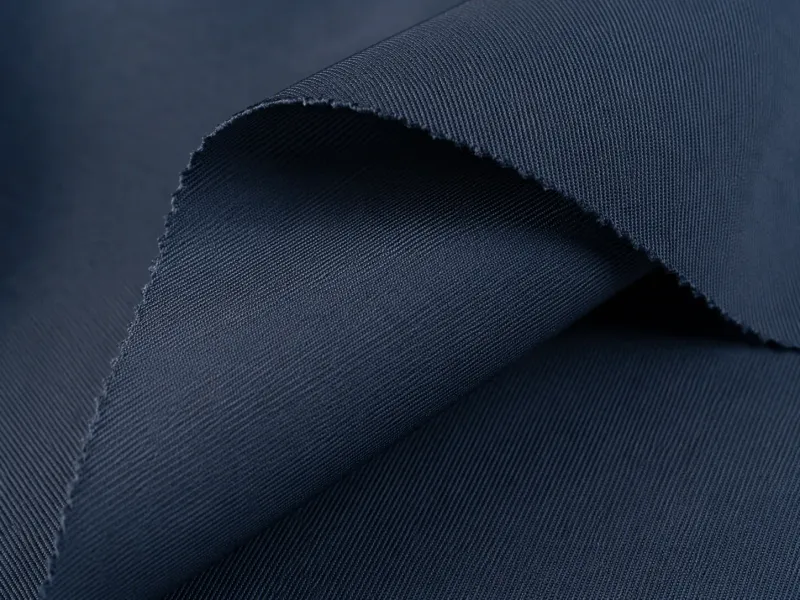
FR Workwear Fabric
Durable flame resistant fabric developed for industrial workwear and PPE applications.
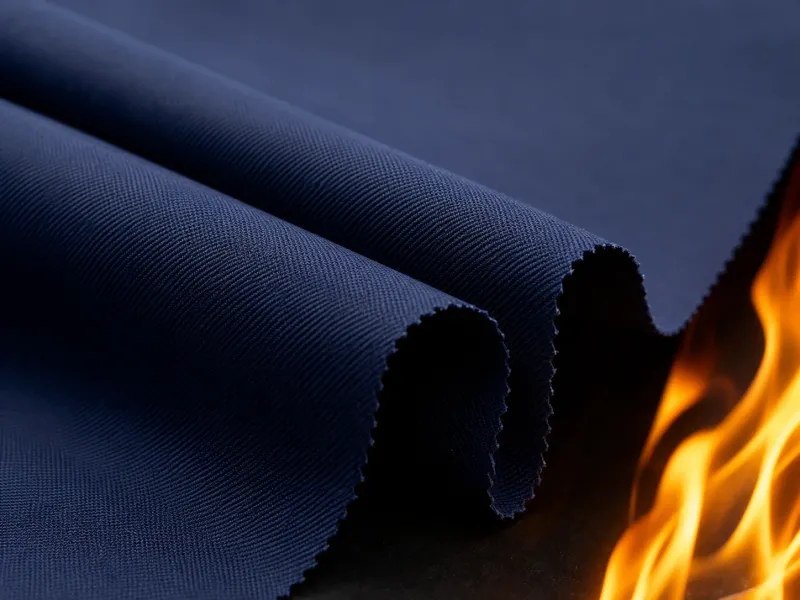
Inherent Flame Retardant Fabric
Permanent flame retardant fabric engineered with inherent FR fibers for industrial protective clothing.
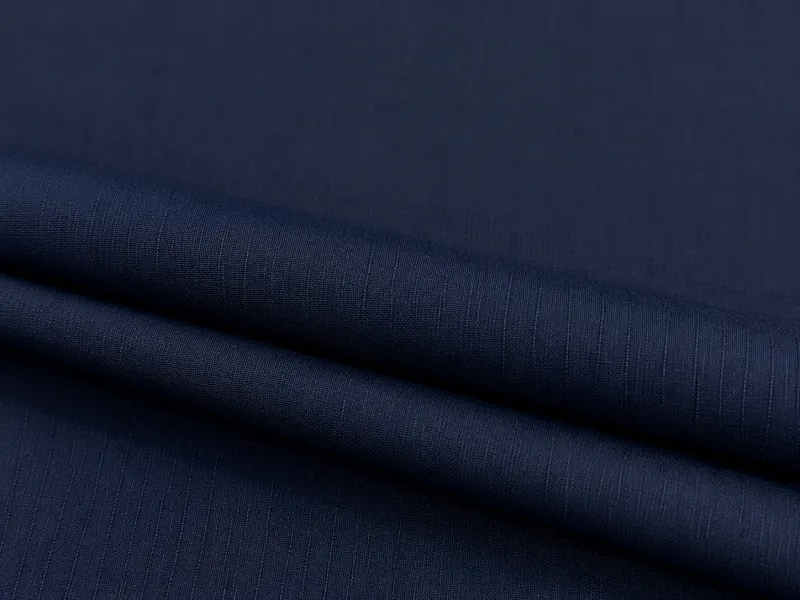
Arc Flash Protection Fabric
Advanced arc flash protective fabric for electrical safety clothing and utility uniforms.
Related Categories
Related Applications
Related Industries
Export-quality protective and performance fabrics for demanding industrial and professional applications
Request a Workwear Fabric Sample or Bulk Quote