

Navigating the complex landscape of fabric certifications is essential for procurement teams, product developers, and sustainability officers sourcing functional textiles. As of 2026, global regulatory requirements and consumer demand for verified performance have made third-party certification a baseline expectation rather than a differentiator. This comprehensive overview breaks down the key certification frameworks that validate fabric safety, sustainability, and performance claims — helping you make informed sourcing decisions backed by audited evidence.
Why Fabric Certifications Matter in Global Sourcing
The Compliance Imperative for Technical Textiles
The global textile supply chain spans multiple jurisdictions, each with distinct regulatory expectations. Unverified fabric claims can lead to customs delays, product recalls, and reputational damage. Certified materials provide documented proof that specifications meet recognized standards — reducing risk across your entire supply chain.
- OEKO-TEX Standard 100 tests for over 350 regulated substances, including pesticides, heavy metals, and allergenic dyes, with compliance thresholds as low as 0.1 ppm for certain chemicals
- ISO 9001 requires documented quality management procedures with annual surveillance audits and a formal corrective action process
- GRS certification mandates a chain-of-custody audit covering every stage from recycled feedstock collection through final fabric production
Unlike loose specification sheets, third-party certifications provide independent verification that can be audited by your customers or regulatory bodies at any point.
Key Certification Frameworks for Functional Fabrics
Safety & Chemical Compliance Certifications
These certifications address human health and environmental safety in finished textiles. They are typically mandatory for products sold in the EU, North America, and increasingly in Asian markets.
| Certification | Scope | Key Requirement | Typical Test Standard |
| OEKO-TEX Standard 100 | Human-ecological safety | No harmful substances above threshold limits | OEKO-TEX Test Methodology |
| OEKO-TEX STeP | Sustainable production facility | Environmental, chemical, and social compliance across operations | OEKO-TEX STeP Requirements |
| REACH (EU) | Chemical regulation | Restriction of 175+ SVHC substances in articles | EU Regulation 1907/2006 |
| CPSIA (US) | Children's products | Lead and phthalate limits for items targeting under-12s | 16 CFR Part 1303 |
Sustainability & Recycled Content Certifications
Sustainability credentials are now a procurement requirement across most major brands. These frameworks verify both material composition and supply chain transparency.
| Certification | Verified Parameter | Minimum Recycled Content | Audit Frequency |
| GRS (Global Recycled Standard) | Recycled content + chain of custody | **20%** to **100%** (tiered) | Annual transaction certificate |
| RCS (Recycled Claim Standard) | Recycled content verification | **5%** minimum | Annual audit |
| Bluesign® | Input stream management | N/A (system certification) | Ongoing supply chain audit |
| GOTS | Organic fiber + environmental processing | **70%** organic fibers | Annual on-site audit |
Performance & Quality Management Certifications
These validate manufacturing consistency and product performance against defined technical benchmarks.
| Certification | Focus Area | Key Metric | Applicable To |
| ISO 9001:2015 | Quality management systems | Documented procedures + continuous improvement | All manufacturing stages |
| ISO 14001 | Environmental management | Emissions, waste, and resource tracking | Facility-level operations |
| AATCC Method Compliance | Performance testing | Wash durability, colorfastness, wicking speed | Product-specific validation |
| Oeko-Tex Eco Passport | Chemical input safety | Verified substance lists for auxiliaries | Dye houses and finishers |
How to Validate Certification Claims for Your Procurement
Due Diligence Checklist for Certified Fabrics
When evaluating supplier certifications, look beyond the certificate itself. Verification requires cross-referencing documentation, transaction certificates, and physical test reports against current standard versions.
Essential verification steps:
- Request the certificate number and verify it on the issuing body's public registry (e.g., oeko-tex.com for OEKO-TEX,.global-recycled-standard.com for GRS)
- Confirm the certificate covers the exact product SKU, not just the factory premises
- Cross-check the transaction certificate quantity against your purchase order to confirm traceability
- Review the test report date — AATCC colorfastness and antibacterial test results should be within the last 12 months for current validity
- Verify the certification scope includes your target application; a GRS certificate for knit jersey may not cover woven constructions
Unlike generic certificates issued to entire factories, verified transaction-level documentation ensures the specific fabric roll you receive matches the certified specification. For Recycled Performance Fabric and GRS Certified Recycled Fabric, we provide full chain-of-custody documentation from post-consumer PET bottle sourcing through finished fabric, with weight ranges from 120gsm to 280gsm and widths up to 250cm depending on construction.
Certification Mapping by Product Category and Application
Matching Certifications to End-Use Requirements
Different product categories carry different certification obligations. Understanding these mappings helps you specify correctly at the design stage rather than retrofitting compliance after production.
| Product Category | Primary Certifications | Secondary / Supporting |
| Apparel for EU market | OEKO-TEX Standard 100 Class 1 & 2 | REACH, CPSIA (if children's) |
| Recycled content products | GRS or RCS | Life cycle assessment (optional) |
| Medical & healthcare textiles | OEKO-TEX Standard 100 Class I | ISO 13485 (if medical device), AATCC 100 |
| flame retardant workwear | NFPA 2112, EN ISO 11611, EN ISO 11612 | ISO 9001, ATEX (for explosive atmospheres) |
| Outdoor and marine textiles | UPF 50+ rating (ASTM D6603) | CMC (Colorfastness to Light), AATCC 195 (wicking) |
| Sportswear and activewear | OEKO-TEX Standard 100 | GRS (if recycled), AATCC 195 (moisture wicking) |
For example, UV Protection Stretch Fabric carries a verified UPF 50+ rating (blocking >98% of UVA/UVB radiation) with colorfastness graded 4-5 per ISO 105-B02. This certification framework differs from Medical Antibacterial Fabric, which requires OEKO-TEX Standard 100 compliance alongside AATCC 100 antibacterial testing demonstrating ≥99.9% reduction against E. coli and S. aureus.
When comparing certification approaches, a single fabric may carry multiple certifications — such as RPET Sports Fabric which holds GRS certification for recycled content while also meeting AATCC 195 for moisture wicking performance. This layered verification provides stronger procurement confidence than any single certification alone.
Frequently Asked Questions
What is the difference between OEKO-TEX Standard 100 and OEKO-TEX STeP?
OEKO-TEX Standard 100 certifies the finished textile product itself for harmful substance content, testing against 350+ parameters. OEKO-TEX STeP certifies the production facility for environmental compatibility, chemical management, and social responsibility across the entire manufacturing site. A supplier can hold STeP certification without Standard 100 certification for a specific product line, and vice versa. Both provide complementary assurance — STeP validates the factory environment, while Standard 100 validates the specific material you receive.
How long is a fabric certification valid before re-testing is required?
Certificate validity periods vary by issuing body. OEKO-TEX Standard 100 certificates are valid for one year with mandatory annual renewal testing. GRS certificates require annual audits and each shipment must be supported by a current transaction certificate. AATCC test reports are typically accepted for 12-24 months provided no formulation changes occur. We recommend maintaining test reports within a 24-month window for active product lines and refreshing all certifications annually.
Can a fabric pass OEKO-TEX but fail GRS, or vice versa?
Yes — these certifications measure entirely different criteria. A fabric can be chemically safe (OEKO-TEX compliant) while containing zero recycled content (failing GRS). Conversely, a fabric made from 100% recycled PET bottles with full chain-of-custody documentation may qualify for GRS but would still require separate OEKO-TEX testing for substance safety. Both certifications address different risk dimensions and are frequently required together for comprehensive compliance.
What GRS recycled content percentage qualifies for tiered certification?
GRS certification operates on four content tiers: 20% (minimum entry level), 50%, 70%, and 100% recycled content. Each tier requires proportionally stricter chain-of-custody documentation. Our GRS Certified Recycled Fabric line spans the full range from 20% to 100% recycled content with independently audited verification at each level. Transaction certificates specify the exact percentage for each batch, enabling precise labeling compliance for your end-market requirements.
How do I verify a supplier's certification is current and covers my specific product?
Request the certificate number and verify it directly on the certifier's public database — OEKO-TEX maintains a searchable registry, as do Textile Exchange (for GRS/RCS) and SGS. Confirm the certificate holder name matches your supplier exactly, the certificate status is 'active', and the scope of certification includes your fabric construction and GSM range. Ask for the latest transaction certificate linked to your purchase order, which provides batch-level traceability back to the recycled feedstock or raw material source.
Related Resources
Related Products (4)
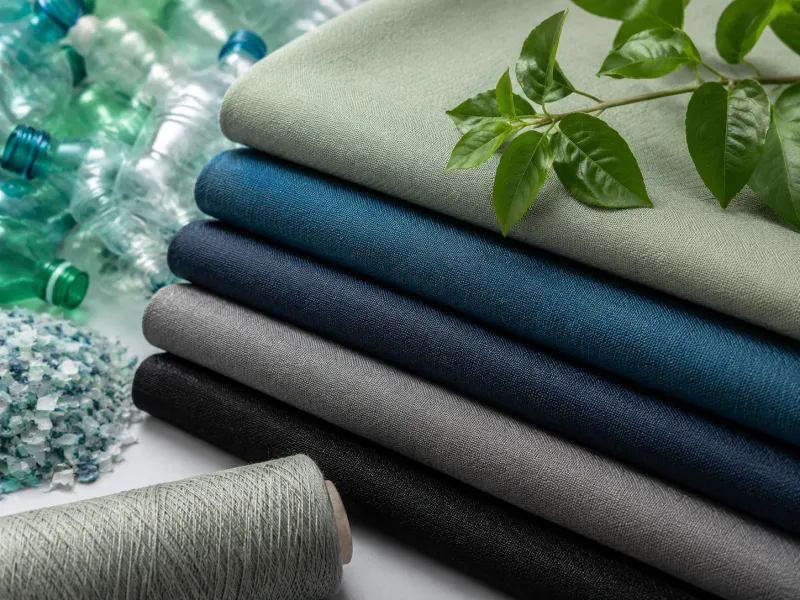
GRS Certified Recycled Fabric
Global Recycled Standard certified fabric providing traceable sustainability for international brands.

Medical Antibacterial Fabric
Medical-grade antibacterial fabric engineered for healthcare uniforms, scrubs and patient care textiles.

UV Protection Stretch Fabric
Stretch performance fabric combining flexibility, comfort and advanced UV protection.
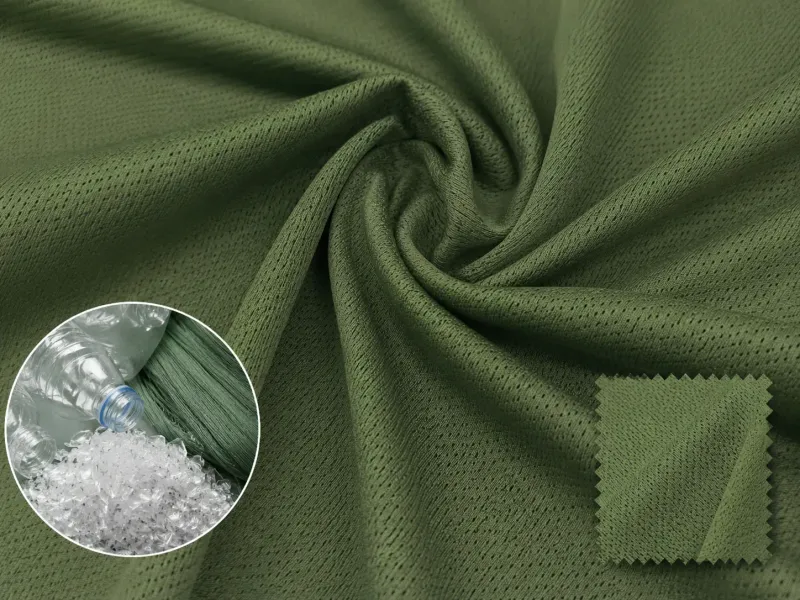
RPET Sports Fabric
Eco-friendly RPET sports fabric designed for activewear brands seeking sustainable performance textiles.
Related Categories
Related Applications
Understanding ISO, OEKO-TEX, GRS & AATCC standards for technical textile compliance
Request Certification Documentation for Your Project