
Understanding flame retardant fabric safety standards is critical for procurement teams, safety officers, and textile manufacturers operating in high-risk industrial environments. As of 2026, regulatory frameworks across North America, Europe, and the Middle East have tightened requirements for personal protective equipment (PPE) used in welding, electrical arc flash, oil and gas, and general industrial workwear applications. This guide covers the primary standards, test methodologies, and compliance pathways for flame retardant fabrics, helping you select materials that meet both regulatory obligations and performance expectations.
Why Flame Retardant Fabric Safety Standards Matter
Flame retardant fabric safety standards exist to reduce burn injuries and fatalities in workplaces where ignition sources are present. Unlike standard cotton or polyester fabrics, which can melt, drip, and continue burning upon exposure to flame, properly certified FR fabrics are engineered to self-extinguish within seconds of ignition source removal. Globally, industrial heat-related injuries account for an estimated 30,000+ hospital admissions annually in manufacturing and energy sectors alone.
Compliance with recognized standards is not optional in most jurisdictions. The Occupational Safety and Health Administration (OSHA) in the United States references NFPA standards under the General Duty Clause, while the European Union enforces FR requirements through the Personal Protective Equipment Regulation (EU) 2016/425. Non-compliant fabrics expose employers to significant liability, failed inspections, and worker safety risks.
We prepare bulk FR fabric orders every week for clients across North America, Europe, and the Middle East. Our QC team verifies that each batch meets the cited standard before shipment, ensuring your supply chain remains compliant from mill to final garment.
Key Flame Retardant Fabric Safety Standards
The following standards represent the most widely adopted flame retardant fabric safety standards across global industrial markets:
NFPA 2112 — Flame-Resistant Garments for Flash Fire Protection
- Applies to garments worn by workers exposed to flash fire hazards
- Requires char length ≤ 6 inches (152mm) after test
- Afterflame time must not exceed 2 seconds
- Thermal shrinkage must be ≤ 10% in any dimension
- Fuel value reduction of ≥ 35% compared to untreated fabric
EN ISO 11612 — Protective Clothing Against Heat and Flame
- European standard covering multiple performance categories
- Category A: Flame spread and heat transmission
- Category B: Molten metal splash, radiant heat, convective heat, small flame
- Each letter-number combination (e.g., A1, B2, B4) specifies distinct test requirements
- Widely required for welding protective clothing across the EU and EEA
EN ISO 11611 — Protective Clothing for Welding and Related Processes
- Class A1/A2 for welding applications with spark and slag resistance
- Self-extinguishing behavior required after ignition source removal
- Surface flame spread < 2 seconds
- Tested against direct sparks, molten metal splatter, and radiant heat
ASTM F1506 — Standard for Electrical Flame-Resistant Textiles
- Governs FR clothing for workers exposed to electric arc hazards
- ATPV (Arc Thermal Performance Value) or EBT (Energy to Breakopen) ratings required
- ATPV ranges from 8 cal/cm² to 45+ cal/cm² depending on fabric construction
- Must pass NFPA 70E arc flash testing protocols
AATCC 76 — Antistatic Resistance
- Required for oil and gas environments where static discharge is a hazard
- Surface resistance must measure < 100 Ohms
- Compliant with ATEX and IECEx standards for explosive atmospheres
Flame Retardant Fabric Types and Performance Comparison
Inherent vs. Treated Flame Retardant Fabrics
Understanding the difference between inherent and treated FR fabrics is essential for compliance and longevity:
| Fabric Type | Material Base | FR Mechanism | Wash Durability | Typical GSM Range |
| Inherent FR (Meta-Aramid) | 95% Meta-Aramid / 5% PPTA | Intrinsic molecular structure | Permanent — no wash dependency | 180–320 gsm |
| FR Cotton (Phosphorus Finish) | 100% Cotton, Indura-type | Chemical finish bonded to fibers | ≥30–50 industrial launder cycles | 200–340 gsm |
| Modacrylic/Cotton Blend | Modacrylic + Cotton | Inherent + treated hybrid | ≥50 industrial cycles | 250–350 gsm |
| FR Workwear Blend | Polyester/Modacrylic | Self-extinguishing construction | ≥50 industrial cycles | 220–350 gsm |
Unlike generic cotton fabrics, which offer zero flame resistance, our FR cotton fabric with advanced phosphorus-based chemical finish achieves self-extinguishing behavior with afterglow below 2 seconds. Compared to inherent aramid fabrics, treated FR cotton offers a cost-effective alternative for lower-hazard environments where ATPV ratings above 8 cal/cm² are sufficient.
Arc Flash and Electrical Protection Standards
For electrical workers, arc flash protection fabric must meet specific ATPV and EBT thresholds:
- Entry-level protection: ATPV 8–12 cal/cm² (light industrial)
- Medium protection: ATPV 12–25 cal/cm² (general electrical work)
- High protection: ATPV 25–45+ cal/cm² (high-voltage environments)
- EBT rating must exceed 30 cal/cm² to prevent fabric breakopen
Our arc flash protection fabric, composed of modacrylic, meta-aramid, or cotton blend constructions, delivers ATPV ratings from 12 to 45+ cal/cm² depending on fabric weight and weave density, covering the full spectrum of electrical hazard classifications under NFPA 70E.
How to Verify FR Fabric Compliance
Documentation and Certification Requirements
When sourcing flame retardant fabric safety standards-compliant materials, request the following documentation from your supplier:
- Test reports from ISO 17025 accredited laboratories
- Certificate of compliance referencing the specific standard (e.g., NFPA 2112, EN ISO 11612)
- ATPV or EBT values for arc flash fabrics
- Wash durability data showing FR performance after specified launder cycles
- Chain of custody documentation for inherent FR materials
- Material Safety Data Sheets (MSDS) for chemical finishes
Third-Party Testing and Recertification
Flame retardant performance can degrade over time due to improper laundering, UV exposure, and chemical contact. We recommend recertification testing every 12 months for active PPE programs. Our team can arrange third-party lab testing through partners such as Intertek, SGS, or UL to verify ongoing compliance.
For export-quality FR fabric destined for North American or European markets, we ensure all shipments include the required test documentation and standard references, reducing customs delays and compliance audit findings.
Common FR Fabric Applications and Industry Requirements
Welding and Spark-Exposure Environments
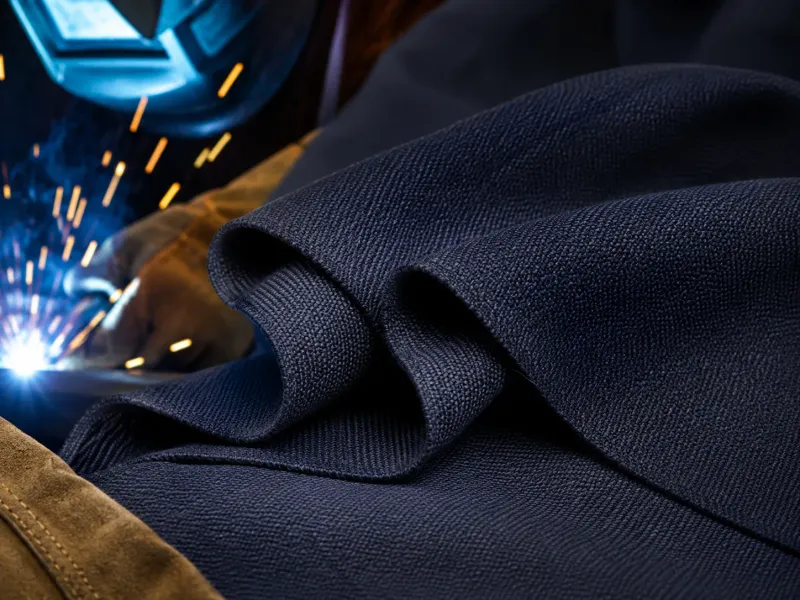
Welding protective fabric must meet EN ISO 11611 Class A1/A2 requirements. Our welding protective fabric, available in heavy-duty cotton/FR blend or inherent aramid constructions at 260–420 gsm, provides self-extinguishing protection with surface flame spread below 2 seconds after ignition.
Oil, Gas, and Petrochemical Workwear
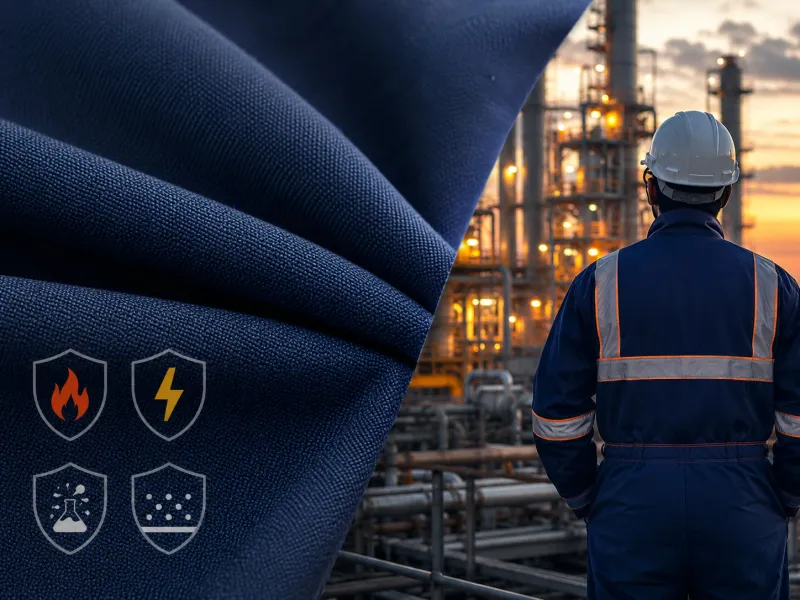
Oil and gas protective fabric must combine FR performance with antistatic properties (AATCC 76 < 100 Ohms), oil and water repellency (AATCC 118 Grade 8–9), and chemical splash resistance (ASTM D4342). Our modacrylic/cotton and polyester/modacrylic blends deliver ATPV ratings of 8–25 cal/cm² with full ATEX/IECEx compliance for hazardous area classification.
General Industrial and Utility Workwear
FR workwear fabric in the 220–350 gsm range serves as the baseline for general industrial applications. These fabrics are self-extinguishing, carbonizing, and abrasion-resistant, making them suitable for manufacturing, utilities, and emergency services. Compliance with NFPA 2112 and EN ISO 11612 is standard.
Frequently Asked Questions
What is the difference between inherent and treated flame retardant fabric?
Inherent FR fabrics, such as those made from meta-aramid (Nomex-type) or PBI blends, have flame retardancy built into the polymer structure at the molecular level. This means the FR property is permanent and does not degrade with washing. Treated FR fabrics, such as phosphorus-finished cotton (Indura-type), receive a chemical finish that provides flame resistance for a specified number of industrial launder cycles — typically 30 to 50 cycles per AATCC 61 testing. Inherent FR fabrics command a higher price point but offer longer service life in demanding environments.
What ATPV rating is required for arc flash protection?
The required ATPV (Arc Thermal Performance Value) depends on the incident energy analysis for your specific workplace. NFPA 70E categorizes hazard levels from 1 to 4, with corresponding ATPV requirements ranging from 8 cal/cm² (Category 1) to 45+ cal/cm² (Category 4). Our arc flash protection fabric covers the full range from 12 to 45+ cal/cm², with EBT ratings exceeding 30 cal/cm² to prevent fabric breakopen during arc events.
How many wash cycles does FR fabric maintain its flame resistance?
For inherent FR fabrics like meta-aramid and modacrylic blends, flame resistance is permanent and does not diminish with washing. For treated FR cotton fabrics, the phosphorus-based finish maintains self-extinguishing performance for at least 30 to 50 industrial launder cycles as verified by AATCC 61 testing. We provide wash durability data with every FR fabric order to support your PPE lifecycle management.
Are flame retardant fabrics required by OSHA?
OSHA does not prescribe a single FR fabric standard but enforces FR requirements through the General Duty Clause and by referencing consensus standards such as NFPA 2112 and NFPA 70E. Employers in the United States must provide PPE that protects against flash fire and arc flash hazards, and FR fabric meeting these standards is the recognized compliance pathway. In the EU, FR PPE is mandated under Regulation (EU) 2016/425 for workers exposed to thermal hazards.
What is the weight range for flame retardant workwear fabric?
FR workwear fabric is commonly available in the 180 to 350 gsm range, depending on the application. Lighter weights (180–220 gsm) are suitable for general industrial use and summer workwear. Mid-range weights (220–280 gsm) are standard for welding and electrical work. Heavier weights (280–420 gsm) are used for high-heat environments such as foundry work and heavy welding. Our FR fabric portfolio spans this full range with customizable GSM options.
Related Resources
Related Products (4)
Welding Protective Fabric
Heat and spark resistant fabric designed for welding apparel and industrial protection.
Oil & Gas Protective Fabric
Multi-hazard protective fabric developed for oil, gas and petrochemical industries.
Arc Flash Protection Fabric
Advanced arc flash protective fabric for electrical safety clothing and utility uniforms.
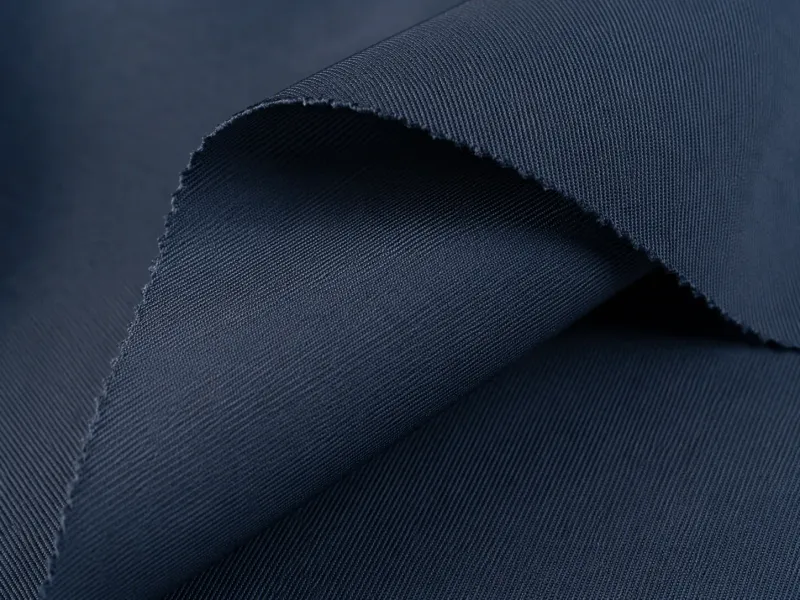
FR Workwear Fabric
Durable flame resistant fabric developed for industrial workwear and PPE applications.
Related Categories
Related Applications
Related Industries
Navigate FR fabric certifications, test methods, and regulatory requirements for industrial safety applications
Request a Flame Retardant Fabric Quote