
Antibacterial fabric is a performance textile engineered to inhibit the growth of microorganisms on its surface. It is used in everything from hospital scrubs and patient gowns to sports base layers, uniforms, and smart casual apparel. The choice of base fiber, knit construction, and antimicrobial finish determines how a fabric behaves in a specific application. As of 2026, buyers increasingly specify antibacterial properties alongside moisture management, stretch, and wash durability, because a finish that cannot survive industrial laundering is of limited value in professional settings. Understanding what antibacterial fabric is used for—and how it performs—ensures you select the right material for your product range.
Core Uses in Medical & Healthcare Textiles
In medical settings, antibacterial fabric is primarily specified for scrubs, patient gowns, lab coats, and bedding where high contact and frequent laundering are routine. Our Medical Antibacterial Fabric, for example, is produced with 100% polyester or poly-cotton blends and delivers an antibacterial rate of at least 99.9% against E. coli, S. aureus, and C. albicans. Fabric weight is optimized between 100 and 140 GSM—fine for lightweight tunics and scrub suits—while an oleophobic and hydrophobic finish adds stain resistance. Healthcare Uniform Fabric uses a T/C blend in the same 100–140 GSM range and maintains color fastness grade 4–5 through more than 50 industrial launder cycles.
Compared with standard poly-cotton, these fabrics keep a tighter microbial profile throughout the shift and after repeated washing. That matters in facilities where textiles move through high-temperature washing and chemical disinfection. Medical Antibacterial Fabric is also available with OEKO-TEX Standard 100 / ISO certification and AATCC 100 compliance, making it a reliable choice for medical and healthcare textile programs that require documented test data.
Sportswear, Activewear & Odor Control
Beyond healthcare, one of the most common answers to what is antibacterial fabric used for is athletic apparel. During exercise, synthetic fabrics trap heat and moisture, creating ideal conditions for odor-causing bacteria. Odor Resistant Sports Fabric integrates an advanced antimicrobial silver-ion/zinc-based finish and achieves at least 99% reduction of S. aureus, B. subtilis, and E. coli. At 130–220 GSM, it can be constructed as single jersey, interlock, or mesh, with quick-dry and wicking properties. For lighter garments, Quick Dry Sports Fabric and Moisture Wicking Jersey Fabric combine rapid drying with a polyester base; when an antimicrobial finish is added, the fabric can maintain effectiveness for 30–50 industrial wash cycles per AATCC 61.
Unlike ordinary performance knits that only move sweat away from the skin, an antibacterial knit actively limits the microbes that cause perspiration odor. This makes it especially useful for base layers, yoga wear, team uniforms, and fitness apparel in the sportswear and activewear market. Fabric weights from 140 up to 260 GSM cover both light training pieces and more structured outer layers.
How Antibacterial Fabric Works: Technology & Wash Durability
Antibacterial fabric works in two main ways: by incorporating antimicrobial agents into the yarn during polymerization or by applying a finish to the finished textile. Silver Ion Antibacterial Fabric uses ppm-level silver-ion integration on polyester, nylon, cotton, or custom blends, and remains effective for 50–100 industrial wash cycles. Antimicrobial Polyester Fabric, made with virgin or recycled polyester, displays at least 99% antibacterial activity and can be supplied in single jersey, interlock, mesh, or twill constructions.
In a separate category, Antibacterial Moisture Wicking Fabric combines 100% recycled PET with silver-ion treatment, giving a wicking speed of less than 25 seconds (AATCC 195) alongside at least 99% activity. The selection of technology determines durability: silver-ion compounds are generally more robust across 50+ institutional washes, whereas some organic coatings may lose efficacy more quickly. For medical programs that require certification, Medical Antibacterial Fabric is OEKO-TEX Standard 100 / ISO certified and AATCC 100 compliant. We can provide lab reports that confirm reduction rates for each target organism before bulk production.
Uniforms, Workwear & Institutional Applications
Antibacterial properties are also specified in corporate uniforms, hospitality linen, and protective workwear. Uniforms and corporate apparel programs commonly use healthcare-inspired fabrics because they combine easy care, wrinkle resistance, and anti-static options. For safety teams working long shifts, antibacterial performance reduces odor and skin irritation inside flame-resistant or heavy-duty garments. In the workwear and protective clothing sector, buyers often pair FR functionality with antimicrobial finishes so that garments stay fresher between launderings.
As of 2026, sourcing teams across North America and Europe increasingly request antimicrobial properties as a baseline feature rather than a premium upgrade, particularly for textiles that cannot be laundered daily. That includes training uniforms, medical scrubs, public-facing workwear, and reusable protective gear. Compared with untreated synthetic textiles, antimicrobial versions are better suited to high-touch, shared environments because they reduce bacterial load on the fabric surface.
How to Choose the Right Antibacterial Fabric
Choosing an antibacterial fabric requires matching the substrate and finish to the end-use environment. Start with construction: single jersey and interlock knits provide stretch for activewear, while twill weaves support structured uniforms. Next, check laundering: healthcare buyers should require at least 50 industrial wash cycles, while seasonal athleisure may tolerate a 30-cycle threshold. Weight is another shortlist filter—lightweight 100–140 GSM fabrics suit scrubs and liners, whereas mid-weight 140–260 GSM knits support sports and everyday apparel.
Stretch and moisture management matter for movement and comfort: a 4-way stretch construction with quick-dry or moisture-wicking ability improves wearability in active applications. Finally, ask for test data covering E. coli, S. aureus, or C. albicans and confirm whether the product uses a silver-ion finish for durability or an organic treatment for specific end uses. This approach turns the question what is antibacterial fabric used for into a specification brief rather than a generic product search.
Frequently Asked Questions
What is antibacterial fabric used for?
Antibacterial fabric is used in medical and healthcare textiles such as scrubs, gowns and uniforms; in sportswear and activewear to control odor; and in corporate or workwear apparel where frequent laundering or close contact requires microbial control. It is also used in performance fabrics that combine moisture wicking, stretch, or quick-dry properties.
How long does antibacterial fabric stay effective?
Durability depends on the technology. Silver Ion Antibacterial Fabric maintains efficacy for 50–100 industrial wash cycles, while products such as Medical Antibacterial Fabric withstand more than 50 launder cycles per AATCC 61. Always confirm the antimicrobial compound and test method with your supplier before selecting a fabric for high-laundry environments.
Is antibacterial fabric safe for direct skin contact?
Yes. Our antibacterial products use silver-ion integration and antimicrobial finishes that are safe in apparel applications. Medical Antibacterial Fabric is OEKO-TEX Standard 100 / ISO certified and AATCC 100 compliant. The silver ion concentration is optimized to be effective against E. coli, S. aureus, and C. albicans while remaining suitable for direct skin contact.
What test standards are used for antibacterial fabric?
Common references include AATCC 100 for antibacterial activity and AATCC 61 for laundering durability. Products such as Antibacterial Knitted Fabric achieve at least 99% reduction against E. coli, S. aureus, and C. albicans, while medical grades show at least 99.9%. Fabric structures range from 140–260 GSM, and finishes are typically verified after 30–50 industrial wash cycles.
Related Resources
Related Products (4)
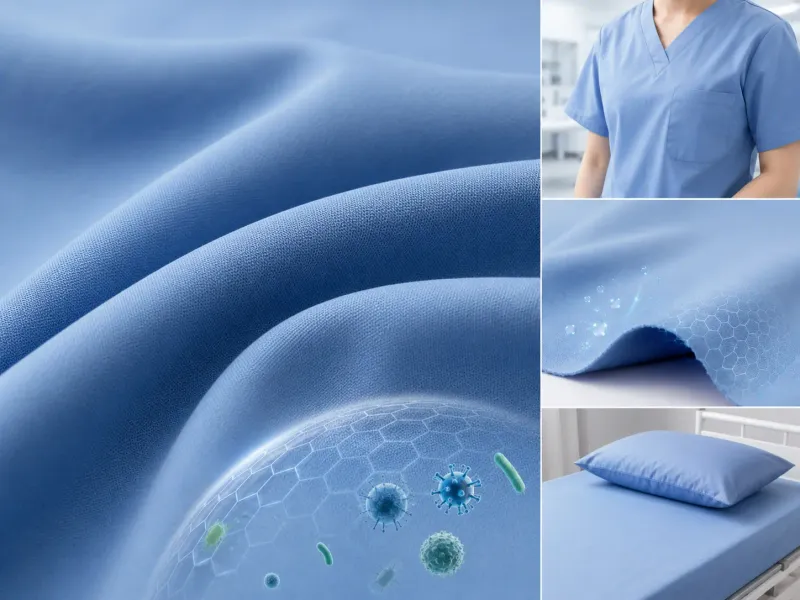
Medical Antibacterial Fabric
Medical-grade antibacterial fabric engineered for healthcare uniforms, scrubs and patient care textiles.
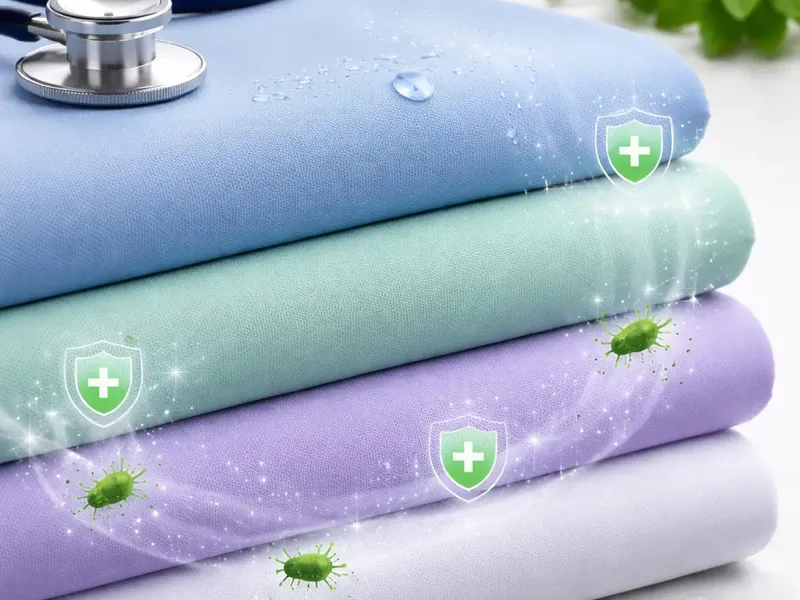
Healthcare Uniform Fabric
Antibacterial healthcare uniform fabric developed for hospitals, clinics and healthcare institutions.
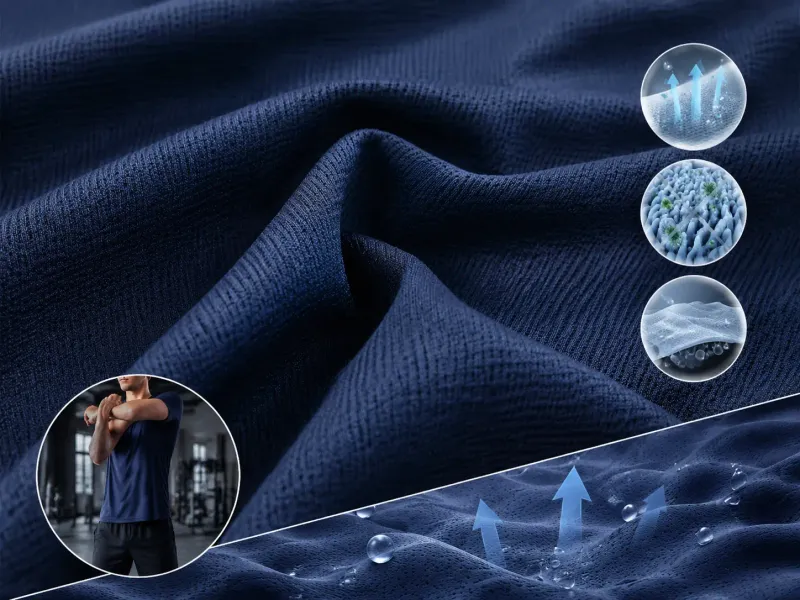
Odor Resistant Sports Fabric
Performance sports fabric with odor control technology and antibacterial protection for activewear brands.
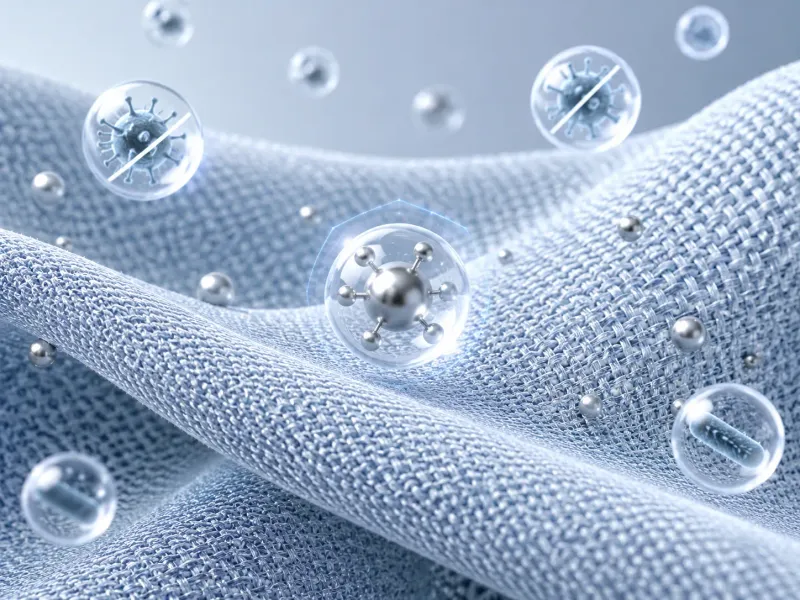
Silver Ion Antibacterial Fabric
Advanced antibacterial fabric utilizing silver ion technology for long-lasting microbial protection and odor control.
Related Categories
Related Applications
Antimicrobial textiles for medical, sportswear, and workwear applications
Request Antibacterial Fabric Samples